

Table of Contents
- What Single Origin Coffee Actually Means
- Single Origin vs. Blends: When to Choose Each
- How Tasting Notes in Coffee Explained Help Your Selection
- Coffee Processing Methods Natural vs. Washed: Impact on Flavor
- Key Factors That Define Single Origin Quality
- Best Ethically Sourced Coffee Brands 2026
- Reading Labels: What to Look For and What to Ignore
- Matching Your Brewing Method to Single Origin Beans
Last Updated: August 17, 2026
What Single Origin Coffee Actually Means
Single origin coffee refers to beans sourced from one specific geographic region, farm, or cooperative rather than blended from multiple origins. This distinction matters because it lets you taste the unique characteristics of that place, its climate, altitude, soil composition, and processing methods all influence the final flavor profile.
When you buy single origin, you're getting coffee with traceable roots. A bag labeled "Ethiopian Yirgacheffe" or "Colombian Geisha" tells you exactly where those beans grew. Single origin beans showcase terroir, the environmental factors that shape flavor, much like wine regions do. A coffee grown at 6,000 feet in volcanic soil will taste noticeably different from one grown at 4,000 feet in clay-based soil, even if they're the same varietal.
At Lux Brew Coffee Co., we focus exclusively on single origin selections because they deliver the freshness and flavor complexity that subscription customers seek.
Single Origin vs. Blends: When to Choose Each
Single origin coffees highlight distinct regional characteristics. You taste the specific notes that come from that place, the floral notes of an Ethiopian natural process bean, the chocolate and nut undertones of a Brazilian washed coffee, the bright citrus of a Kenyan microlot. These work best when you're exploring new flavor profiles or when your brewing method can showcase complexity.
Blends combine beans from multiple origins to create a consistent flavor profile. A roaster might blend a Brazilian base for body and sweetness with an Ethiopian component for brightness. The result is balanced and approachable, less likely to surprise you with unexpected flavors.
Choose single origin if you want to explore and taste terroir. Choose blends if you want a reliable, balanced cup that tastes the same every time. The freshness factor tilts toward single origin for most home brewers. Since they're sourced from one place, roasters can roast them to order and ship within hours of roasting. That peak freshness window, roughly 2-4 weeks after roasting, is where single origin beans shine brightest.
How Tasting Notes in Coffee Explained Help Your Selection
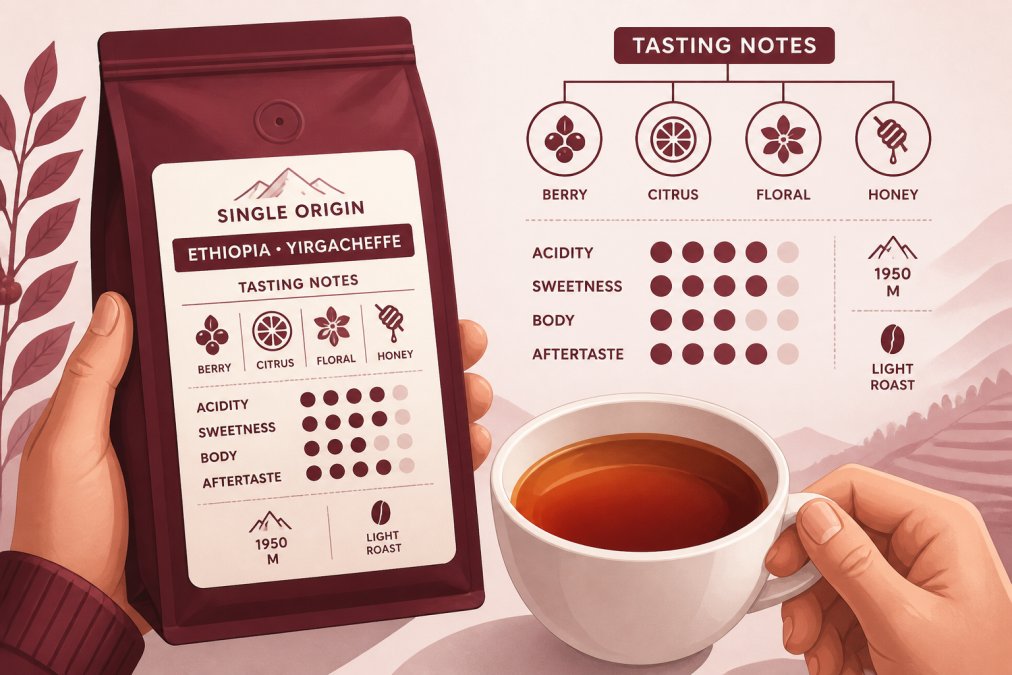
Tasting notes are the language coffee professionals use to describe flavor. They're not marketing fiction, they're the actual flavors you'll detect when you brew and taste the coffee.
Reading Flavor Descriptors on Labels
Coffee labels typically list 3-5 tasting notes. You might see "chocolate, cherry, orange blossom" or "stone fruit, honey, floral." These aren't added flavors, they're what your palate actually detects based on the coffee's processing method, altitude, and varietal.
The notes come from cupping, a standardized tasting process where coffee professionals brew coffee the same way every time and evaluate it systematically. Pay attention to specificity: "fruity" is vague marketing, while "stone fruit with hints of blackberry" gives you actual guidance.
Matching Tasting Notes to Your Palate
Do you prefer bright, acidic coffees with citrus and floral notes? Look for high-altitude origins like Ethiopia, Kenya, or Colombia. Do you prefer full-bodied, sweet coffees with chocolate or nut undertones? Brazilian and Indonesian coffees typically deliver this profile. Do you like something balanced? Central American origins like Costa Rica and Guatemala often hit this sweet spot.
Buy small quantities of single origin coffees with different flavor profiles, brew them the same way, and taste them side by side. You'll quickly learn which notes appeal to you.
Coffee Processing Methods Natural vs. Washed: Impact on Flavor
The processing method, how the coffee cherry is removed from the bean, fundamentally shapes flavor and is one of the most important factors in choosing single origin coffee.
Washed Process Characteristics
Washed process coffees are cleaned thoroughly. The coffee cherry is removed, the bean is fermented to break down remaining fruit, then washed with water to remove all sticky residue. The result is a clean, clear flavor profile that highlights the bean's origin characteristics directly.
Washed coffees tend to have pronounced, bright acidity and lighter to medium body. You'll often find notes of citrus, floral, or tea-like qualities. Most specialty coffees use the washed process because it's consistent and showcases origin complexity.
Natural Process Characteristics
Natural process (also called dry process) is simpler. The entire coffee cherry dries on the bean before removal. This extended contact with fruit creates a very different flavor profile, full-bodied and fruity, with lower, softer acidity and heavier body.
Natural process coffees are polarizing. Some drinkers love the fruit-forward complexity. Others find them overwhelming. If you're new to single origin, start with washed process to build your baseline.
Honey Process and Other Methods
Honey process (also called pulped natural) sits between washed and natural. The cherry is removed, but some of the sticky fruit layer stays on the bean while it dries. Honey process coffees are typically balanced, with more body and fruit notes than washed, but cleaner and more predictable than natural.
Other methods like anaerobic fermentation and carbonic maceration are used by specialty roasters to create unique flavor profiles but are less common.
Key Factors That Define Single Origin Quality
Altitude and Geographic Region
Altitude is one of the strongest predictors of coffee quality. Higher-altitude coffees develop slower, allowing more complex flavors to develop. Coffees grown above 5,500 feet tend to have more acidity, brightness, and flavor complexity. Geographic region determines climate, rainfall patterns, and soil composition. Ethiopian coffees tend toward floral and fruity notes. Colombian coffees often show chocolate and balanced sweetness. Kenyan coffees frequently display berry and citrus brightness.
The best single origin coffees come from regions with ideal growing conditions: volcanic soil, consistent rainfall, and altitude between 5,000-7,000 feet.
Harvest Season and Freshness
Most coffees are harvested once per year, typically during the local dry season. Freshness matters more for single origin than blends because you're tasting the coffee's inherent characteristics. Stale single origin loses its brightness and complexity.
Look for a roast date on the label, not a harvest date. Single origin coffees hit their flavor peak roughly 2-4 weeks after roasting. After 8 weeks, they're noticeably less vibrant.
Store your single origin beans in an airtight container away from light and heat. They'll stay fresh for about a month after roasting if stored properly. Grind immediately before brewing.
Roast Profile and Your Brewing Method
Roast profile dramatically affects how a single origin coffee tastes. Light roasts preserve origin characteristics and acidity. Medium roasts balance origin flavors with roasted notes. Dark roasts emphasize body and muted acidity.
Your brewing method should match the roast profile. Light roasts shine in pour-overs and Aeropress. Medium roasts work well in espresso machines and French presses. Dark roasts are forgiving in almost any method.
Best Ethically Sourced Coffee Brands 2026
Finding ethically sourced single origin coffee means looking for transparency about farming practices and fair compensation for farmers.
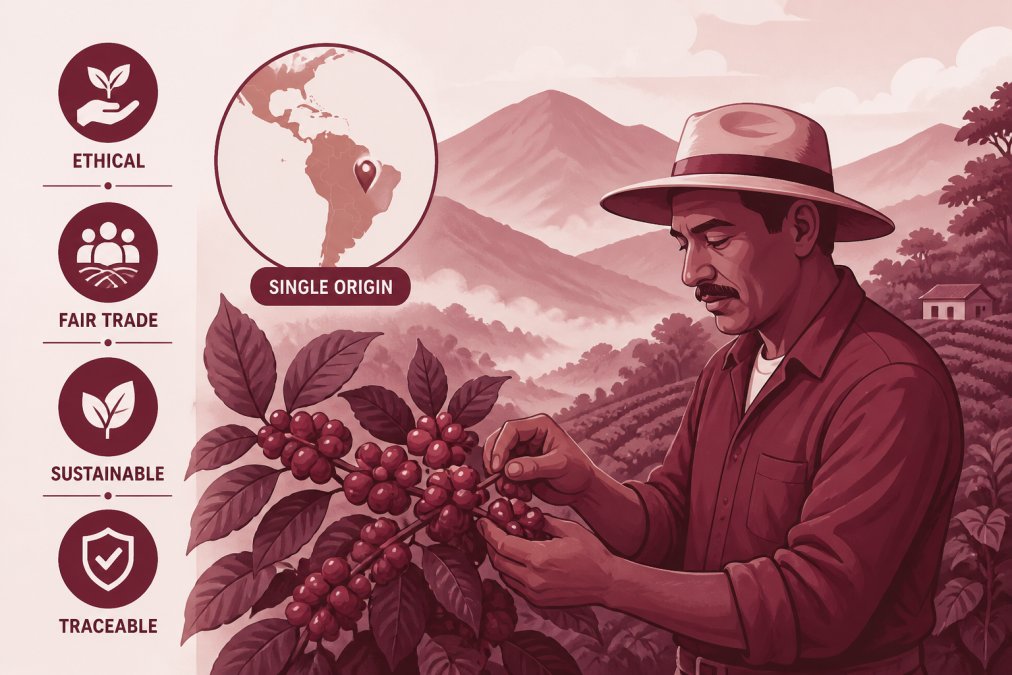
Lux Brew Coffee Co. stands out for direct relationships with family farms and roasting to order. Every bag is roasted within hours of shipment, guaranteeing peak freshness. The brand sources exclusively from farms with transparent labor practices and environmental stewardship.
Look for certifications like Fair Trade, Rainforest Alliance, or direct trade partnerships. These indicate farmers are paid fairly and farms meet environmental standards. Many specialty roasters publish detailed information about which farms they source from, sometimes including farmer names and photos.
The premium you pay for ethically sourced single origin goes directly to farmers, incentivizing quality production and sustainable practices.
Reading Labels: What to Look For and What to Ignore
Traceability and Transparency Signals
The best labels tell you exactly where the coffee comes from. "Ethiopian Yirgacheffe from the Gedeo Zone" tells you more than just "Ethiopian coffee." Even more specific: "Ethiopian Yirgacheffe from the Kochere cooperative, harvested December 2025."
Look for roast dates, not just "best by" dates. Processing method should be stated clearly: washed, natural, or honey process. Altitude is useful information, coffees above 5,500 feet are typically higher quality and more complex.
Roast Date and Storage Tips
The roast date is the single most important piece of information on a single origin coffee label. Coffee is best between 2-4 weeks after roasting. Before that, it's still degassing. After 8 weeks, it's noticeably stale.
Store your coffee in an airtight container, away from light, heat, and moisture. A pantry shelf is ideal. Grind immediately before brewing. Ignore marketing terms like "premium," "gourmet," or "craft" without supporting information. Focus instead on roast date, origin specificity, processing method, and tasting notes.
Matching Your Brewing Method to Single Origin Beans
How you brew single origin coffee determines what flavors you'll taste.
Pour-over methods (Chemex, V60, Kalita Wave) are ideal for light roasts and washed process coffees. The controlled water flow and paper filters produce clean, bright cups that showcase origin characteristics.
French press brews immersion-style, extracting more oils and creating body. It works well with medium roasts and natural process coffees where you want fuller body and fruity notes.
Espresso machines require medium to dark roasts and precise grind size. Single origin espresso can be excellent but is less forgiving than blends.
Aeropress is versatile and forgiving. It works well with light to medium roasts and highlights origin flavors without over-extracting.
Turkish coffee uses very fine grounds and a special pot. It works with any roast but creates intense, concentrated flavor.
| Brewing Method | Best Roast Profile | Best Coffee Type | Brew Time |
|---|---|---|---|
| Pour-over | Light to medium | Washed process, high altitude | 3-4 minutes |
| French press | Medium to dark | Natural process, full body | 4 minutes |
| Espresso | Medium to dark | Balanced origins | 25-30 seconds |
| Aeropress | Light to medium | Any origin | 1-2 minutes |
| Turkish | Any | Any | 5-10 minutes |
Choosing single origin coffee becomes straightforward once you understand the fundamentals: terroir shapes flavor, processing method determines whether a coffee is bright or full-bodied, freshness matters more than origin alone, and your brewing method should match the coffee's roast profile. At Lux Brew Coffee Co., we roast to order and ship within hours to guarantee you receive coffee at peak freshness, the window where single origin complexity shines brightest. Start with a light roast washed process coffee from an origin known for clarity, like Ethiopia or Kenya. Brew it in a method that preserves brightness, like a pour-over. Taste it at different ages, 2 weeks, 4 weeks, 8 weeks after roasting, and notice how freshness changes the experience. That foundation builds the palate awareness you need to make intentional choices about single origin coffee for years to come.
Frequently Asked Questions
What does single origin actually mean in coffee?
Single origin coffee comes from a specific geographic location, a single country, region, or even a specific estate or farm. Unlike blends that combine beans from multiple origins, single origin coffee lets you taste the unique characteristics of one place. These characteristics, called terroir, include the region's altitude, climate, soil, and processing methods. This traceability makes it easier to understand exactly what you're buying and supports direct relationships with coffee farmers.
How do processing methods affect the flavor of single origin coffee?
Processing method dramatically shapes flavor. Washed process coffees tend to be clean and bright with pronounced acidity, highlighting the bean's origin characteristics. Natural process coffees develop fruity, wine-like notes because the bean ferments inside the cherry. Honey process splits the difference, offering balanced complexity with some fruitiness. Understanding these methods helps you predict whether a single origin will taste bright and crisp or rich and fruity before you brew.
Is single origin coffee always better than a blend?
Not necessarily. Single origin excels if you want to explore distinct flavor profiles and understand terroir. Blends, however, can offer more consistency, balance, and complexity by combining complementary beans. Your choice depends on your goals: choose single origin to discover regional characteristics and experiment with different origins; choose blends for reliable, balanced everyday drinking. Both have merit, it's about what experience you're seeking.
What should I look for on a coffee label to ensure quality?
Look for roast date (within 2-4 weeks is ideal for peak freshness), the specific origin (country, region, or farm name), processing method, altitude, and tasting notes. Specialty grade certification signals quality standards. Check for transparency signals like farmer names or cooperative information, which indicate ethical sourcing. Avoid vague terms like 'mountain grown' without specifics. The more detailed the label, the more confidence you can have in both quality and traceability.
This article was written using GrandRanker