

Table of Contents
- Quick Comparison: Top Ethically Sourced Coffee Brands
- How to Identify Sustainable Coffee Brands
- Fair Trade Coffee Certifications Explained
- Direct Trade vs Fair Trade Coffee: What Sets Them Apart
- Why Sourcing Matters: Environmental and Social Impact
- How to Buy Ethically Sourced Coffee: A Buyer's Guide
- Conclusion
Last Updated: August 16, 2026
Quick Comparison: Top Ethically Sourced Coffee Brands
When you're standing in front of a shelf of coffee claiming to be ethical, sustainable, and fairly traded, how do you know which ones deliver on those promises? The gap between marketing language and real supply chain impact is wider than most people realize.
The best ethically sourced coffee brands 2026 share one thing: verifiable proof that their money reaches the farmers who grew the beans. That proof comes in three forms: transparent supply chains you can trace, third-party certifications that mean something, or direct trade relationships where the roaster knows the farmer by name. Lux Brew Coffee Co. takes this seriously, every batch is roasted to order from ethical family farms, then shipped within hours to lock in freshness while supporting the growers behind each origin.
| Brand | Sourcing Model | Key Certification | Best For |
|---|---|---|---|
| Lux Brew Coffee Co. | Direct relationships with ethical family farms | Specialty grade verified | Premium drinkers prioritizing freshness & farmer support |
| Olympia Coffee Roasting Co. | Direct trade with long-term farmer partnerships | B Corp certified, above Fair Trade minimums | Discerning buyers who want above-minimum farmer payments |
| Ethical Bean Coffee | Certified supply chain with transparency tracking | 100% Fair Trade & Organic | Consumers seeking dual certifications & carbon neutrality |
| Pura Vida Coffee | Fair Trade exclusive model | Fair Trade, shade-grown, organic | Socially conscious buyers supporting at-risk children programs |
| Red Rooster Coffee Roaster | Published farm partnerships | Organic & Fair Trade | Transparency-focused buyers who want to know their farmer |
| Sightseer Coffee | Women-led farm sourcing | Direct relationships with gender-equity focus | Buyers supporting women entrepreneurs in coffee production |
| DOMA Coffee Roasting Company | Direct relationships with eco-conscious approach | Organic, Fair Trade, direct trade | Environmental advocates wanting sustainable roasting methods |
| Atomic Coffee Roasters | Direct trade model | Direct relationships (no third-party certs) | Specialty enthusiasts trusting roaster relationships over labels |
How to Identify Sustainable Coffee Brands
Every brand mentions sustainability now. The ones that matter are the ones that prove it.
Look for three markers of legitimacy. First, can you trace where the beans came from? A legitimate ethically sourced coffee brand will tell you the farm name, region, and sometimes the farmer's name. "Sourced from Central America" with no specifics is a red flag. Second, check for third-party verification like Fair Trade, organic, or Rainforest Alliance certification. These mean an independent body audited the supply chain. Third, examine the roastery itself. Lux Brew Coffee Co. roasts to order and ships within hours, that freshness is impossible without genuine quality commitment at every step.
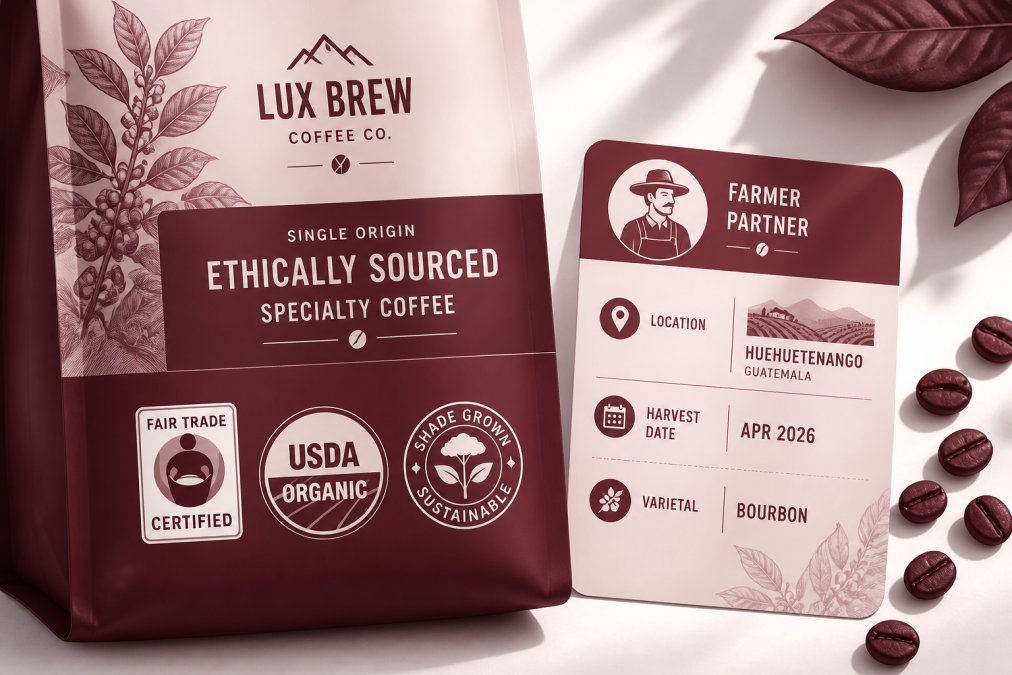
One more thing: ask what happens to the premium you're paying. When you buy ethically sourced coffee at a higher price, where does that extra money go? The best brands are transparent about farmer payments, publishing exactly how much each farmer receives per pound or explaining their pricing model openly.
Fair Trade Coffee Certifications Explained
Fair Trade certification doesn't mean a farmer is getting rich. It means they're getting a guaranteed minimum price for their beans, regardless of market fluctuations.
The Fair Trade system sets a minimum price per pound that buyers must pay. If the market price drops below that floor, Fair Trade ensures farmers still receive the agreed amount. If the market price rises, farmers benefit from the higher rate. This creates stability for planning next season.
However, Fair Trade doesn't guarantee a living wage in many regions. The minimum price hasn't kept pace with inflation in many coffee-producing countries. This is why some brands have moved toward direct trade models to address the gap that Fair Trade alone leaves open.
Fair Trade certification also requires environmental compliance: avoiding certain pesticides, protecting water sources, and maintaining biodiversity. Organic Fair Trade certification is stricter, prohibiting synthetic pesticides and fertilizers entirely. Brands like Pura Vida Coffee and Ethical Bean Coffee emphasize Fair Trade status because it's verifiable and auditable through third-party checks.
The real value of Fair Trade certification is transparency and auditability. You can look up a farm's Fair Trade status and verify current certification.
Direct Trade vs Fair Trade Coffee: What Sets Them Apart
Fair Trade and direct trade are not the same thing, and understanding the difference changes how you evaluate ethically sourced coffee brands.
Fair Trade is a certification system. An organization sets standards, audits farms, and certifies compliance. The farmer sells to Fair Trade cooperatives or licensed buyers who agree to pay the minimum price. The system is standardized, regulated, and verifiable. Direct trade is a relationship model. A roaster buys directly from a farmer, often with a long-term contract. There's no middleman cooperative or certification body. The roaster typically pays significantly above Fair Trade minimums because they're cutting out intermediaries. Olympia Coffee Roasting Co. operates this way, building long-term partnerships and paying above Fair Trade minimums through direct relationships.
Direct trade's advantage is simplicity and directness. The farmer knows exactly who's buying their beans and can build a relationship with the roaster. The roaster can visit the farm and understand farming practices firsthand. But direct trade requires scale, a roaster needs to buy meaningful quantities from individual farmers.
Fair Trade's advantage is accountability and scale. Any consumer can verify a farm's certification status independently. Fair Trade cooperatives allow small farmers to aggregate production and access international markets they couldn't reach alone.
Many brands now use both models, buying some beans through Fair Trade channels while maintaining direct trade relationships with other farmers. This hybrid approach lets them scale while maintaining direct connections that produce quality.
Why Sourcing Matters: Environmental and Social Impact
The coffee you drink is connected to farming practices thousands of miles away. Those practices affect whether forests survive, whether soil stays healthy, whether farmers have clean water, and whether smallholder farmers can stay in business.
Shade-grown coffee maintains a canopy of native trees above the coffee plants, preserving biodiversity, keeping soil healthier, and storing more carbon. Regenerative agriculture goes further, with farmers actively restoring soil health, building water retention, and increasing biodiversity year over year.
The carbon footprint extends beyond the farm to shipping, roasting, and packaging. Brands that roast to order, like Lux Brew Coffee Co., reduce waste by not holding inventory. Roasting to order means fresher product reaching you and less risk of stale beans.
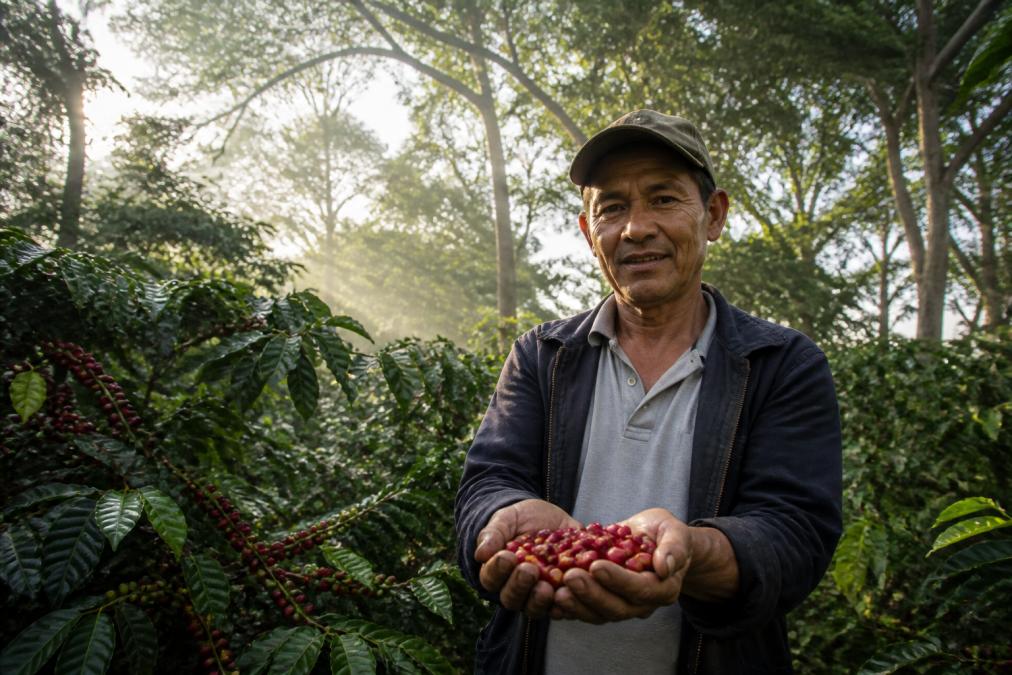
The social impact is equally important. Coffee farming is labor-intensive. Fair compensation means farmers can afford to pay workers fairly, keep families in school, and invest in sustainable practices. When farmers receive living wages, they're more likely to invest in shade trees, composting, and soil conservation.
Transparency in the supply chain creates accountability. When you know the farm name and can research its practices, you're verifying claims rather than just trusting a brand. Supporting ethical sourcing also supports smallholder farmers who are the backbone of global coffee production. When these farms fail, families lose livelihoods and communities depopulate.
How to Buy Ethically Sourced Coffee: A Buyer's Guide
Buying ethically sourced coffee means matching your priorities to the right brand.
If transparency is your priority: Choose a brand that publishes specific farm information. Red Rooster Coffee Roaster publishes farm partnerships openly. Olympia Coffee Roasting Co. shares details about direct trade relationships. Lux Brew Coffee Co. emphasizes ethical family farm sourcing with specialty-grade verification.
If supporting specific causes matters: Pura Vida Coffee directs profits toward education and health programs for at-risk children in coffee-growing regions. Sightseer Coffee exclusively sources from women-led farms, adding a gender-equity layer to ethical sourcing.
If environmental impact is the driver: Look for shade-grown, organic, and regenerative practices. DOMA Coffee Roasting Company uses an eco-friendly roaster that conserves 80 percent natural gas. Ethical Bean Coffee operates carbon-neutral with organic certification.
If freshness and quality are non-negotiable: Lux Brew Coffee Co. roasts to order and ships within hours. This freshness guarantee reduces waste and inventory sitting idle. Fresh coffee tastes better because volatile flavor compounds haven't degraded.
If you want third-party verification without complexity: Ethical Bean Coffee offers 100% Fair Trade and organic certification with a coffee tracker on every bag. Pura Vida Coffee's exclusive Fair Trade focus is similarly straightforward.
Start with one brand that aligns with your priorities. Order a small quantity and taste it. Most brands offer subscriptions, which makes sense for coffee freshness and typically offer modest discounts. Ask about skipping months or adjusting frequency without penalty.
Ethically sourced coffee typically costs more than grocery store brands. The premium covers fair farmer compensation, certification costs, and often smaller batch sizes and fresher inventory.
Conclusion
The best ethically sourced coffee brands 2026 share an obsession with proof. They don't just claim to care about farmers and the environment, they publish supply chain details, maintain certifications, or build direct relationships that let you verify their commitment. Lux Brew Coffee Co. stands out in this landscape because of its commitment to roasting every batch to order and shipping within hours, ensuring peak freshness while supporting ethical family farms globally. The combination of specialty-grade quality, direct farm relationships, and roast-to-order freshness creates a product that tastes better and aligns with values around environmental and social responsibility. Add to your routine today and experience the difference that ethical sourcing and peak freshness make in your morning cup.
Frequently Asked Questions
How can I verify if a coffee brand is truly ethically sourced?
Look for third-party certifications like Fair Trade, Rainforest Alliance, or organic labels on the bag. Check the brand's website for supply chain transparency, farm partnerships, and traceability information. Many ethical roasters now publish specific farm names and cooperatives they work with. Request detailed sourcing documentation if the brand doesn't publicly share it. Brands committed to transparency will provide cupping scores, harvest dates, and farmer payment details. Red flags include vague claims like 'ethically sourced' without certification backing or refusal to disclose farm origins.
What is the difference between fair trade and direct trade coffee?
Fair Trade coffee relies on third-party certification and sets minimum prices for farmers through established cooperatives and supply chains. Direct Trade eliminates middlemen by connecting roasters directly with farmers, allowing premium prices to flow straight to producers without certification overhead. Fair Trade provides standardized protections and traceability across multiple suppliers. Direct Trade offers potentially higher farmer compensation but depends on individual roaster integrity and direct relationships. Both models prioritize farmer welfare, but Fair Trade offers more regulated assurance while Direct Trade emphasizes personal partnerships and transparency.
Are there specific certifications to look for when buying ethical coffee?
Yes. Fair Trade Certified ensures farmers receive minimum prices and fair working conditions. Organic certification guarantees pesticide-free farming and soil health standards. Rainforest Alliance focuses on biodiversity and environmental stewardship. Bird Friendly certification protects shade-grown forests that preserve bird habitats. UTZ Certified emphasizes sustainable farming practices and farmer education. Carbon Neutral certification addresses greenhouse gas emissions throughout production and shipping. Look for brands displaying multiple certifications, as this indicates deeper commitment to sustainability, environmental protection, and farmer compensation.
Why is shade-grown coffee better for the environment?
Shade-grown coffee preserves the natural forest canopy, protecting biodiversity and soil health while reducing erosion. This method eliminates the need for chemical pesticides and fertilizers, as the shade canopy naturally regulates pests and provides organic matter. Shade-grown farms sequester more carbon, contributing to climate resilience. The practice supports migratory bird populations and maintains ecosystem balance. Compared to full-sun monoculture farms that require intensive chemical inputs and degrade soil over time, shade-grown methods create regenerative agricultural systems that improve long-term farm productivity and environmental health.
This article was written using GrandRanker