

Table of Contents
- Why Roast to Order Coffee Delivers Superior Freshness
- Coffee Freshness Timeline: How Quickly Quality Declines
- The Coffee Degassing Process Explained
- Best Roast Level for Antioxidants and Health Benefits
- Flavor Profile Differences and Sensory Experience
- Roast to Order vs. Grocery Store Coffee: What Changes
- How to Choose and Brew Roast to Order Coffee for Maximum Benefit
- Conclusion
Last Updated: August 11, 2026
Why Roast to Order Coffee Delivers Superior Freshness
The moment coffee is roasted, it begins losing its exceptional qualities. Within days, volatile oils oxidize. Within weeks, vibrant flavor becomes flat. Roast to order coffee eliminates this degradation by shipping beans within hours of roasting, ensuring you drink coffee at its peak before oxidation takes hold.
Freshly roasted beans retain their full sensory profile, aromatic complexity, and beneficial compounds. Grocery store coffee has often sat in warehouses and on shelves for months, with the supply chain introducing delays that compromise quality. By the time it reaches your kitchen, much of what made it special has degraded. Roast to order coffee isn't about paying more for a label, it's about getting coffee in a state that mass-market distribution simply cannot achieve.
Coffee Freshness Timeline: How Quickly Quality Declines
Coffee freshness follows a predictable timeline, with the window for peak quality narrower than most realize.
Immediately after roasting, coffee enters its degassing phase as carbon dioxide trapped inside the beans escapes. Many specialty enthusiasts wait 3-5 days before brewing, allowing this process to stabilize. However, flavor compounds begin oxidizing immediately.
By day 7-10, the coffee is still excellent but noticeably different. Aroma compounds fade and brightness softens. By week 3-4, specialty-grade coffee shows noticeable decline, the flavor profile flattens and becomes one-dimensional. By 8-12 weeks, grocery store coffee has lost most defining characteristics, with distinctions between roast levels becoming hard to detect.
Roast to order coffee typically arrives within 3-7 days of roasting, placing you squarely in the window where the coffee's full potential remains present. You're brewing when flavor compounds are most complex and volatile oils are still volatile.
The Coffee Degassing Process Explained
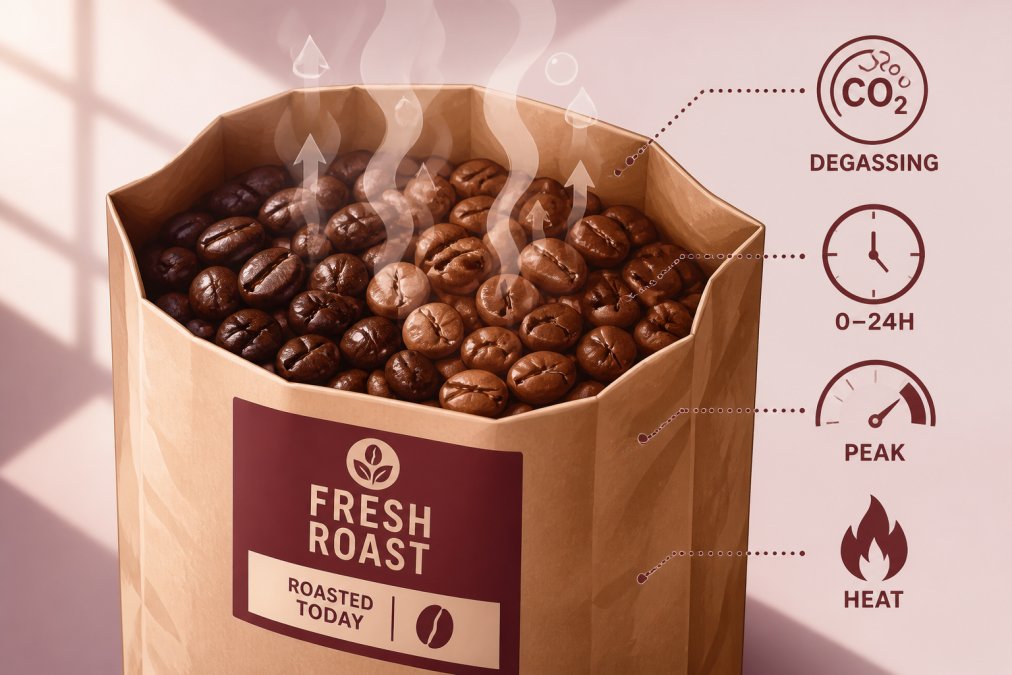
Degassing is the release of carbon dioxide and other volatile compounds from roasted coffee beans. During roasting, heat forces carbon dioxide into the bean's cellular structure. After roasting, beans naturally release this gas fastest in the first 24-48 hours, then gradually over several days.
Degassing affects extraction because water repels from CO2-rich beans, making even wetting difficult. This is why some brewers wait a few days before using freshly roasted beans. However, degassing also indicates freshness, coffee still releasing CO2 is chemically alive and complex. Once degassing essentially completes around day 7-10, the coffee's chemistry stabilizes, but the peak flavor window is already narrowing.
Roast to order coffee arrives during its degassing phase, meaning you receive it while still chemically active and complex. The CO2 release you observe when opening a bag is a sign of freshness, not a problem. Understanding this process helps you choose the right brewing approach for your coffee's specific roast date.
Best Roast Level for Antioxidants and Health Benefits
Different roast profiles affect the nutritional composition of coffee. Light roasts retain more of the green coffee bean's original chemical structure, preserving higher levels of chlorogenic acid and other polyphenols. Medium roasts represent a balance, transforming some delicate polyphenols while preserving others, often delivering complex antioxidant profiles. Dark roasts undergo more extensive transformation, breaking down some polyphenols but creating new compounds like melanoidins with their own antioxidant properties.
All roast levels contain antioxidants, with differences less dramatic than marketing claims suggest. What matters more is freshness, oxidation degrades antioxidants regardless of roast level. A fresh dark roast contains more beneficial compounds than a stale light roast. For health-conscious drinkers, roast to order coffee delivers a consistent advantage: you receive coffee before oxidation has significantly reduced its antioxidant content.
Flavor Profile Differences and Sensory Experience
Roast level creates distinct flavor profiles, and freshness amplifies these differences dramatically.
Light roasts emphasize origin characteristics, showing bright acidity and floral or fruity notes with lighter body. These delicate flavors depend entirely on freshness, a stale light roast loses brightness and becomes thin rather than crisp and complex.
Medium roasts balance origin character with roast-induced flavors, often showing chocolate, caramel, or nutty notes. This balance appeals to many specialty coffee drinkers, with complexity depending on both layers being present.
Dark roasts emphasize roast-induced flavors, with origin characteristics largely masked by extensive heat. They show bold, smoky, or bitter notes with heavier body and lower acidity.
Freshness changes the sensory experience across all roast levels, most noticeably with light and medium roasts. A fresh light roast is vibrant and complex; the same roast at two weeks old becomes dull. With roast to order coffee, you taste the roaster's intended flavor profile as designed.
Roast to Order vs. Grocery Store Coffee: What Changes
Grocery store coffee typically comes from large commercial roasters who roast in bulk, store inventory, and distribute through conventional retail channels. This model prioritizes consistency and shelf stability over freshness. Coffee is often roasted weeks or months before reaching stores, with oxidation well underway by purchase. Bulk roasters often blend beans from multiple origins to achieve consistent profiles, losing the specificity of single-origin beans.
Roast to order coffee operates differently. Coffee is roasted after you order it, typically within 24 hours, and shipped immediately, arriving within 3-7 days. This model prioritizes freshness over inventory stability. Sourcing is typically more specific with single-origin beans, allowing you to taste distinct origin characteristics. Roast profiles are more intentional, with specialty roasters making decisions based on specific beans that day rather than matching pre-determined standards. Quality control differs substantially, roast to order roasters typically cup every batch and remain accountable for what they send.
The practical difference is significant. Fresh roast to order coffee delivers complexity, clarity, and the specific flavor profile the roaster intended, while grocery store coffee has been compromised by time and oxidation.
How to Choose and Brew Roast to Order Coffee for Maximum Benefit
Start by understanding the roast date. Quality roast to order roasters clearly label when coffee was roasted. Seek coffee roasted within the last 2-3 weeks ideally, though coffee up to 4 weeks old remains excellent. Avoid anything older than 6 weeks.
Consider roast profile in relation to your brewing method. Light roasts work beautifully with pour-over methods, highlighting brightness and complexity. Medium roasts are versatile across most methods. Dark roasts shine with French press or espresso.
Pay attention to origin. Single-origin coffees tell stories about where they're from, Kenyan coffees often show fruity notes, Ethiopian coffees display floral characteristics, Brazilian coffees tend toward chocolate and nuts.
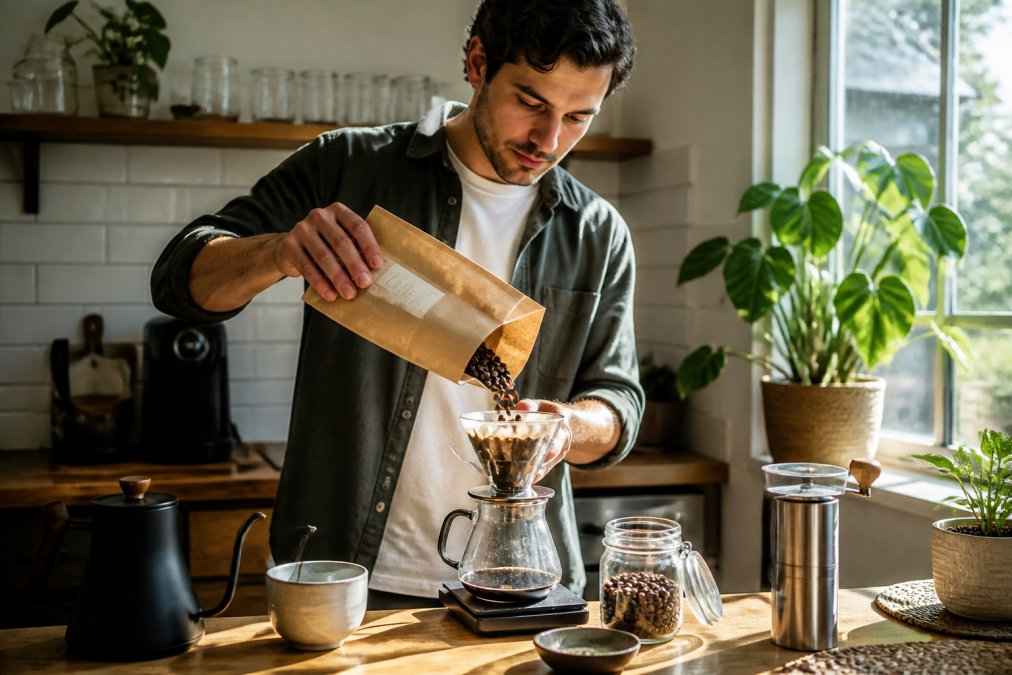
For brewing, coffee still actively degassing (within the first week) benefits from a slightly longer bloom time, around 45 seconds instead of 30, allowing excess CO2 to escape before full extraction. Grind size matters more with fresh coffee, adjust slightly finer if under-extracted (sour) or coarser if over-extracted (bitter). Water temperature should be consistent around 195-205 degrees Fahrenheit.
Transfer roast to order coffee to an airtight container away from light and heat. A pantry works better than a counter or refrigerator. Avoid freezing unless storing longer than 4 weeks. Brew within 2-4 weeks of the roast date for optimal results. You'll notice the flavor profile evolving slightly as oxidation gradually progresses, early in the window you get maximum brightness and complexity, later the coffee becomes slightly more mellow.
Conclusion
The case for roast to order coffee rests on a simple foundation: freshness fundamentally changes what you experience in your cup. From the moment coffee is roasted, oxidation begins degrading the compounds that define its flavor, aroma, and health benefits. Roast to order coffee eliminates the time gap that conventional distribution introduces, placing fresh beans in your hands while they're still chemically complex and full of potential.
Lux Brew Coffee Co. has built its operation around this principle. Every batch is roasted to order and shipped within hours to ensure you receive coffee at its peak. Our specialty-grade beans, sourced from ethical family farms, deliver the full sensory experience that only fresh coffee can provide. Start with Lux Brew Coffee Co. and experience roast to order coffee benefits through your own brewing ritual.
Frequently Asked Questions
How long does roast to order coffee stay fresh after roasting?
Roast to order coffee peaks in flavor and antioxidant content within 3-10 days of roasting, depending on roast level and storage. Light roasts maintain peak freshness for about 2-3 weeks, while darker roasts can stay vibrant for 3-4 weeks. After 4 weeks, oxidation significantly degrades both flavor compounds and bioavailable antioxidants. Proper storage in an airtight container away from light and heat extends this window.
Does roast to order coffee have more antioxidants than grocery store coffee?
Yes. Roast to order coffee retains significantly more polyphenols and antioxidants because it hasn't undergone prolonged oxidation. Grocery store coffee often sits for weeks or months before purchase, losing volatile oils and antioxidant potency. Studies show that freshly roasted beans contain up to 30% more measurable antioxidants than pre-packaged coffee over 2 weeks old. The roasting date matters as much as the bean origin for antioxidant bioavailability.
Which roast level has the best health benefits?
Light to medium roasts retain the highest polyphenol and chlorogenic acid content, making them superior for antioxidant intake. However, the roasting process itself creates beneficial compounds like melanoidins that emerge during the Maillard reaction. Medium roasts offer a balance: they preserve most polyphenols while developing roasting-stage antioxidants. Dark roasts lose some chlorogenic acid but gain other beneficial compounds. For maximum antioxidants, choose light-to-medium roast to order coffee shipped within days of roasting.
Can casual coffee drinkers taste the difference with roast to order coffee?
Absolutely. The difference between fresh-roasted and stale coffee is noticeable in aroma, body, and aftertaste, not just to experts. Within the first 2 weeks, you'll detect brighter acidity, cleaner flavor notes, and fuller body. After 4 weeks, grocery store coffee tastes flat and muted by comparison. You don't need an expensive espresso machine; even basic drip brewing or French press reveals the difference. The sensory experience improves dramatically with freshness alone.
This article was written using GrandRanker