

Table of Contents
- Why Proper Storage Matters for Coffee Freshness
- Best Coffee Storage Containers for Peak Flavor
- Creating the Ideal Environment: Temperature and Humidity
- Whole Beans vs. Ground Coffee: Storage Differences
- How Long Do Coffee Beans Stay Fresh
- Freezing Coffee Beans: Benefits and Best Practices
- Storage Solutions for Different Roast Levels
- Common Storage Mistakes to Avoid
Last Updated: August 13, 2026
Why Proper Storage Matters for Coffee Freshness
The moment coffee is roasted, it begins to deteriorate. Oxygen exposure, heat, light, and humidity all accelerate the staling process, breaking down the volatile compounds that create aroma and flavor. Within weeks, even premium beans lose their peak freshness if stored improperly.
Lux Brew Coffee Co. emphasizes the critical importance of storage. The company roasts every batch to order and ships within hours, but what happens after delivery depends entirely on how you store those beans at home. Proper storage extends the window where your coffee tastes its absolute best, preserving the investment you've made in specialty-grade beans. Beans kept in an airtight container in a cool, dark place maintain their flavor profile for weeks, while the same beans left in a paper bag on the counter go stale in days.
Best Coffee Storage Containers for Peak Flavor
The container you choose is your first line of defense against oxidation and moisture. Not all containers are created equal, and the wrong choice can undo the work that went into sourcing and roasting quality beans.
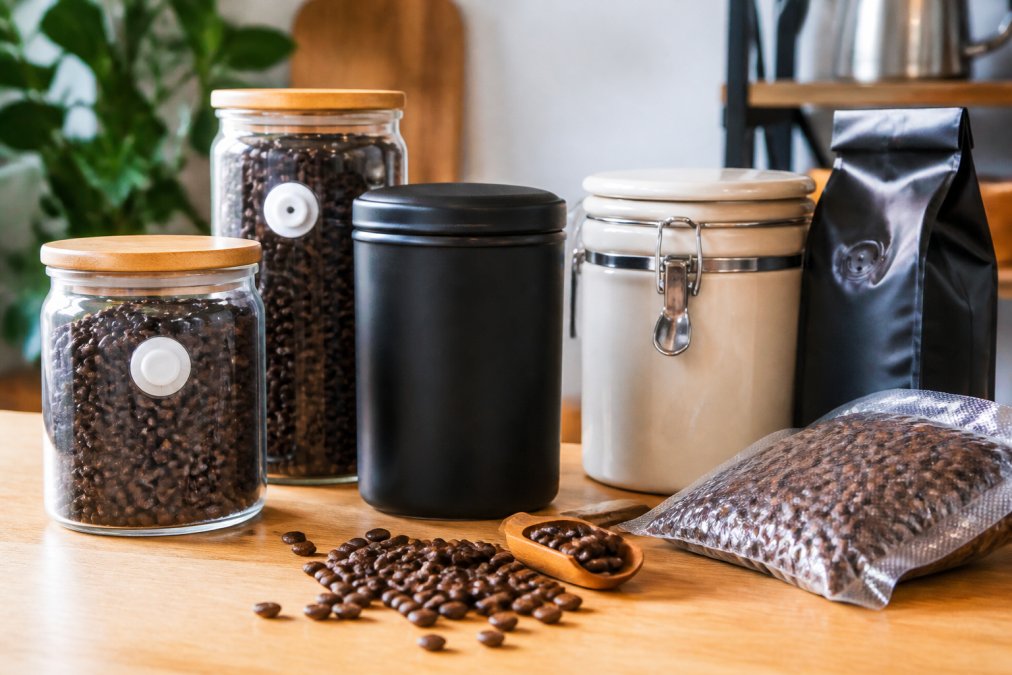
Airtight canisters with one-way valves
An airtight container with a one-way valve is the gold standard for coffee storage. The valve allows carbon dioxide, which beans release during degassing, to escape without letting oxygen back in. This is crucial in the first week after roasting, when beans are actively degassing and releasing CO2.
Look for canisters made from glass or stainless steel with rubber or silicone gaskets that create an airtight seal. The seal quality matters more than the material. Even a premium canister with a faulty gasket will allow oxygen and moisture to infiltrate over time. Before purchasing, check reviews for durability reports, especially how well the seal holds after repeated opening and closing.
Opaque vs. clear containers
Opaque containers win. Light, particularly direct sunlight and UV rays, degrades coffee oils and accelerates flavor loss. Clear glass containers look attractive on a shelf, but they expose your beans to constant light exposure. Opaque ceramic, stainless steel, or dark-tinted glass containers protect beans from light damage.
Vacuum-sealed bags and nitrogen flushing
Vacuum-sealed bags remove oxygen entirely, creating an anaerobic environment where oxidation cannot occur. This method is excellent for long-term storage, particularly if you're freezing beans or buying in bulk.
Nitrogen flushing, a process where nitrogen gas replaces oxygen in a sealed bag, is used by many specialty roasters before shipping. Bags with nitrogen flushing maintain freshness longer than vacuum-sealed bags because they protect against thermal shock and condensation damage. If you're buying from a roaster like Lux Brew Coffee Co. that uses nitrogen flushing, keep the original bag sealed until you're ready to use the beans. Once opened, transfer remaining beans to an airtight container with a one-way valve.
Creating the Ideal Environment: Temperature and Humidity
Where you store your beans matters as much as what you store them in. The environment controls how quickly oxidation, moisture absorption, and flavor degradation occur.
Avoiding heat, light, and moisture
Heat accelerates the staling process by increasing molecular activity and speeding up oxidation. Coffee stored above 75°F degrades noticeably faster than coffee stored at 65°F. Avoid placing containers near appliances that generate heat, ovens, dishwashers, coffee makers, or direct sunlight through windows.
Light damages coffee oils, and moisture causes beans to absorb water, triggering mold growth and accelerating the staling process. Bathrooms, kitchens near sinks, and basements with humidity fluctuations are poor storage locations. Temperature fluctuations are equally damaging. When beans move between warm and cool environments, condensation forms on their surface, triggering oxidation and potentially introducing mold. Consistent temperature is more important than absolute temperature.
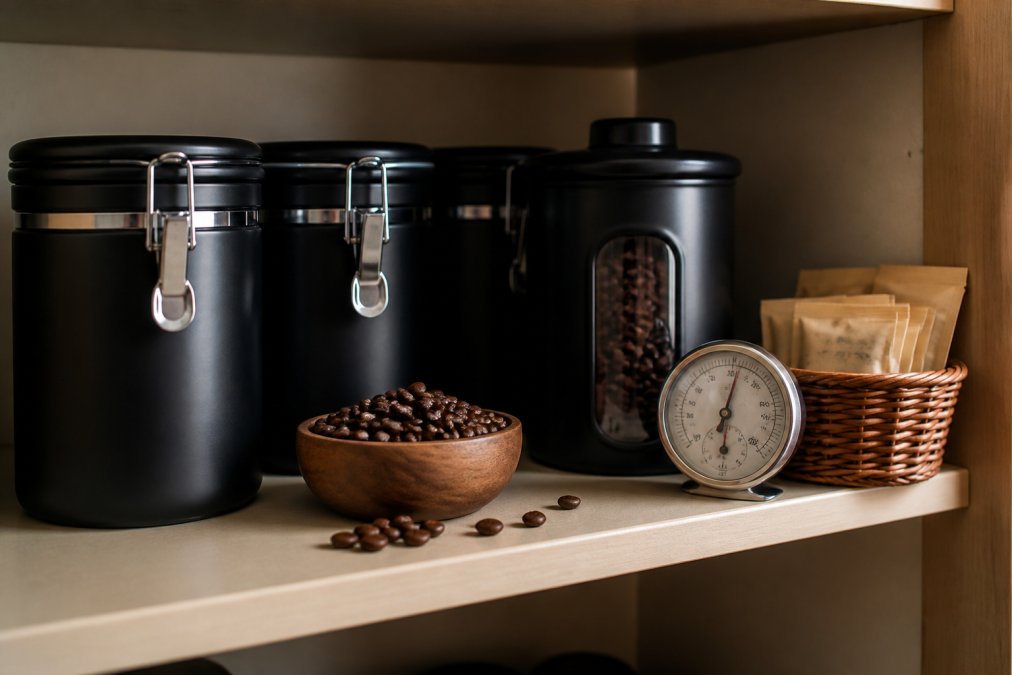
Pantry conditions and cool dark places
An ideal pantry is cool (60-70°F), dark, and dry, away from heat sources, moisture sources, and direct sunlight. Upper shelves are better than lower shelves, as heat rises and moisture accumulates near the floor. If your pantry doesn't meet these criteria, a cabinet in a bedroom or living room often works better. The key is consistency and avoiding locations with temperature swings or humidity spikes.
Whole Beans vs. Ground Coffee: Storage Differences
Whole beans have minimal surface area exposed to air. The dense interior of the bean is protected from oxidation. Properly stored whole beans stay fresh for 3-4 weeks after roasting.
Ground coffee has vastly more surface area. Every particle is exposed to oxygen, accelerating oxidation exponentially. Ground coffee begins to noticeably stale within 24-48 hours of grinding, even in an airtight container. This is why coffee professionals grind immediately before brewing.
If you're buying from Lux Brew Coffee Co. or any specialty roaster, request whole beans and grind at home. If you must buy pre-ground, use it within a week and store in the coldest part of your refrigerator (not the freezer).
How Long Do Coffee Beans Stay Fresh
The timeline for coffee freshness depends on roast date, storage conditions, and bean type.
Peak freshness window and roast date
Peak freshness typically occurs 5-14 days after roasting. During this window, degassing is complete, the flavor profile has fully developed, and oxidation hasn't yet caused noticeable degradation. After 14 days, flavor begins to decline, but the coffee is still excellent through day 30 if stored properly. By day 45, most drinkers notice a decline in aroma and complexity. By day 60, the coffee tastes noticeably stale.
Always check the roast date on your bag. A roaster that doesn't print the roast date isn't transparent about freshness. Lux Brew Coffee Co. clearly labels roast dates, allowing you to maximize your freshness window.
Signs of stale coffee and the staling process
Stale coffee exhibits several telltale signs. The aroma becomes muted, the flavor becomes flat and one-dimensional, lacking the brightness and complexity of fresh coffee. Acidity may taste sharp or unpleasant rather than balanced. The aftertaste is often bitter or ashy.
The staling process is oxidation. Oxygen breaks down the volatile compounds responsible for aroma and flavor. This process is slow at room temperature but accelerates with heat, light, and moisture.
Freezing Coffee Beans: Benefits and Best Practices
Freezing extends the freshness window significantly, but it must be done correctly to avoid damage.
When to freeze and how to avoid freezer burn
Freezing is ideal for beans you won't use within 4-6 weeks. The cold dramatically slows oxidation and extends peak freshness to 3-4 months. However, freezing introduces a new risk: condensation and freezer burn.
Freezer burn occurs when moisture on the bean's surface freezes, then sublimates in the dry freezer environment. To prevent freezer burn, beans must be sealed in a vacuum-sealed bag with no air pockets. Freeze beans in their original vacuum-sealed bag if possible. Freeze beans within the first week of receiving them, before they've begun to stale. Freezing doesn't restore freshness; it preserves current freshness.
Thawing without condensation damage
Removing frozen beans from the freezer and opening them immediately causes condensation. Thaw beans in their sealed bag at room temperature for 1-2 hours before opening. This allows the temperature to equalize without condensation forming on the beans. Never thaw beans in the refrigerator, as this prolongs the temperature gradient and increases condensation risk.
Once thawed, use the beans within 1-2 weeks. Don't refreeze. The freeze-thaw cycle damages bean structure, and repeated cycles compound the damage.
Storage Solutions for Different Roast Levels
Light roasts have less developed surface oils and denser bean structure. They're more resistant to oxidation and can be stored slightly longer than medium roasts, up to 5-6 weeks with proper storage.
Medium roasts are the standard, with moderate oil development and moderate oxidation resistance. The 4-5 week timeline applies here.
Dark roasts have significant surface oil development. The oils are more prone to oxidation, shortening the peak freshness window to 3-4 weeks. For all roasts, the storage method remains the same: airtight container, cool dark place, low humidity. If you're buying multiple roasts from Lux Brew Coffee Co., use dark roasts first and save light roasts for later in the month.
Common Storage Mistakes to Avoid
Storing beans in the original bag without sealing it is common and wrong. Once opened, the valve no longer functions. Transfer beans to an airtight container immediately.
Storing beans in clear containers on open shelves looks nice but accelerates degradation. Light exposure is constant, and temperature fluctuations are greater near windows. Grinding beans in advance destroys freshness. Ground coffee stales in hours, not days. Grind immediately before brewing.
Storing beans in the refrigerator is a common misconception. The refrigerator is humid and temperature fluctuates every time you open the door. Buying more beans than you can use in 4-6 weeks is a mistake unless you're freezing them. Storing beans near the coffee maker, oven, or other heat sources is surprisingly common. Heat is one of the three enemies of freshness.
Proper storage transforms how your coffee tastes. The difference between beans stored in a clear container on a sunny counter and beans stored in an opaque airtight container in a cool dark pantry is dramatic. Every element matters: the container type, the environment, the roast date, and the timeline for use.
When you invest in premium beans from Lux Brew Coffee Co., roasted to order and shipped fresh, the storage decision determines whether that investment pays off. Store them correctly, and you'll experience the full complexity of specialty-grade coffee. Store them carelessly, and even the best beans become ordinary.
Frequently Asked Questions
What is the best way to keep coffee beans fresh?
Store beans in an airtight container with a one-way valve in a cool, dark place away from heat, light, and moisture. Keep them at room temperature (around 65-75°F) and maintain humidity below 50%. Use opaque containers to block direct sunlight, which accelerates oxidation and degassing. Whole beans stay fresher longer than ground coffee. Check the roast date and consume within 2-4 weeks for peak freshness. Avoid temperature fluctuations and keep beans away from direct sunlight and heat sources like stovetops or windows.
How long do coffee beans stay fresh after roasting?
Whole beans typically stay fresh for 2-4 weeks after the roast date, with peak freshness occurring within the first 2 weeks. Ground coffee degrades faster, staying fresh for only 1-2 weeks due to increased surface area exposed to oxygen. The staling process accelerates when beans are exposed to heat, light, and moisture. Proper storage in an airtight container extends shelf life but doesn't stop the natural oxidation process. Always check the roast date on your bag, freshly roasted beans deliver superior flavor and aroma compared to older stock.
Should you freeze coffee beans to extend freshness?
Freezing can extend shelf life to 3-4 months when done correctly, but it's best reserved for long-term storage rather than regular use. Freeze beans in small portions in airtight, freezer-safe containers to prevent freezer burn and condensation damage. Thaw completely before opening to avoid thermal shock and moisture exposure. Once thawed, use beans within 1-2 weeks. Repeated freeze-thaw cycles damage the beans' volatile compounds and flavor profile. For regular consumption, room-temperature storage in an airtight container is preferable to maintain optimal taste and aroma.
Is it better to store coffee in the bag it came in or transfer it to a container?
Transfer beans to an opaque, airtight container for best results. While resealable bags with one-way valves offer convenience and allow carbon dioxide to escape during degassing, they provide less protection against light exposure and oxygen infiltration over time. Glass or ceramic canisters with airtight seals and opaque designs offer superior protection from light and moisture. If using the original bag, ensure it's stored upright in a dark cabinet away from heat sources. For premium, freshly roasted beans, investing in a quality storage container maximizes the investment in high-quality coffee.
This article was written using GrandRanker