

Table of Contents
- Single Origin vs Specialty Coffee Blends: Understanding the Core Differences
- Comparison Table: Single Origin vs Specialty Blends
- Flavor Profiles and Tasting Notes: What to Expect
- Geographical Sourcing, Terroir, and Consistency
- Coffee Brewing Methods: Optimization for Each Type
- Best Coffee for Espresso: Single Origin or Blend
- How to Choose Coffee Beans: A Practical Decision Framework
- Price, Freshness, and Supply Chain Transparency
Last Updated: July 31, 2026
Single Origin vs Specialty Coffee Blends: Understanding the Core Differences
Single origin coffees come from one specific geographical region, farm, or harvest. Specialty coffee blends combine beans from multiple origins to achieve a particular flavor profile or brewing characteristic. Single origins highlight terroir, the unique characteristics of soil, altitude, climate, and processing method in a specific place. Blends sacrifice that geographical expression to deliver balance, versatility, and year-round consistency. The right choice depends on your brewing ritual, flavor preferences, and whether you value exploration or reliability.
What Defines Single Origin Coffee
Single origin coffee is specialty-grade coffee sourced from one specific geographical region, often traceable to an individual farm, cooperative, or single harvest lot. This traceability connects you to actual farmers, their processing methods, and the environmental conditions that shaped the flavor.
Single origins showcase terroir in ways blends cannot. A Kenyan single origin might deliver bright citrus and floral notes, while a Brazilian single origin offers deeper chocolate and nutty characteristics. These differences reflect geography, altitude, and harvest timing. The trade-off is consistency. Because single origins depend on seasonal harvests, flavor profiles shift between batches. Pricing reflects this exclusivity, single origins typically cost more than blends because they come from smaller lots and demand transparency about their origin.
What Makes a Specialty Coffee Blend
A specialty coffee blend combines beans from two or more origins to create a consistent, balanced flavor profile designed for specific brewing methods or daily drinking. By combining beans from different regions, roasters achieve the same flavor profile year-round. A signature blend might use 40% Ethiopian beans for brightness, 35% Colombian beans for body, and 25% Brazilian beans for chocolate notes.
Blends dominate espresso applications because espresso machines demand specific characteristics, sweetness, body, and crema stability, that single origins sometimes struggle to deliver consistently. Single origins are typically light roasted to preserve their unique characteristics. Blends often receive medium roasts to develop balance and complexity across multiple bean types.
| Aspect | Single Origin | Specialty Blend |
|---|---|---|
| Source | One geographical region or farm | Multiple origins combined |
| Flavor Profile | Unique, seasonal, expressive of terroir | Consistent, balanced, designed for specific use |
| Traceability | High, often farm-level detail | Moderate, component origins may not be disclosed |
| Seasonal Variation | Significant, harvest timing affects taste | Minimal, roaster adjusts blend ratios |
| Typical Roast Level | Light to medium | Medium to medium-dark |
| Best Brewing Method | Pour-over, Aeropress, French press | Espresso, drip, milk-based drinks |
| Price Point | Higher, reflects exclusivity | Lower, economies of scale |
| Consistency | Variable between harvests | Reliable batch to batch |
Flavor Profiles and Tasting Notes: What to Expect
Single Origin Flavor Characteristics
Single origins express their geography through flavor. An Ethiopian Yirgacheffe delivers bright acidity with floral and fruity notes, jasmine, bergamot, sometimes blueberry. A Kenyan AA offers citrus and black currant complexity. A Colombian from Huila brings caramel sweetness with nutty undertones.
The processing method shapes the flavor profile dramatically. Washed coffees tend toward cleaner, brighter acidity. Natural process coffees develop deeper fruit notes and heavier body. Single origins demand attention and reward slow brewing methods that highlight their nuance.
Blend Flavor Characteristics
Blends prioritize balance over expression. A well-designed blend delivers sweetness, body, and complexity in proportions that appeal to a broad audience. You'll taste chocolate, caramel, and nuts more prominently than floral or citrus notes.
The beauty of blends is predictability. A signature blend tastes nearly identical whether you buy it in January or October. Blends also perform across brewing methods. If you're adding milk or sugar to your coffee, a blend will likely feel more complete and satisfying than a bright, acidic single origin.
Geographical Sourcing, Terroir, and Consistency
Terroir's Role in Single Origin Beans
Terroir, how geography shapes flavor, is the entire reason single origins exist. Altitude, soil composition, rainfall, temperature fluctuations, and sunlight all influence how coffee beans develop.
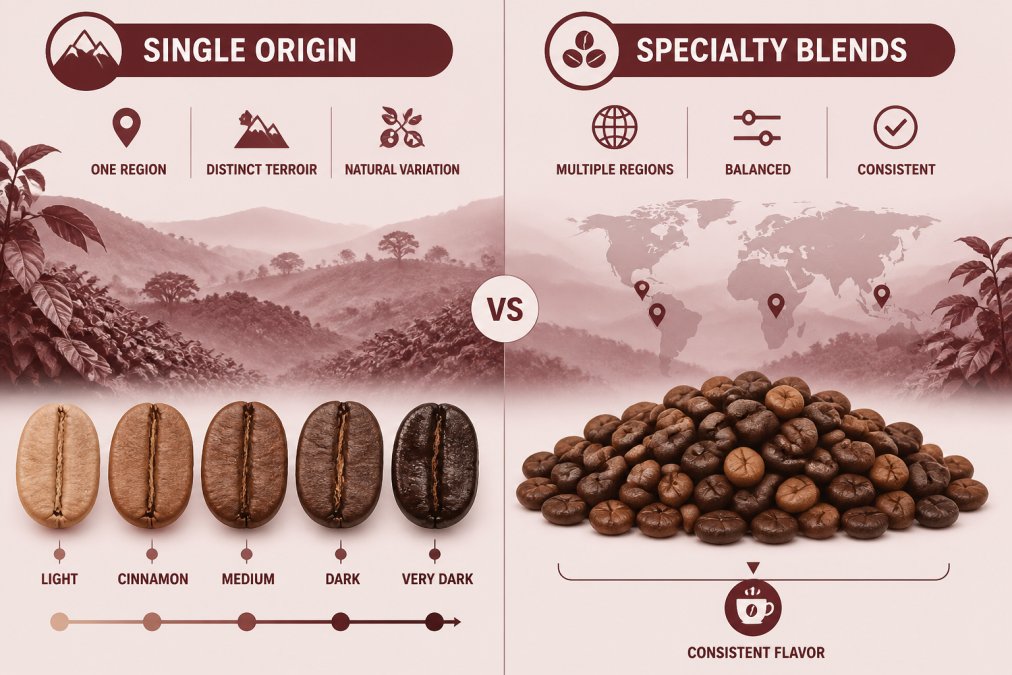
A coffee farm at 2,000 meters elevation produces beans with higher acidity and more delicate flavors than the same varietal grown at 1,200 meters. Soil type shifts flavor too. Volcanic soil, common in Central America and East Africa, produces bright, crisp coffees with mineral undertones. Red clay soils in Brazil tend toward chocolate and nutty profiles. Processing method amplifies terroir expression, a washed Ethiopian Yirgacheffe highlights the bean's natural acidity and floral character, while the same bean processed as natural develops deeper fermentation notes.
Balancing Consistency in Blends
Blends sacrifice terroir expression to deliver consistency. A roaster designing a signature blend must understand how each component bean behaves and adjust ratios seasonally to maintain the same flavor profile.
Consistency also enables espresso performance. Espresso machines are finicky, and a blend engineered for stability performs more predictably than a single origin that might shift between batches.
Coffee Brewing Methods: Optimization for Each Type
Brewing Single Origin for Maximum Nuance
Single origins demand technique. Pour-over methods, Chemex, V60, Kalita Wave, are ideal because they give you control over water temperature, pour rate, and extraction time. A bright Ethiopian Yirgacheffe might need water around 195-200°F to avoid over-extraction and bitterness.
Grind size affects extraction dramatically. For single origins, aim for medium-fine grind and adjust based on what you taste. Water quality matters more with single origins than blends, use filtered water with some mineral content, around 150 parts per million total dissolved solids.
Aeropress and French press also work well for single origins. Espresso machines struggle with many single origins because high pressure and rapid extraction can amplify acidity and create sour shots.
Brewing Blends Across Different Methods
Blends are forgiving and engineered to taste good across brewing methods. Espresso is where blends excel, delivering sweetness, crema stability, and balanced body. Drip machines and pour-overs work equally well with blends. French press brings out the blend's body and sweetness. Cold brew works with both, but blends tend toward better results because their strong, balanced profile holds up better to long steeping.
Best Coffee for Espresso: Single Origin or Blend
Blends win for espresso in most scenarios. They're engineered specifically for espresso machines, the roast level, bean selection, and ratios all optimize for high-pressure extraction and crema production.
Espresso machines demand consistency. A single origin that produces a balanced shot one day might pull sour or bitter the next. A blend, formulated to hit specific targets, performs more predictably. Espresso blends are typically medium roasted to develop sweetness and body. A light-roasted single origin in espresso often tastes thin, acidic, or sour because high pressure amplifies acidity.
Some naturally processed single origins with heavier body and chocolate-forward characteristics can work beautifully in espresso, but these are exceptions.
How to Choose Coffee Beans: A Practical Decision Framework
Choosing Based on Your Brewing Equipment
Your brewing method should drive your choice between single origin and blend. If you have an espresso machine, start with blends, they're engineered for espresso performance. If you have a pour-over setup, single origins shine because the brewing method highlights their nuance.
French press users can go either direction. Cold brew users should lean toward blends. Aeropress and Chemex are ideal for single origins because these methods give you precise control over extraction.
Choosing Based on Flavor Preferences
Do you prefer bright, acidic, floral, or fruity notes? Single origins deliver these characteristics more prominently. Ethiopian coffees offer jasmine and bergamot. Kenyan coffees offer citrus and black currant.
Do you prefer chocolate, caramel, nutty, or sweet notes? Blends typically emphasize these characteristics. If you add milk or sugar to your coffee, blends are usually more satisfying.
Choosing Based on Sustainability and Values
Traceability matters if ethical sourcing is important to you. Single origins offer more transparency because they come from specific farms or cooperatives. Blends obscure this traceability.
If sustainability and fair trade matter to you, ask roasters directly about their sourcing. Look for certifications like Fair Trade or Direct Trade. Single origins from roasters committed to transparency tend to offer more assurance about ethical practices.
Price, Freshness, and Supply Chain Transparency
Why Single Origins Command Premium Pricing
Single origins cost more because they come from smaller lots and require more careful sourcing. Seasonal availability drives scarcity pricing. Quality also justifies the premium, specialty-grade single origins are typically higher quality than the beans that go into blends.
Freshness and Roast-to-Order Advantages
Coffee begins oxidizing the moment it's roasted. Peak flavor lasts about two weeks. Most coffee sold in grocery stores is weeks or months old by the time you buy it. Roast-to-order models solve this problem by shipping beans within hours of roasting, guaranteeing peak freshness.
For filter brewing, fresher is almost always better. For espresso, most roasters recommend waiting 5-10 days after roasting before pulling shots.
Supply Chain Transparency and Ethical Sourcing
Transparency means knowing where your coffee comes from and how fairly farmers were compensated. Single origins enable transparency because they come from specific farms or cooperatives. Some roasters provide detailed information: the farmer's name, the farm's altitude, the processing method, and the price paid to the farmer.
If ethical sourcing matters to you, look for roasters who disclose the origin of their beans, mention Direct Trade or Fair Trade certifications, and emphasize long-term relationships with specific farms. Lux Brew Coffee Co.'s commitment to sourcing from ethical family farms reflects this philosophy, the goal is supporting the people growing the beans while delivering quality coffee to customers.
Choosing between single origin vs specialty coffee blends comes down to what you value: exploration or consistency, storytelling or reliability. Single origins reward the effort you put into brewing and appreciation for geography. Blends reward the convenience of knowing your coffee will taste good no matter which method you use.
The best approach is trying both. Lux Brew Coffee Co. offers distinct single-origin beans from ethical family farms around the globe, plus carefully crafted specialty blends designed for specific brewing methods. Whether you're exploring the bright acidity of an Ethiopian Yirgacheffe or the balanced sweetness of a signature espresso blend, roast-to-order freshness ensures you experience the coffee at its best. Start with what appeals to your palate, then expand from there.
Frequently Asked Questions
What is the main difference between single origin and specialty coffee blends?
Single origin coffee comes from one specific geographical region, farm, or cooperative, showcasing the unique terroir and flavor characteristics of that location. Specialty coffee blends combine beans from multiple origins to achieve a balanced, consistent flavor profile. Single origins emphasize uniqueness and nuance, while blends prioritize consistency and a harmonious palate. Both are specialty grade, but they serve different preferences and brewing methods.
Why is single origin coffee more expensive than blends?
Single origin coffees command higher prices due to smaller production lots, selective harvesting, traceability to specific farms, and seasonal availability. Roasters invest more in sourcing relationships and quality control for single origins. Blends, by combining multiple sources, allow roasters to maintain larger inventory and achieve economies of scale. Additionally, specialty grade single origins often come from award-winning farms with premium processing methods, adding to their cost.
Can I use single origin coffee for espresso, or should I stick with blends?
You can absolutely use single origin coffee for espresso, though blends are traditionally designed for this method. Single origins work best in espresso when they have sufficient body and balanced acidity. Light, high-acidity single origins may taste too bright in espresso. Blends are engineered to deliver sweetness, body, and crema consistency across espresso machines. For best results with single origin espresso, choose beans with notes of chocolate, caramel, or nuts rather than citrus or floral characteristics.
How does freshness affect the taste difference between single origin and blends?
Freshness dramatically impacts both types, but especially single origins. Since single origins highlight subtle terroir characteristics and delicate flavor notes, stale beans lose these nuances quickly. Freshly roasted single origins showcase bright, complex profiles that fade over time. Blends, designed for consistency and balance, maintain acceptable flavor longer but still benefit from freshness. Beans roasted to order and shipped within hours preserve the full spectrum of acidity, body, and aromatic complexity that define specialty grade coffee.
Should I start with single origin or blend coffee as a beginner?
Beginners often find blends more approachable because their balanced, consistent flavor profiles are forgiving and familiar. Blends work well across various brewing methods and pair nicely with milk or sugar. However, if you're interested in exploring coffee's complexity, starting with a lighter-roasted, approachable single origin, like those with chocolate or caramel notes, can be rewarding. Consider your brewing method and taste preferences. Pour-over enthusiasts may prefer single origins, while espresso drinkers typically benefit from blends initially.
This article was written using GrandRanker