

Table of Contents
- What Ethical Coffee Sourcing Actually Means
- Third-Party Coffee Certifications: What to Look For
- Fair Trade vs. Direct Trade Coffee: Which Delivers Real Impact
- How to Read Coffee Packaging Labels and Spot Greenwashing
- Best Ethically Sourced Coffee Brands 2026
- Verify Supply Chain Transparency and Post-Purchase
- Conclusion
Last Updated: August 26, 2026
What Ethical Coffee Sourcing Actually Means
Ethical coffee sourcing is the practice of purchasing coffee beans through supply chains that prioritize fair compensation for farmers, environmental stewardship, and transparent business practices. It goes beyond simply buying certified beans, it means actively verifying that the coffee you purchase genuinely supports the people and ecosystems involved in its production.
At Lux Brew Coffee Co., we've learned that many consumers assume any coffee labeled "ethical" or "sustainable" has been thoroughly vetted. The reality is more complicated. Marketing language often obscures what's actually happening in the supply chain. A bag might claim to support "family farms" without specifying wages, working conditions, or environmental practices. Understanding what ethical sourcing truly entails is your first step toward making purchases that align with your values.
The core components of ethical coffee sourcing include fair labor conditions, where farmers earn living wages and work in safe environments. Environmental stewardship means the farming practices protect biodiversity, reduce chemical inputs, and minimize carbon footprint. Supply chain transparency requires that companies openly document where beans originate, how they're processed, and what certifications or audits verify their claims. Without these three elements working together, "ethical" becomes marketing noise.
Third-Party Coffee Certifications: What to Look For
Third-party certifications exist because consumers need independent verification. A company's own promise means little. Certifications from respected organizations provide accountability that individual companies cannot offer alone.
Fair Trade Certified
Fair Trade certification focuses on ensuring farmers receive a guaranteed minimum price floor for their beans, regardless of commodity market fluctuations (fairtrade.net). This price protection is designed to prevent the economic volatility that devastates smallholder farmers when global coffee prices collapse.
Fair Trade-certified coffee also requires compliance with labor standards, prohibiting child labor and forced labor while mandating safe working conditions. The certification includes environmental criteria, though these are less stringent than some competing standards. Farmers working under Fair Trade agreements often participate in cooperative structures, giving them collective bargaining power.
When you see the Fair Trade logo on packaging, it signals that the coffee passed audits verifying these standards. However, Fair Trade doesn't guarantee the highest environmental practices or the most transparent supply chain. It's a solid baseline, but not the only meaningful certification available.
Rainforest Alliance and UTZ
Rainforest Alliance and UTZ (now merged under the Rainforest Alliance umbrella) emphasize environmental protection alongside social responsibility. These certifications require farms to maintain forest cover, protect water sources, and preserve biodiversity. The standards also address labor conditions and economic viability for farmers.
Rainforest Alliance certification appeals to companies prioritizing environmental impact. The standards require farms to implement specific conservation practices and undergo regular audits. UTZ, before the merger, focused heavily on traceability, the ability to track individual bags of coffee back to specific farms.
The strength of these certifications lies in their environmental rigor. The weakness is that environmental standards sometimes conflict with economic support for farmers. A farm might need to reduce chemical inputs faster than it can transition to alternative pest management, creating financial strain.
Organic and Specialty Grade Standards
Organic certification verifies that coffee was grown without synthetic pesticides or fertilizers. This matters for environmental health and for consumers concerned about chemical residues. Organic farming typically supports biodiversity better than conventional agriculture, though organic doesn't automatically mean ethical labor practices or fair pricing.
Specialty grade refers to coffee quality, not ethics. The Specialty Coffee Association grades beans on flavor, acidity, body, and other sensory attributes. Specialty-grade coffee must score 80 points or higher on a 100-point scale (sca.coffee). This designation tells you the coffee is high-quality, but it says nothing about how farmers were treated or compensated.
Many ethical coffee companies pursue both organic certification and specialty grading. The combination signals quality beans produced through environmentally responsible methods. However, organic certification alone doesn't guarantee fair wages or transparent sourcing.
Fair Trade vs. Direct Trade Coffee: Which Delivers Real Impact
Fair Trade and Direct Trade represent fundamentally different approaches to connecting coffee farmers with buyers, and understanding the difference matters when you're trying to verify ethical sourcing.
Fair Trade operates through established certification infrastructure. Farmers join cooperatives, meet standardized requirements, and receive certification from independent auditors. The Fair Trade organization sets a minimum price that buyers must pay, ensuring farmers have economic protection even when global commodity prices drop. This system works well for smallholder farmers who lack direct relationships with international buyers.
Direct Trade eliminates the middleman entirely. Roasters and coffee companies purchase directly from farms or farm groups, negotiating prices and terms without a certification body involved. Direct Trade relationships often result in higher prices for farmers because there's no certification markup or cooperative fee. The buyer and farmer build ongoing relationships, sometimes spanning years or decades.
The key tension: Fair Trade provides standardized protections and market access for farmers who couldn't otherwise reach international buyers. Direct Trade offers higher prices and more autonomy but requires farmers to have the business sophistication to negotiate directly with international companies. A small farm in a remote region might have no access to Direct Trade relationships but could thrive in a Fair Trade cooperative.
Neither system is inherently superior. Direct Trade often delivers more money to individual farmers, but Fair Trade reaches farmers who have no other pathway to premium markets. When you're evaluating a company's ethical claims, ask which model they use and why. A company using both Fair Trade and Direct Trade relationships shows they're matching their sourcing approach to different farmer situations.
How to Read Coffee Packaging Labels and Spot Greenwashing
Coffee packaging is where marketing language meets reality, and this is where most consumers get misled. Learning to read labels critically transforms you from a passive buyer into an informed one.
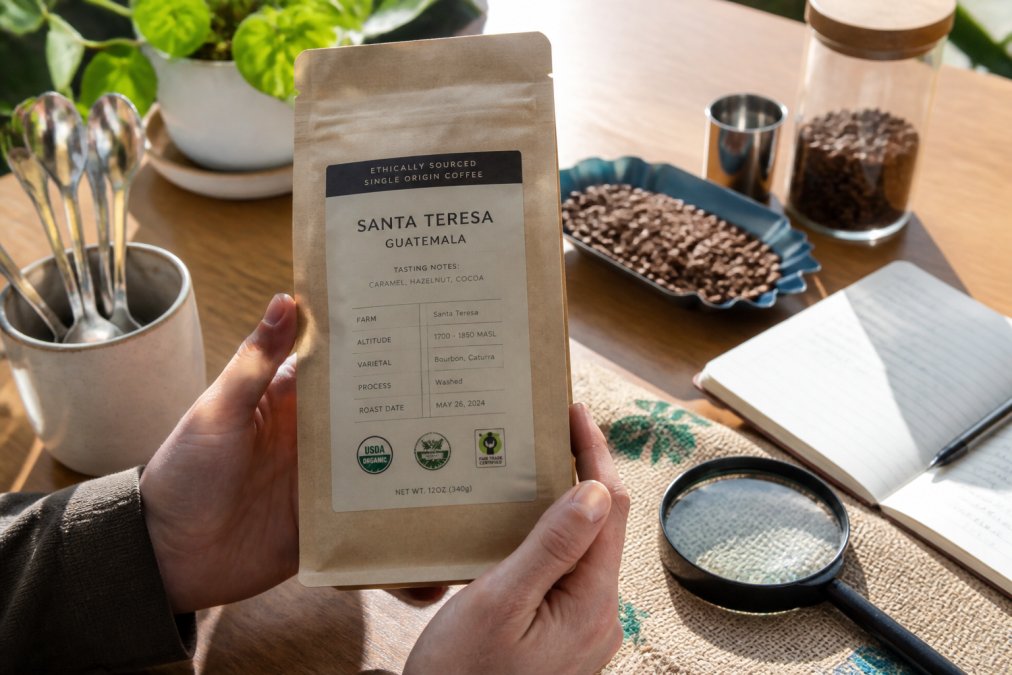
Start by looking for specific farm or cooperative names. Ethical coffee companies list the actual origin: not just "Colombia" but "San Juan Cooperative, Huila Department" or "Yirgacheffe region, Gedeo Zone." Vague geographic claims suggest the company doesn't have direct relationships with specific producers.
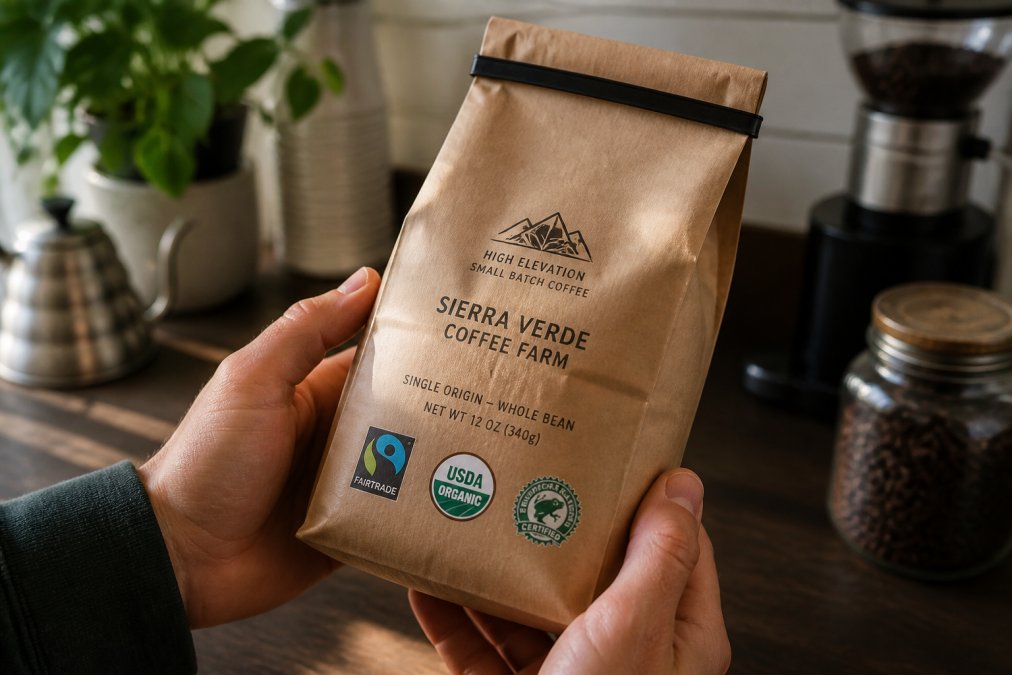
Next, check for third-party certifications. Look for logos from Fair Trade, Rainforest Alliance, organic certifiers, or Specialty Coffee Association. These logos indicate independent verification. A company claiming ethical sourcing without any third-party certification is asking you to trust their word alone.
Examine the altitude and processing method. High-altitude coffee (above 4,000 feet) typically requires more skilled farming and produces higher-quality beans (peer-reviewed research). Specific processing details like "natural fermentation" or "washed process" show the company understands coffee production well enough to specify these details.
Verified Claims vs. Marketing Buzzwords
Verified claims are specific, measurable, and backed by documentation:
- "Fair Trade Certified" (third-party verification exists)
- "Single-origin from [specific farm name]" (traceable to a specific location)
- "Roasted [date]" (verifiable through batch records)
- "Direct Trade with [named farm]" (can be investigated)
Marketing buzzwords sound good but lack substance:
- "Ethically sourced" (undefined and unverified)
- "Sustainably grown" (no standard definition)
- "Premium quality" (subjective and unverifiable)
- "Rainforest friendly" (not an official certification)
- "Small-batch" (marketing term, not a standard)
- "Artisan roasted" (everyone claims this)
The difference comes down to specificity and verifiability. A company willing to name the exact farm, provide certification numbers, and publish transparency reports is making verifiable claims. A company using vague positive language without specifics is using marketing.
The Greenwashing Checklist
Use this checklist when evaluating whether a coffee company's ethical claims are genuine or greenwashing:
- Does the packaging name specific farms or cooperatives, or just a country?
- Are there third-party certifications visible, or only the company's own claims?
- Can you find a transparency report on their website showing sourcing details?
- Do they publish the prices they pay farmers, or keep this information secret?
- Are environmental claims backed by specific practices (shade-grown, pesticide-free), or just buzzwords?
- Do they explain their supply chain, or keep it vague?
- Are there audit results or certification documents available for review?
- Do they acknowledge any limitations or challenges in their sourcing?
If more than two boxes are unchecked, the company is likely using greenwashing language. Genuine ethical sourcing operations are transparent because they have nothing to hide.
Best Ethically Sourced Coffee Brands 2026
When you're ready to purchase ethically sourced coffee, several companies demonstrate genuine commitment to the practices we've discussed. Lux Brew Coffee Co. stands out for its approach to verification and freshness. Every bag is roasted to order and shipped within hours of roasting, ensuring peak freshness. The company sources from ethical family farms globally. Because beans are roasted fresh for each order, you're getting coffee at its optimal flavor window while supporting farms through transparent, documented relationships.
Beyond Lux Brew Coffee Co., other brands worth considering include those that publish transparency reports naming specific farms and payment structures. Look for companies that distinguish between Fair Trade relationships and Direct Trade partnerships, showing they've matched their sourcing approach to different farmer situations. The best brands acknowledge that ethical sourcing is complex and evolving, rather than claiming to have solved it perfectly.
When comparing options, prioritize companies that allow you to trace your purchase back to a specific farm or cooperative. This traceability is the foundation of verification. If a company can't tell you where your coffee came from, they can't prove it was ethically sourced.
Verify Supply Chain Transparency and Post-Purchase
Verification doesn't end at purchase. The most sophisticated ethical coffee consumers actively check the claims companies make, using available tools and resources to confirm what they're being told.
Using Digital Verification Tools
Several platforms now allow consumers to verify coffee sourcing claims. Some certification organizations maintain searchable databases where you can enter a certification number and confirm a product's status. Fair Trade International's website includes a product directory where you can verify that specific coffee products are legitimately certified.
Blockchain-based traceability systems are emerging in specialty coffee. Some companies use technology that lets you scan a code on the bag and see the exact farm, farmer name, harvest date, and payment information. These systems are still developing, but they represent the future of verification.
When a company provides a batch number or lot code, use it. Contact the company and ask for documentation: farm location, farmer payment, certification details, audit results. Legitimate ethical coffee companies welcome these questions. Companies that deflect or refuse to provide documentation are signaling that their claims don't withstand scrutiny.
Checking Transparency Reports and Audit Results
The most transparent coffee companies publish annual reports detailing their sourcing. These reports typically include information about the number of farms they work with, average prices paid to farmers, environmental practices supported, and audit findings.
Look for reports that include both successes and challenges. A company claiming 100% perfect compliance is either not being honest or not doing complex enough work. Real supply chain transparency includes acknowledgment of problems discovered and steps taken to address them.
Third-party audit reports are the gold standard. If a company can share an audit from an independent organization confirming their claims, that's strong verification. Audits typically cover labor practices, environmental compliance, and payment documentation.
Ask the company directly: "Can you share your most recent third-party audit?" If they can, review it. If they can't or won't, that's a red flag. Genuine ethical sourcing operations have nothing to hide.
Verifying ethical coffee sourcing requires active engagement, but the process becomes easier with practice. Start by checking for specific farm names, third-party certifications, and published transparency reports. Move beyond marketing language to documented claims. When you find a company like Lux Brew Coffee Co. that roasts to order, publishes sourcing details, and ships fresh beans within hours, you're supporting farms while getting coffee at its peak. The effort to verify pays off in both the quality of what you're drinking and the confidence that your purchase genuinely supports ethical practices.
=== FAQ ANSWERS (audit these too, same rules) ===
[1] Q: What certifications should I look for to verify ethical coffee? A: Look for third-party certifications like Fair Trade Certified, Rainforest Alliance, UTZ, and USDA Organic. These certifications are audited by independent organizations and verify fair labor conditions, environmental stewardship, and sustainable agriculture. Check the coffee bag for the official certification logo and verify it on the certifying organization's website. Avoid bags with vague claims like 'ethically sourced' without a recognized certification backing it up.
[2] Q: What is the difference between Fair Trade and direct trade coffee? A: Fair Trade uses a standardized price floor set by certification bodies to ensure farmers earn a living wage, while direct trade involves roasters buying directly from farms at negotiated prices, often higher than Fair Trade minimums. Fair Trade provides broader accessibility and certification oversight; direct trade offers greater transparency and direct relationships but requires more research into individual roaster practices. Both aim to improve producer equity, though direct trade often emphasizes traceability and farm-to-cup relationships.
[3] Q: How can I tell if a coffee brand is truly transparent about its supply chain? A: Legitimate brands publish transparency reports naming specific farms, regions, and cooperatives they source from. Look for detailed information about farmer relationships, price paid per pound, and audit results. Check if the brand provides traceability data, such as lot numbers linking beans to specific farms. Digital verification tools and certification databases let you cross-reference claims. Brands hesitant to share specifics or using generic language like 'sourced responsibly' without details are likely greenwashing.
[4] Q: What is greenwashing in coffee sourcing, and how do I spot it? A: Greenwashing is marketing language that sounds ethical but lacks verification or audit backing. Red flags include vague terms like 'naturally sourced,' 'eco-friendly,' or 'sustainable' without certification; premium pricing without corresponding certifications; and lack of specific farm or cooperative names. Compare packaging claims against third-party certification databases. If a brand cannot provide transparency reports, audit results, or specific sourcing details, the ethical claims are likely unverified marketing.
[5] Q: Are there digital tools to verify a coffee company's ethical sourcing claims? A: Yes. The Fair Trade Certified directory and Rainforest Alliance database allow you to search brands and farms. Some roasters use blockchain or QR codes on bags linking to supply chain data. Request transparency reports directly from brands; legitimate companies provide detailed sourcing documentation. Cross-reference certifications on official certification websites. These digital tools help confirm whether claims are independently audited or marketing fiction.
[6] Q: What does 'specialty grade' mean in ethical coffee sourcing? A: Specialty grade refers to coffee scoring 80 points or higher on the Specialty Coffee Association's 100-point scale, indicating superior quality, traceability, and often ethical sourcing. Specialty-grade beans typically come from single-origin farms with documented agricultural practices. This classification often correlates with ethical sourcing because specialty roasters prioritize direct relationships with quality-conscious farmers who practice sustainable agriculture and fair labor conditions.
Frequently Asked Questions
Q: What certifications should I look for to verify ethical coffee?
A: Look for third-party certifications like Fair Trade Certified, Rainforest Alliance, UTZ, and USDA Organic. These certifications are audited by independent organizations and verify fair labor conditions, environmental stewardship, and sustainable agriculture. Check the coffee bag for the official certification logo and verify it on the certifying organization's website. Avoid bags with vague claims like 'ethically sourced' without a recognized certification backing it up.
Q: What is the difference between Fair Trade and direct trade coffee?
A: Fair Trade uses a standardized price floor set by certification bodies to ensure farmers earn a living wage, while direct trade involves roasters buying directly from farms at negotiated prices, often higher than Fair Trade minimums. Fair Trade provides broader accessibility and certification oversight; direct trade offers greater transparency and direct relationships but requires more research into individual roaster practices. Both aim to improve producer equity, though direct trade often emphasizes traceability and farm-to-cup relationships.
Q: How can I tell if a coffee brand is truly transparent about its supply chain?
A: Legitimate brands publish transparency reports naming specific farms, regions, and cooperatives they source from. Look for detailed information about farmer relationships, price paid per pound, and audit results. Check if the brand provides traceability data, such as lot numbers linking beans to specific farms. Digital verification tools and certification databases let you cross-reference claims. Brands hesitant to share specifics or using generic language like 'sourced responsibly' without details are likely greenwashing.
Q: What is greenwashing in coffee sourcing, and how do I spot it?
A: Greenwashing is marketing language that sounds ethical but lacks verification or audit backing. Red flags include vague terms like 'naturally sourced,' 'eco-friendly,' or 'sustainable' without certification; premium pricing without corresponding certifications; and lack of specific farm or cooperative names. Compare packaging claims against third-party certification databases. If a brand cannot provide transparency reports, audit results, or specific sourcing details, the ethical claims are likely unverified marketing.
Q: Are there digital tools to verify a coffee company's ethical sourcing claims?
A: Yes. The Fair Trade Certified directory and Rainforest Alliance database allow you to search brands and farms. Some roasters use blockchain or QR codes on bags linking to supply chain data. Request transparency reports directly from brands; legitimate companies provide detailed sourcing documentation. Cross-reference certifications on official certification websites. These digital tools help confirm whether claims are independently audited or marketing fiction.
Q: What does 'specialty grade' mean in ethical coffee sourcing?
A: Specialty grade refers to coffee scoring 80 points or higher on the Specialty Coffee Association's 100-point scale, indicating superior quality, traceability, and often ethical sourcing. Specialty-grade beans typically come from single-origin farms with documented agricultural practices. This classification often correlates with ethical sourcing because specialty roasters prioritize direct relationships with quality-conscious farmers who practice sustainable agriculture and fair labor conditions.
This article was written using GrandRanker