

Table of Contents
- What Ethical Coffee Sourcing Actually Means
- How Ethical Sourcing Improves Farmer Livelihoods
- Environmental Impact of Ethical Coffee Sourcing
- Fair Trade vs Direct Trade Coffee: What's the Difference
- How to Identify Ethical Coffee Labels and Avoid Greenwashing
- Best Ethically Sourced Coffee Brands in 2026
- The Real Cost: Understanding Coffee Pricing and Value
- Conclusion
Last Updated: August 19, 2026
What Ethical Coffee Sourcing Actually Means
Ethical coffee sourcing is the practice of purchasing coffee beans through supply chains that prioritize fair compensation for farmers, environmental stewardship, and transparent business practices. Coffee farmers in developing regions often receive a fraction of what consumers pay at retail while bearing the full risk of volatile global commodity prices. Ethical sourcing models, whether through fair trade certification, direct trade relationships, or cooperative partnerships, create mechanisms to close that gap by building pricing structures that reflect the true cost of production, including living wages and sustainable farming practices.
Lux Brew Coffee Co. approaches this through direct relationships with family farms, ensuring that every bag of specialty grade coffee directly supports the producers behind it. This model eliminates unnecessary intermediaries and creates transparency at every step, from harvest to roasting to your cup.
The three primary models for ethical coffee sourcing each take different approaches:
- Fair Trade Certification relies on third-party verification to ensure minimum price floors and labor standards
- Direct Trade establishes relationships between roasters and farms, often with higher premiums but less standardized oversight
- Cooperative Farming pools smallholder farmers to increase bargaining power and reduce individual risk
Understanding these distinctions matters because they shape what "ethical" actually means in practice. A certified fair trade coffee meets specific international standards. A direct trade coffee reflects a roaster's direct commitment to a specific farm. A cooperative model distributes benefits across a community of farmers.
How Ethical Sourcing Improves Farmer Livelihoods
Ethical coffee sourcing directly addresses the economic instability that has trapped coffee farmers in cycles of poverty for decades. When farmers receive fair compensation, they can invest in their operations, educate their children, and plan for the future instead of simply surviving season to season.
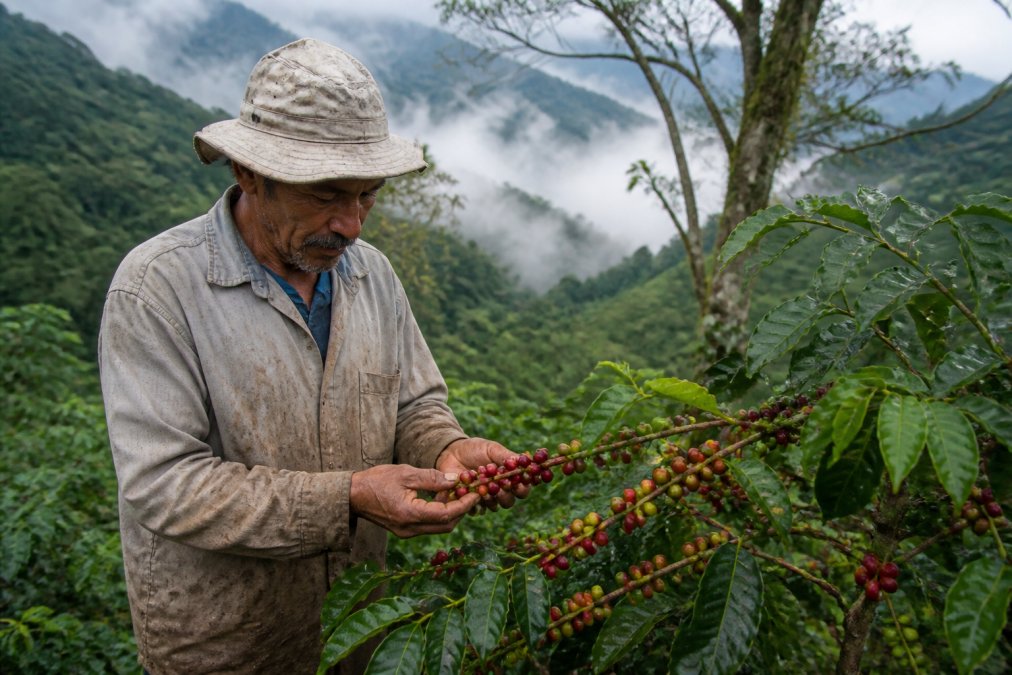
The conventional coffee market operates on a race-to-the-bottom pricing model where farmers are price-takers rather than price-setters. A farmer might spend months cultivating, harvesting, and processing coffee, only to receive payment based on commodity futures prices set in exchanges thousands of miles away.
Ethical sourcing breaks this cycle through guaranteed minimum prices and long-term purchasing commitments. When a roaster commits to buying coffee at a premium price year after year, farmers can make longer-term investments in processing equipment, soil conservation, or permanent staff. Living wages represent the most direct benefit, fair trade certification typically establishes price floors that account for the actual cost of living in coffee-producing regions, while direct trade relationships often exceed these minimums. A farmer earning a living wage can send children to secondary school, access healthcare, and reduce vulnerability to crop failure or price shocks.
Community development follows from individual farm stability. When farmers earn consistent, adequate income, they invest in their communities through improved schools, expanded healthcare access, and local infrastructure development.
Environmental Impact of Ethical Coffee Sourcing
Coffee farming covers approximately 27 million acres globally, making environmental practices on coffee farms consequential for biodiversity, water systems, and climate resilience. Ethical sourcing models prioritize farming methods that restore ecosystem health rather than deplete it.
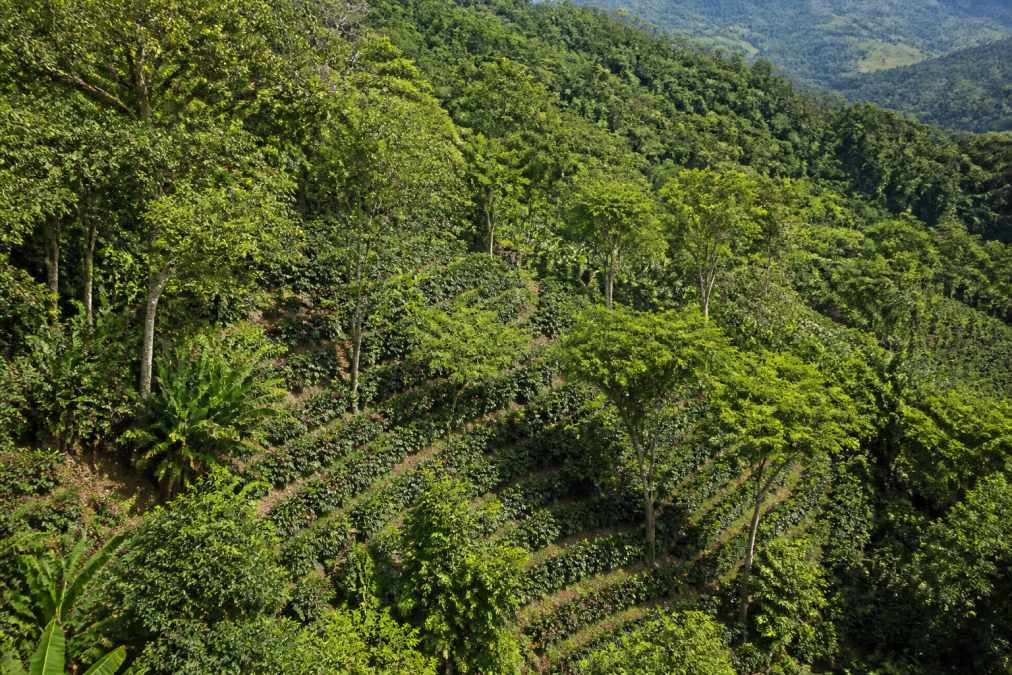
Conventional coffee farming often relies on monoculture, clearing native forest and managing farms with heavy pesticide and fertilizer inputs. This approach maximizes short-term yield but destroys the ecosystem services that make farming sustainable long-term. Soil degrades, water sources become contaminated, and biodiversity collapses.
Ethical sourcing emphasizes agroforestry, integrating shade trees, native vegetation, and coffee plants into a diverse farming system that mimics natural forest structure. Shade trees reduce temperature stress on coffee plants, improve soil health through leaf litter, prevent erosion, and create habitat for birds and insects that control pests naturally. The result is a farm that requires fewer external inputs, produces higher-quality coffee, and regenerates rather than degrades its environment.
Water conservation becomes possible through ethical farming practices. Diverse farms with healthy soil retain moisture better and filter rainwater more effectively. Shade trees and diverse vegetation store carbon in biomass, while healthy soil stores carbon in organic matter. A well-managed ethical coffee farm functions as a carbon sink rather than a source.
Fair Trade vs Direct Trade Coffee: What's the Difference
Fair trade and direct trade represent two different philosophical approaches to ethical sourcing, each with distinct advantages and tradeoffs.
Fair Trade Certification establishes standardized requirements enforced by third-party auditors. Fair trade-certified coffee must meet minimum price floors (typically $1.40-$1.60 per pound depending on bean type), labor standards, and environmental criteria. This standardization provides confidence that your purchase supports ethical practices. Fair trade's strength is consistency and scale, a consumer can buy fair trade coffee anywhere and know that basic ethical standards were met. However, the certification process costs money, which small farms sometimes struggle to afford, and standardized requirements don't account for local context.
Direct Trade Coffee skips the certification middleman. A roaster establishes a direct relationship with a specific farm and negotiates prices, terms, and practices directly. Direct trade typically results in higher prices for farmers, often $2-$4+ per pound, because the roaster captures the margin that would otherwise go to certification bodies and intermediaries. The roaster visits the farm, understands specific challenges, and builds a partnership based on mutual benefit. Quality often improves because the roaster has direct feedback loops with the farmer. However, direct trade requires significant roaster investment and doesn't scale as easily as fair trade certification.
| Attribute | Fair Trade | Direct Trade |
|---|---|---|
| Price to Farmer | $1.40-$1.60+ per pound | $2.00-$4.00+ per pound |
| Verification | Third-party audit | Roaster relationship |
| Scalability | High | Lower |
| Customization | Standardized | Farm-specific |
| Consumer Confidence | Certified standard | Roaster reputation |
| Relationship | Transactional | Partnership-based |
Many specialty roasters, including Lux Brew Coffee Co., use direct relationships with family farms to ensure both transparency and premium compensation, combining the personal accountability of direct trade with the farmer-focused values of fair trade.
How to Identify Ethical Coffee Labels and Avoid Greenwashing
The coffee market is crowded with claims about sustainability, fairness, and ethics. Not all of them are credible. Greenwashing occurs when companies use environmental or ethical language to appear responsible without backing those claims with meaningful action or transparent verification.
The most reliable ethical labels have specific, verifiable standards:
- Fair Trade Certified (Fair Trade USA, Fair Trade International) requires third-party audits, minimum price guarantees, and labor standards. Look for the official seal on packaging.
- Rainforest Alliance Certified focuses on environmental sustainability and worker welfare with annual audits.
- Organic Certification (USDA or equivalent) verifies that coffee was grown without synthetic pesticides or fertilizers.
- Bird Friendly Certification specifically verifies that shade-grown coffee provides habitat for migratory birds.
Beyond certifications, transparency is your best defense against greenwashing. Ethical roasters typically provide the specific farm or region where coffee originated, information about the farmer or cooperative, pricing breakdown showing what percentage reaches the farmer, details about farming practices, and direct relationship information.
Ask your coffee roaster: Where exactly did this coffee come from? What price did the farmer receive? What farming practices are used? Is there a certification? Have you visited the farm?
If a roaster can't or won't answer these questions, their ethical claims may not be substantive. Lux Brew Coffee Co. provides detailed sourcing information for every coffee, including the specific farms or cooperatives involved and the farming practices used, because transparency is foundational to ethical sourcing.
Best Ethically Sourced Coffee Brands in 2026
Several roasters have built their entire business models around ethical sourcing and transparency. Lux Brew Coffee Co. specializes in specialty grade coffee sourced directly from ethical family farms globally. Every batch is roasted to order and shipped within hours to ensure peak freshness. The roaster maintains direct relationships with farms, ensuring transparency about pricing and practices.
Intelligentsia Coffee pioneered the direct trade movement in specialty coffee, establishing long-term relationships with specific farms and paying premiums that reflect actual production costs. Counter Culture Coffee combines fair trade certification with direct relationships, creating a hybrid model that provides both third-party verification and personal partnership. Dripkit focuses on single-origin, ethically sourced beans with detailed farm information for every coffee. Blue Bottle Coffee maintains direct relationships with farms and emphasizes transparency about sourcing and pricing.
The common thread across these brands is transparency. They provide specific farm information, share pricing details, maintain long-term relationships, and often include educational content about their sourcing practices.
The Real Cost: Understanding Coffee Pricing and Value
Coffee pricing confuses many consumers because the price at retail bears little relationship to what farmers actually receive. In conventional coffee supply chains, the farmer receives 10-15% of the retail price, while exporters, importers, roasters, distributors, and retailers capture the remainder.
Ethical sourcing models restructure this. When a roaster works directly with farms, they eliminate intermediary markups, allowing more of the purchase price to reach the farmer. A direct trade coffee might allocate 40-50% of the retail price to the farmer. A fair trade coffee guarantees a minimum that typically represents 25-30% of retail price.
The quality difference also justifies premium pricing. Ethically sourced coffee, particularly specialty grade beans from farms using agroforestry and sustainable practices, is simply better coffee. The farming practices that support farmer livelihoods and environmental health also produce higher-quality beans with better flavor, more complexity, and greater consistency.
Freshness adds another dimension. Coffee is freshest within 2-4 weeks of roasting. Ethical roasters like Lux Brew Coffee Co., which roast to order and ship within hours, deliver coffee at peak flavor. When you purchase ethically sourced coffee at premium pricing, you're paying the actual cost of producing quality coffee sustainably.
Ethical coffee sourcing represents a fundamental shift in how coffee reaches your cup. It acknowledges that coffee farmers deserve fair compensation for their work, that ecosystems deserve protection, and that consumers deserve transparency about where their coffee comes from. Lux Brew Coffee Co. brings these principles into practice through direct farm relationships, specialty grade beans, and roasting-to-order freshness. When you choose ethically sourced coffee, you're investing in farmer livelihoods, supporting sustainable agriculture, and accessing coffee at its best.
Frequently Asked Questions
What does it mean for coffee to be ethically sourced?
Ethically sourced coffee comes from farms that prioritize fair wages for workers, sustainable agricultural practices, and supply chain transparency. It means the farmers who grew your beans received compensation that supports their families and communities, and the coffee was produced with environmental stewardship in mind. Ethical sourcing encompasses fair labor conditions, biodiversity preservation, and accountability throughout the entire supply chain from farm to cup.
How does fair trade vs direct trade coffee differ?
Fair trade certification guarantees minimum prices and labor standards through third-party verification by organizations like Fair Trade USA, though it may involve multiple intermediaries. Direct trade eliminates middlemen, roasters buy directly from farmers, often at premium prices negotiated personally. Direct trade typically offers greater transparency and higher farmer compensation, but requires roasters to invest in direct relationships. Both approaches aim to improve farmer livelihoods, but direct trade provides more control over pricing and relationship-building.
How can I identify truly ethical coffee labels and avoid greenwashing?
Look for third-party certifications like Fair Trade USA, Rainforest Alliance, or organic certification from the USDA. Check if the roaster provides specific information about origin, farmer names, and cooperative details, vague claims like 'ethically sourced' without specifics are red flags. Roasters practicing genuine ethical sourcing share supply chain transparency, including pricing breakdowns and direct relationships with producers. Research the brand's sourcing practices on their website and look for certifications that require independent auditing rather than self-certification.
Does ethical coffee sourcing really affect the taste of your coffee?
Yes, ethical sourcing often correlates with higher quality because it supports sustainable farming practices and proper crop management. Farmers receiving fair compensation invest in soil health, water conservation, and careful harvesting, all factors that improve bean quality. Additionally, ethical sourcing typically involves specialty-grade beans roasted fresh to preserve flavor complexity. The combination of sustainable agriculture, proper handling, and quality-focused roasting creates a noticeably richer, more nuanced cup compared to commodity-grade coffee.
This article was written using GrandRanker