

Table of Contents
- What Is Specialty Coffee vs. Grocery Coffee?
- Coffee Bean Quality Grades: How They're Rated
- Fresh Roasted Coffee Benefits: Why Roast Date Matters
- Ethical Coffee Sourcing and Supply Chain Transparency
- Coffee Flavor Profiles: Specialty's Distinct Advantage
- The Role of the Roaster: Why Craft Roasters Matter
- Price vs. Value: Is Specialty Coffee Worth the Cost?
- The Third Wave Coffee Movement and Home Brewing Compatibility
Specialty vs. Grocery Coffee: Key Differences Explained
Last Updated: July 26, 2026
Understanding the difference between specialty and grocery coffee fundamentally changes how you approach your daily brew. At Lux Brew Coffee Co., we've spent years sourcing and roasting coffee from ethical family farms around the world, and the gap between what you'll find on supermarket shelves and what specialty roasters offer is far more significant than most people realize. This guide breaks down exactly what separates these two categories, from bean quality and freshness to flavor complexity and sourcing transparency.
What Is Specialty Coffee vs. Grocery Coffee?
Specialty coffee refers to beans that score 80 points or higher on the Specialty Coffee Association (SCA) cupping scale, a standardized evaluation system that measures quality across multiple dimensions. Grocery coffee typically consists of commodity-grade beans that score below 80. The fundamental difference comes down to quality control, traceability, and intentionality. Specialty coffee roasters know exactly where their beans come from, often directly from individual farms or cooperatives, and select based on specific flavor profiles and quality metrics. Grocery coffee blends are typically composed of lower-grade beans sourced from commodity markets, where price and volume drive purchasing decisions rather than quality.
Coffee Bean Quality Grades: How They're Rated
Coffee beans are graded on the SCA's 100-point scale. Specialty Grade (80-100 points) beans have minimal defects, consistent size and color, and exceptional flavor complexity. Commercial Grade (below 80 points) beans may have visible defects, inconsistent sizing, or flavor flaws, and are often blended to mask individual quality issues.
Specialty roasters conduct cupping sessions, formal tastings where trained professionals evaluate beans blind, scoring them across 10 categories. This rigorous process ensures consistency. Grocery coffee producers rarely conduct formal cuppings; instead, they rely on basic quality checks and existing supplier relationships.
Fresh Roasted Coffee Benefits: Why Roast Date Matters
The roast date is perhaps the single most important factor separating specialty from grocery coffee in terms of actual drinking experience. Specialty roasters print the roast date directly on the bag. Grocery coffee often omits this entirely, making it impossible to know how long the beans have been sitting on shelves.
Coffee begins losing flavor immediately after roasting. After about two weeks, the coffee enters its peak flavor window, which typically lasts 2-4 weeks depending on storage conditions. Beyond that, oxidation accelerates and the coffee becomes stale. When you buy grocery coffee from a supermarket shelf, you have no way of knowing whether those beans were roasted last week or three months ago. Specialty roasters ship coffee within days of roasting; at Lux Brew Coffee Co., we roast to order and ship within hours, guaranteeing maximum freshness.
Degassing, Bloom, and Peak Flavor Window
When you first pour hot water over freshly roasted specialty coffee, you'll see vigorous blooming as CO2 escapes. This is a sign of freshness. Older coffee blooms much less noticeably because most of the gas has already escaped. During bloom, CO2 creates channels for water to flow through the coffee grounds. If the coffee is too old and has already degassed, water flows unevenly, resulting in under-extraction and flat flavor. Specialty coffee produces an impressive, fragrant bloom; older grocery coffee produces a thin, quiet bloom.
Storage and Shelf-Life Science
Specialty roasters use opaque, one-way valve bags that allow CO2 to escape while preventing oxygen from entering. This extends the flavor window significantly. Most grocery coffee is packaged in transparent bags or bags without one-way valves. Light accelerates oxidation, and without proper valve technology, oxygen continuously enters the bag.
Store your specialty coffee in an airtight container away from light, heat, and moisture. Under these conditions, specialty coffee maintains its peak flavor for 4-6 weeks post-roast. Grocery coffee typically tastes noticeably stale after 3-4 weeks because it started from a lower quality baseline and likely spent weeks in suboptimal storage before you purchased it.
Ethical Coffee Sourcing and Supply Chain Transparency
The difference between specialty and grocery coffee extends beyond flavor into ethics and sustainability. Specialty roasters typically maintain direct relationships with coffee farmers and cooperatives. Grocery coffee sourcing is opaque, with beans passing through multiple intermediaries before reaching the roaster. Individual farmers are disconnected from the final product, and pricing decisions are made based on global commodity markets rather than the actual cost of production.
Direct Trade vs. Fair Trade vs. Commodity Coffee
Direct Trade: Roasters buy directly from farmers or farmer cooperatives, often at prices significantly above commodity market rates. Direct trade coffee typically costs more but guarantees that farmers receive premium compensation. Lux Brew Coffee Co. sources from ethical family farms using direct relationships, ensuring transparency and fair pricing throughout the supply chain.
Fair Trade: Third-party certification ensures that farmers receive a minimum price floor and that production meets environmental and social standards. Fair trade is more accessible than direct trade but involves certification costs and less direct farmer-roaster contact.
Commodity Coffee: Beans are bought and sold on global markets at prices determined by supply and demand. Individual farmers have no direct relationship with buyers. Prices can drop below production costs, forcing farmers into poverty. Most grocery coffee falls into this category.
According to Fair Trade USA's 2026 Impact Report, direct trade and fair trade models generate significantly higher incomes for farming families compared to commodity coffee.
Coffee Flavor Profiles: Specialty's Distinct Advantage
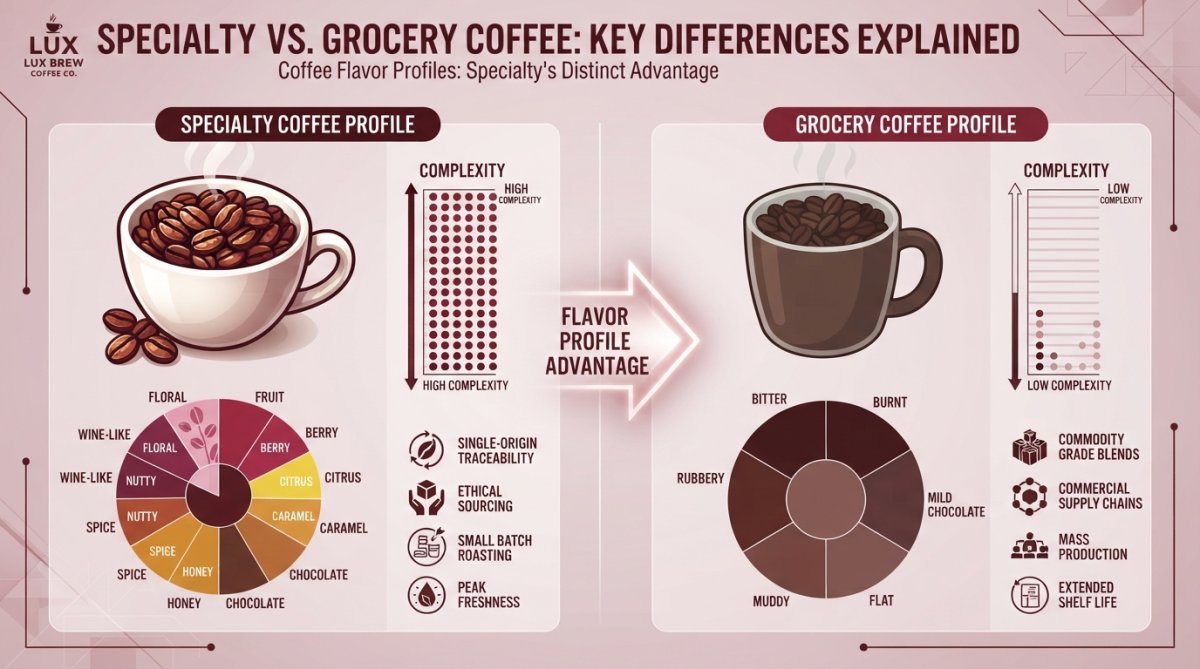
Specialty coffee offers flavor complexity that grocery coffee cannot match. When you brew specialty coffee, you taste distinct flavor notes, perhaps berry, chocolate, citrus, or floral undertones depending on the origin and roast level. Grocery coffee tastes generic: vaguely bitter, one-dimensional, often unpleasant. Specialty coffee starts with superior raw material. Defective beans, which are common in commodity coffee, contribute off-flavors that mask the coffee's inherent characteristics. Specialty roasters remove defects before roasting and roast with precision to highlight each bean's unique qualities.
Single-Origin vs. Blends and Acidity, Body, and Aroma
Single-origin specialty coffee comes from one specific farm or region, allowing consumers to experience terroir, the environmental factors that influence flavor. Ethiopian coffee tastes distinctly different from Colombian coffee because of altitude, climate, soil, and processing methods. Specialty roasters celebrate these differences; grocery coffee blends them away.
Acidity in coffee terminology refers to brightness and complexity, not sourness. High-quality specialty coffee exhibits pleasant acidity that makes the cup feel alive. Body describes how the coffee feels in your mouth, light, medium, or full. Specialty roasters intentionally develop body through roast level and bean selection. Aroma is the first signal of coffee quality. Specialty coffee has a rich, nuanced aroma; grocery coffee smells generic.
The Role of the Roaster: Why Craft Roasters Matter
Specialty coffee doesn't exist without skilled roasters. Craft roasters spend years developing roasting profiles and understanding how different bean densities, moisture levels, and origins respond to heat. They can roast the same origin at different levels to highlight different flavor notes. Grocery coffee roasters prioritize volume and consistency, using standardized roasting profiles applied to large batches of mixed beans. Achieving consistency with lower-quality beans requires roasting them darker, which masks defects but also masks positive flavor characteristics.
At Lux Brew Coffee Co., every batch is roasted with intention. We roast to order specifically because freshness matters more than inventory convenience.
Price vs. Value: Is Specialty Coffee Worth the Cost?
Specialty coffee costs more than grocery coffee, typically $15-20 for 12 ounces versus $6-13 for grocery coffee. However, a 12-ounce bag of specialty coffee makes roughly 15-20 cups, working out to roughly $0.90-1.20 per cup, compared to $0.50-0.67 for grocery coffee. The difference is less than $1 per cup for dramatically better flavor and the assurance that farmers were fairly compensated.
Beyond flavor, specialty coffee offers transparency and traceability that grocery coffee cannot match. You know exactly where your beans came from, when they were roasted, and how they were processed. For daily personal consumption, specialty coffee delivers better value despite higher per-bag cost.
The Third Wave Coffee Movement and Home Brewing Compatibility
The "third wave" refers to the modern specialty coffee movement that emerged in the early 2000s, emphasizing transparency, quality, and the artisanal craft of coffee production. Third wave roasters focus on single-origin beans, light-to-medium roasts that showcase origin flavors, and direct relationships with farmers. They publish cupping scores, roast dates, and farm information. This movement made specialty coffee accessible to home brewers, allowing you to order freshly roasted specialty beans online and brew them at home using relatively simple equipment.
Home Brewing Equipment Compatibility
Specialty coffee tastes better with better brewing equipment, but even basic methods produce noticeably superior results compared to grocery coffee. A basic pour-over cone costs $10-20 and produces excellent specialty coffee. A French press costs similar amounts. An AeroPress runs $30-40. Even a standard drip coffee maker will produce better coffee with specialty beans than with grocery coffee.
The key is using fresh water, measuring beans by weight rather than volume, and brewing at the right temperature (195-205°F). Specialty coffee roasters typically recommend specific brewing methods on their packaging, having tested their beans with different methods to guide you toward optimal results.
The difference between specialty and grocery coffee extends from the farm to your cup. Specialty coffee begins with superior beans, involves intentional roasting, guarantees freshness, and supports fair farmer compensation. The flavor difference is immediate and dramatic. At Lux Brew Coffee Co., we roast every batch to order and ship within hours to ensure you experience coffee at its peak. Our specialty-grade beans are sourced directly from ethical family farms, roasted with precision, and backed by complete transparency about origin and quality. Start with a single bag and taste the difference that freshness and quality make.
Frequently Asked Questions
What makes coffee 'specialty' according to SCA standards?
Specialty coffee is defined by the Specialty Coffee Association as coffee that scores 80 points or higher on a 100-point cupping scale. This rating reflects exceptional quality across multiple dimensions: origin, processing, flavor complexity, aroma, acidity, and body. In contrast, commodity coffee (grocery store brands) typically scores below 80 and often lacks traceability to specific origins. Specialty roasters focus on single-origin beans or carefully crafted blends that highlight distinct flavor profiles, while commercial coffee prioritizes consistency and volume over nuance.
How much fresher is roasted-to-order specialty coffee compared to grocery store coffee?
Roasted-to-order specialty coffee is typically roasted within days of shipment, whereas grocery store coffee may have been roasted weeks or even months before purchase. Freshness matters because coffee begins to lose flavor compounds through oxidation immediately after roasting. Peak flavor window for specialty coffee is usually 2-4 weeks post-roast. Grocery store coffee often sits in warehouses and on shelves, causing it to taste flat or stale. Shipping specialty coffee within hours of roasting, as some roasters do, ensures you receive beans at their optimal flavor point, directly impacting taste quality in your morning cup.
Why is ethical coffee sourcing important, and how do specialty roasters verify it?
Ethical sourcing ensures fair wages and sustainable practices for coffee farmers, many of whom work on family farms in developing countries. Specialty roasters often use direct trade or fair trade certification to verify ethical practices and maintain transparency in the supply chain. Grocery store coffee typically relies on commodity supply chains where origin and farming practices are often unknown. Specialty roasters publish detailed sourcing information, including farm names, regions, and processing methods. This transparency allows you to support family farms directly and understand exactly where your coffee comes from, something mass-produced commercial coffee cannot offer.
Will I actually taste the difference between specialty and grocery coffee, or do I need an expensive espresso machine?
Yes, you'll notice a difference with any brewing method, no expensive equipment required. Specialty coffee's distinct flavor profiles (fruity, floral, chocolatey notes) are evident in French press, pour-over, or standard drip machines. The difference comes from superior bean quality, proper roasting, and freshness, not the equipment. Grocery store coffee tastes flat or one-dimensional because it lacks the complexity of single-origin beans and has degraded during storage. Even casual coffee drinkers can detect the difference: specialty coffee has more aroma, cleaner taste, and subtle flavor notes, while grocery coffee tastes generic. Start with any brewing method you already own to experience the improvement firsthand.
This article was written using GrandRanker