

Table of Contents
- What Is Sustainable Coffee Farming?
- Shade-Grown Coffee vs Sun-Grown: Key Differences
- Core Practices That Define Sustainable Coffee Farming
- Benefits of Sustainable Coffee Farming
- Best Ethically Sourced Coffee Brands in 2026
- How to Verify Sustainable Coffee: Certifications and Standards
- The Economics of Sustainable Coffee for Smallholder Farmers
- Conclusion
Last Updated: August 18, 2026
What Is Sustainable Coffee Farming?
Sustainable coffee farming balances productivity with environmental stewardship, economic viability, and social responsibility. Rather than maximizing short-term yields through intensive monoculture and chemical inputs, it integrates ecological principles, farmer welfare, and long-term land health into production.
Sustainable coffee farming recognizes that coffee quality and environmental health are interconnected. The best coffee grows in biodiverse ecosystems where soil remains fertile, water cycles remain intact, and the land can support farming indefinitely without degradation. This contrasts sharply with industrial coffee production, which depletes soil, concentrates pesticide use, and creates economic pressure that forces farmers into unsustainable cycles.
Lux Brew Coffee Co. sources exclusively from farms practicing sustainable methods because these practices directly correlate with superior flavor complexity and consistency. When farmers invest in soil health and biodiversity, coffee plants develop more nuanced flavor profiles.
Sustainable coffee farming encompasses multiple interconnected practices: shade-grown cultivation, water conservation, soil management, biodiversity protection, and fair compensation structures. These aren't separate initiatives but an integrated system where each practice reinforces the others. A farm using agroforestry naturally improves soil health while creating habitat for beneficial insects that reduce pest pressure, which means less chemical input is needed and water quality is protected downstream.
The economic dimension matters equally. Sustainable practices often require higher upfront investment than conventional monoculture. Farmers need assurance that buyers will pay premiums reflecting this extra effort. Without reliable market demand and fair pricing, farmers revert to cheaper, more extractive methods.
Shade-Grown Coffee vs Sun-Grown: Key Differences
The choice between shade-grown and sun-grown coffee represents one of the most consequential decisions in sustainable coffee farming.
Sun-grown coffee maximizes yield per acre by removing all shade trees and planting coffee in full sunlight. This requires intensive chemical inputs: synthetic fertilizers to replace nutrients that would naturally cycle through a diverse ecosystem, and pesticides to manage pests. Soil degrades faster without organic matter from fallen leaves. Water runoff increases, carrying chemicals into waterways. The monoculture creates a biological desert.
Shade-grown coffee maintains a canopy of native or planted trees above the coffee plants, mimicking the natural forest understory where coffee evolved. The shade trees regulate soil temperature and moisture, reduce erosion, add organic matter through leaf litter, and create habitat for birds and insects that naturally control coffee pests. Shade-grown farms typically produce lower yields per acre but require far fewer chemical inputs.
The environmental difference is measurable. Research from Smithsonian Migratory Bird Center studies on coffee agroforestry has documented that shade-grown coffee farms can harbor bird species populations comparable to natural forests, while sun-grown farms support minimal avian diversity. This biodiversity provides ecosystem services: pollination, pest control, and nutrient cycling that reduce the need for external inputs.
For coffee quality, shade-grown cultivation typically produces more complex, nuanced flavors. The slower maturation under partial shade allows sugars and acids to develop more fully. The organic matter in shade-grown soil creates conditions where coffee plants develop deeper root systems, accessing more diverse mineral compounds that express themselves in the cup.
The trade-off is real: shade-grown farms produce less coffee per acre, which means higher production costs and premium prices. For consumers and roasters committed to sustainability, this premium reflects the true cost of production that doesn't externalize environmental damage.
Core Practices That Define Sustainable Coffee Farming
Sustainable coffee farming practices operate as an integrated system rather than isolated techniques, creating resilience and long-term viability.
Agroforestry and Biodiversity
Agroforestry is the deliberate integration of trees with coffee cultivation. Rather than removing all forest vegetation, farmers plant or preserve a diverse canopy of native and introduced species above and around coffee plants, creating a multi-layered ecosystem that functions like a natural forest.
A diverse canopy means diverse root systems at different soil depths, which improves water infiltration and reduces erosion. Different tree species contribute different nutrients through their leaf litter, creating a more complete nutrient cycle. Nitrogen-fixing trees like legumes reduce the need for synthetic nitrogen fertilizers. This approach also provides farmers with diversified income: shade trees can produce fruit, nuts, timber, or firewood, reducing financial risk if coffee prices drop.
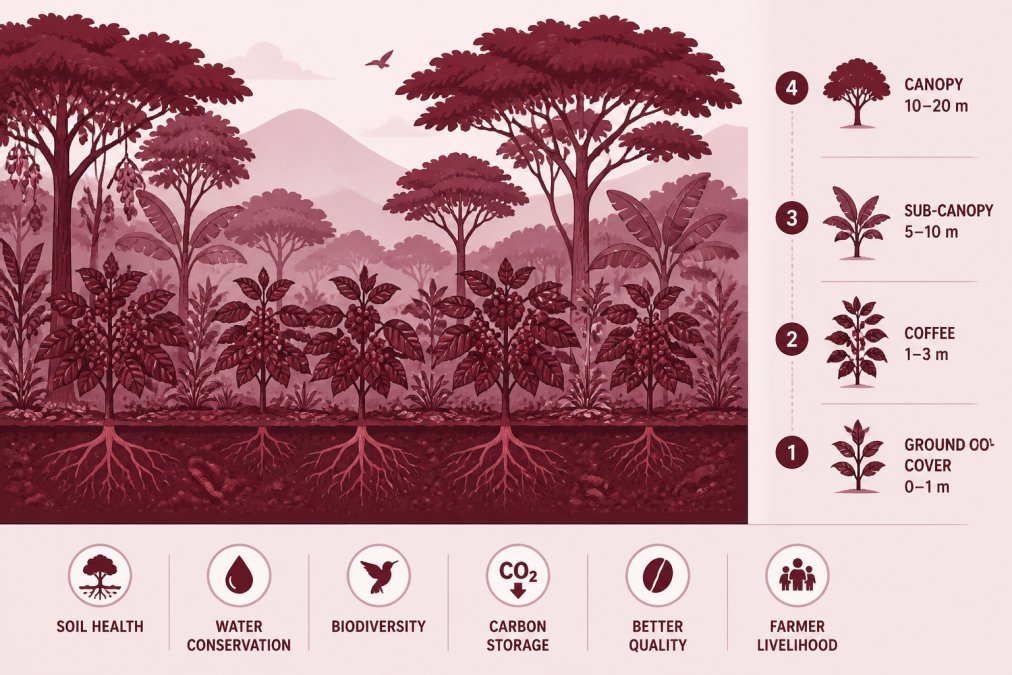
Native species are generally preferable because they support local wildlife and require less management. However, some introduced species like Inga trees (nitrogen-fixing legumes) have proven highly effective in coffee agroforestry systems across Central and South America. Biodiversity protection extends beyond the farm boundary, sustainable coffee farms often serve as wildlife corridors, connecting fragmented forest patches and providing crucial connectivity for migratory birds, insects, and mammals.
Water Conservation and Soil Health
Coffee is a water-intensive crop, and in many growing regions, water scarcity represents a genuine constraint. Sustainable coffee farming practices minimize water consumption while protecting water quality.
Soil health is foundational to water management. Healthy soil with high organic matter content absorbs and retains water more effectively than degraded soil. Sustainable practices build soil organic matter through composting, mulching, and reduced tillage, creating soil that functions like a sponge, capturing rainfall and making it available to plants over longer periods.
Specific water conservation techniques include drip irrigation systems that deliver water directly to plant roots with minimal evaporative loss, rainwater harvesting in ponds or cisterns, mulching around coffee plants, and contour farming on hillsides to slow water movement and reduce erosion. Water quality protection involves minimizing chemical use and implementing buffer zones of vegetation between cultivated areas and water sources to trap sediment and chemicals before they reach streams and rivers.
Post-Harvest Processing Sustainability
Post-harvest processing represents a significant environmental impact that receives less attention than farming practices. Traditional wet processing methods can use 40 or more liters of water per kilogram of coffee produced, creating contaminated wastewater requiring treatment.
Sustainable processing innovations include water-efficient methods like honey processing (removing fruit flesh but leaving some sticky mucilage on the bean during drying) and natural/dry processing (drying fruit intact on the bean), which use 80-90% less water than traditional wet processing. Controlled fermentation improves flavor development while reducing processing time and water pollution. Energy use is increasingly addressed through renewable sources like solar drying and solar panels powering equipment.
Waste management creates opportunities for circular economy approaches. Dried fruit pulp can be composted and returned to farms as fertilizer, closing the nutrient loop. Some processors have developed animal feed products from processing byproducts, transforming waste into a revenue stream while reducing the need for external inputs.
Benefits of Sustainable Coffee Farming
The case for sustainable coffee farming rests on three pillars: environmental regeneration, economic viability for farmers, and superior product quality.
Environmental benefits are measurable and substantial. Shade-grown, biodiverse coffee farms support wildlife populations comparable to natural forests. Soil health improves over time rather than degrading. Water cycles remain intact, with less pollution and better infiltration. Carbon sequestration in trees and soil helps mitigate climate change. These farms create ecosystem services, pollination, pest control, water filtration, climate regulation, that would cost enormous sums to replicate through technology.
For farmers, sustainable practices can improve long-term profitability despite higher upfront costs. Reduced chemical inputs lower operational expenses. Diversified income from shade trees and secondary products reduces financial risk. Most importantly, sustainable practices build reputation and access to premium markets. Buyers seeking ethical sourcing and environmental responsibility pay significant premiums for certified sustainable coffee, creating genuine economic incentive for sustainable practices.
For consumers and specialty roasters, the benefits include superior flavor complexity, consistency, and the assurance that their purchase supports farmers and protects ecosystems.
Best Ethically Sourced Coffee Brands in 2026
The specialty coffee market includes numerous brands emphasizing ethical sourcing and sustainability. Evaluating these claims requires understanding what certifications mean and what practices actually drive positive outcomes.
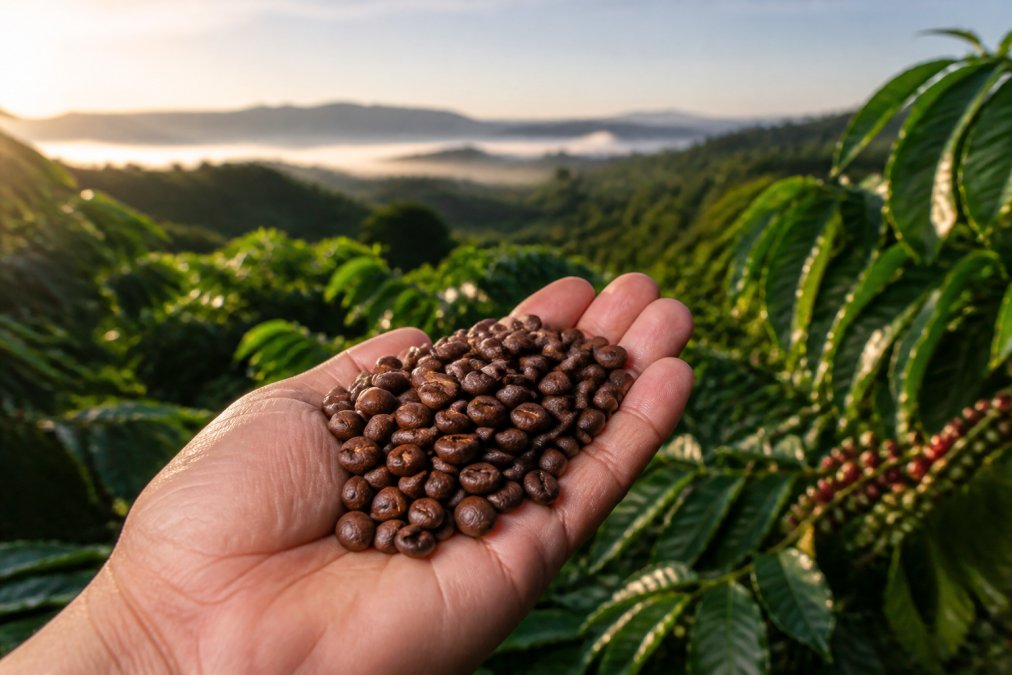
Lux Brew Coffee Co. stands out for its commitment to direct relationships with ethical family farms and its guarantee of freshness through roasting to order. Lux Brew maintains direct partnerships with specific farms, enabling transparency about farming practices and fair compensation. The roasting-to-order model means beans ship within hours of roasting, ensuring peak freshness that amplifies the complexity developed through sustainable farming.
Other established brands emphasize Fair Trade or Rainforest Alliance certifications. Fair Trade certification ensures farmers receive minimum prices above commodity market rates. Rainforest Alliance certification verifies environmental and social standards. Both provide meaningful assurance, though they represent minimum standards rather than best practices.
Direct-trade models, where roasters work directly with farmers or farmer cooperatives, often provide better outcomes than certification-dependent models. Direct relationships enable higher prices, longer-term commitments, and transparency about specific farms and practices.
When evaluating ethical sourcing claims, look for specificity. Brands that name specific farms or regions, explain their sourcing relationships, and provide transparency about pricing and practices are more credible than those making vague ethical claims.
How to Verify Sustainable Coffee: Certifications and Standards
Multiple certification systems exist to verify sustainable coffee farming practices.
Fair Trade Certification focuses primarily on economic equity, guaranteeing farmers received a minimum price plus a premium for certified coffee. Fair Trade also verifies labor practices, prohibiting child labor and unsafe working conditions. However, Fair Trade certification doesn't necessarily require environmental sustainability practices.
Rainforest Alliance Certification emphasizes environmental protection and social responsibility. Certified farms must implement practices protecting biodiversity, soil health, and water quality, and must provide fair wages and safe working conditions.
Organic Certification verifies that coffee was grown without synthetic pesticides or fertilizers. Organic certification ensures chemical-free production but doesn't necessarily require biodiversity protection or agroforestry.
Specialty Coffee Association (SCA) Grading focuses on cup quality rather than farming practices, but quality and sustainability are correlated. SCA specialty-grade coffee (85+ points) typically comes from farms using sustainable practices because environmental conditions that produce complex flavors require biodiversity and soil health.
Direct-Trade Verification isn't a formal certification but rather a sourcing model where roasters work directly with farmers. Direct trade often provides better farmer compensation and transparency than certification-dependent models, but it lacks third-party verification.
Certifications provide useful assurance, but they work best in combination. The most meaningful verification comes from transparency: roasters that name specific farms, explain their relationships, and provide detailed information about practices and pricing.
The Economics of Sustainable Coffee for Smallholder Farmers
For sustainable practices to persist, they must be economically viable for farmers, particularly smallholders who produce the majority of global coffee.
Sustainable farming requires higher upfront investment than conventional monoculture. Establishing shade trees takes years before they provide benefits. Building soil health through composting and reduced chemical use requires labor investment. For smallholder farmers operating on thin margins, these investments are difficult without external support or assurance of premium markets.
The economic model that makes sustainable practices viable relies on price premiums. Specialty coffee buyers willing to pay significantly more than commodity prices enable farmers to invest in sustainability. Fair Trade minimum prices provide a floor, but direct-trade relationships and specialty certifications can yield even higher premiums. When roasters pay $4-6 per pound for specialty sustainable coffee rather than commodity prices around $1.50-2.00, farmers can afford to invest in long-term sustainability.
However, price premiums alone aren't sufficient. Farmers also need technical support to implement new practices, access to quality inputs, and stable market relationships. The most successful sustainable coffee models combine direct relationships between roasters and farmers, long-term purchasing commitments, technical assistance, fair pricing that exceeds commodity rates, and farmer participation in decision-making.
For smallholder farmers, sustainable practices also provide resilience benefits. Diversified income from shade trees, reduced chemical costs, and improved soil health create more stable livelihoods than monoculture dependent on commodity prices and chemical inputs.
The most direct path to supporting sustainable coffee farming is purchasing from roasters committed to transparency and farmer relationships. Lux Brew Coffee Co. exemplifies this commitment through direct partnerships with ethical family farms and the guarantee of freshness through roasting to order. When you choose specialty coffee sourced with attention to farming practices and farmer welfare, you're supporting a system that regenerates soil, protects ecosystems, and sustains farmer livelihoods. The complexity and quality in your cup reflects the health of the land that produced it.
Frequently Asked Questions
What are some examples of sustainable farming practices in coffee production?
Sustainable coffee farming practices include agroforestry (growing coffee under native shade trees), water-efficient drip irrigation, mulching to retain soil moisture, crop diversification to reduce pest pressure, and composting to build soil health. Post-harvest processing also matters: natural and pulped-natural methods use less water than traditional washed processing. Regenerative approaches go further by actively restoring soil carbon and habitat. These practices work together to reduce the farm's environmental footprint while maintaining or improving yields.
How do sustainable farming practices benefit coffee farmers?
Sustainable coffee farming improves farmer livelihoods by reducing input costs (less chemical fertilizer and pesticide), increasing long-term soil productivity, and qualifying for premium prices through fair trade and sustainability certifications. Shade-grown systems diversify income through fruit and timber crops. Climate-smart agriculture builds resilience against drought and extreme weather. Farmers practicing regenerative methods also access carbon credit programs. These economic benefits help smallholders achieve stable, predictable income and reduce dependency on volatile commodity markets.
Why is shade-grown coffee considered a sustainable practice?
Shade-grown coffee mimics natural forest ecosystems, preserving biodiversity and habitat for birds, insects, and soil organisms. The native tree canopy reduces water evaporation, decreases erosion, sequesters carbon, and improves soil health through leaf litter and nutrient cycling. Shade trees also buffer coffee plants from extreme temperature swings and reduce pest outbreaks naturally. Unlike sun-grown monocultures that require heavy chemical inputs and frequent replanting, shade-grown systems are self-sustaining and regenerative over decades.
What certifications should I look for to ensure sustainable coffee?
Look for Fair Trade Certified, Rainforest Alliance, UTZ Certified, or Organic certifications, which verify environmental and social standards. B Corp certification indicates the company meets rigorous sustainability criteria. Some roasters use direct-trade relationships with specific farms, documented through supply chain transparency. When buying from specialty roasters like Lux Brew Coffee Co., ask about their sourcing practices and farm partnerships. Certifications vary in rigor; Fair Trade and Rainforest Alliance are among the most comprehensive for protecting both ecosystems and farmer livelihoods.
This article was written using GrandRanker