

Table of Contents
- Why Coffee Roast Date Importance Separates Real Roasters From Resellers
- What Is Specialty Grade Coffee and Why It Signals Roaster Quality
- Ethical Coffee Sourcing Practices: What Transparent Roasters Actually Disclose
- Reading Packaging Integrity: One-Way Valves and Barrier Protection
- How to Identify Quality Coffee Bean Roasters Through Roast Level and Processing
- Equipment Transparency and the Cupping Process for Home Buyers
- Red Flags: Signs a Roaster Is Cutting Corners
- Frequently Asked Questions
Last Updated: September 14, 2026
Why Coffee Roast Date Importance Separates Real Roasters From Resellers
Coffee roast date importance comes down to one fact: roasted beans lose flavor within days, not months. A roaster printing the roast date controls its own production; a company printing only a best-by date is often reselling stock.
This guide from Lux Brew Coffee Co. breaks down how to identify quality coffee bean roasters by reading the signals they leave on the bag, website, and in the cup.
How to Read a Roast Date vs. a Best-By Date
A roast date tells you when beans were roasted. A best-by date is a marketing decision, not a freshness measurement.
Look for an exact date, not a month. "Roasted 09/08/2026" is useful; "Best by 03/2027" tells you nothing about warehouse time.
The Degassing Window: When Beans Hit Peak Flavor
Freshly roasted coffee releases carbon dioxide for several days, a process called degassing. That's why a bag roasted yesterday can taste flat while one roasted a week ago tastes vibrant.
Most beans peak 4 to 14 days after roasting, depending on roast level and processing method; after that, oxidation flattens the flavor.
That's the argument for roasting to order: beans shipped within hours arrive as they enter their best window, not after it.
What Is Specialty Grade Coffee and Why It Signals Roaster Quality
Specialty grade coffee scores 80+ points on the Specialty Coffee Association's 100-point scale with zero primary defects (Coffee Value Assessment). It's a small fraction of global production and requires deliberate sourcing.
A roaster working with specialty grade green coffee has already invested in quality, you can't roast your way out of poor green coffee.
Grading Scores, Defect Counts, and What They Tell You
Grading happens on green beans before roasting. Licensed Q graders assess density, moisture, and defects, then cup the coffee to score flavor.
- 80-84 points: Very good specialty coffee
- 85-89 points: Excellent, distinct origin character
- 90+ points: Exceptional, rare, and priced accordingly
Roasters who publish scores or name their grading process are showing you their work; those who say only "premium" are telling you nothing verifiable.
Ethical Coffee Sourcing Practices: What Transparent Roasters Actually Disclose
Ethical coffee sourcing practices show up in specifics, not slogans. A transparent roaster names the farm, region, cooperative, and often the family behind the lot; a vague one says "ethically sourced" and moves on.
Ask three questions: Which farm? Which region? What did the roaster pay above commodity price? The third separates real commitment from marketing copy.
Direct Trade, Fair Trade, and Certifications That Mean Something
Direct trade means buying straight from the producer, often at a premium above commodity pricing. Fair Trade is a third-party certification with audited social and environmental standards. Organic (USDA National Organic Program) verifies growing and handling but says nothing about price paid to the farmer (ams.usda.gov). Rainforest Alliance certifies environmental and social criteria at farm and supply-chain level.
These aren't interchangeable, and a logo isn't a quality score. What matters is verification:
- Fair Trade and USDA Organic carry an independent audit trail, lookable through the certifying body's public registry.
- Direct trade depends on the roaster's own disclosure; the strongest publish farm names, harvest years, and sometimes the price differential paid.
- "Relationship coffee" and similar phrases are marketing terms with no defined standard. Treat them as a prompt to ask questions, not as proof.
A useful test: pick one coffee on a roaster's site and trace it. Can you find the farm name, region, altitude, harvest year, and a named producer or cooperative? If the trail stops at "South America," the transparency is decorative.
How to Verify a Sourcing Claim in About Five Minutes
A few checks separate real disclosure from copy:
- Check the harvest year, not just the origin. Coffee is a crop; a roaster listing "Ethiopia, Yirgacheffe" without a harvest year may be selling older green coffee.
- Look for altitude and varietal. These farm-level details are rare among resellers and common among roasters who buy directly.
- Cross-reference the certification. Fair Trade or USDA Organic marks can be matched against the certifying body's public database; a logo with no registry entry is a red flag.
- Read the roaster's sourcing page, not just the product page. The best publish a standing sourcing philosophy, how they choose partners, how long relationships last, how they handle pricing.
- Email one question. Ask which farm a specific lot came from and when it was harvested. Roasters who control their supply answer quickly and specifically; resellers deflect or go quiet.
Why This Matters for the Cup, Not Just the Conscience
Sourcing transparency is also a quality signal. Producers paid above commodity price can invest in selective picking, proper processing, and consistent drying, the variables that determine whether green coffee scores in the specialty range. A roaster who can't say where a coffee came from usually can't say how it was processed either, and that gap shows up as inconsistency: one bag bright and clean, the next flat or muddy.
Reading Packaging Integrity: One-Way Valves and Barrier Protection
Packaging integrity determines whether freshness survives the trip to your kitchen. Two features matter most: a one-way valve and an opaque barrier bag.
The one-way valve lets carbon dioxide escape during degassing while keeping oxygen out; without it, gas builds up or the roaster vents early and loses aroma (pubmed.ncbi.nlm.nih.gov). The barrier layer blocks light and moisture, both of which accelerate staling.
A glossy finish often signals a laminated barrier layer. Matte paper bags with a folded top and no valve are a warning sign, especially for coffee sold as fresh.
How to Identify Quality Coffee Bean Roasters Through Roast Level and Processing
Roast level and processing method tell you how much origin character the roaster chose to preserve. Light roasts highlight acidity and origin notes; dark roasts emphasize body and caramelized sweetness, often masking the source.
A roaster offering a range of roast levels, and explaining why each exists, is working with intent. One who roasts everything dark is often hiding inconsistent green coffee.
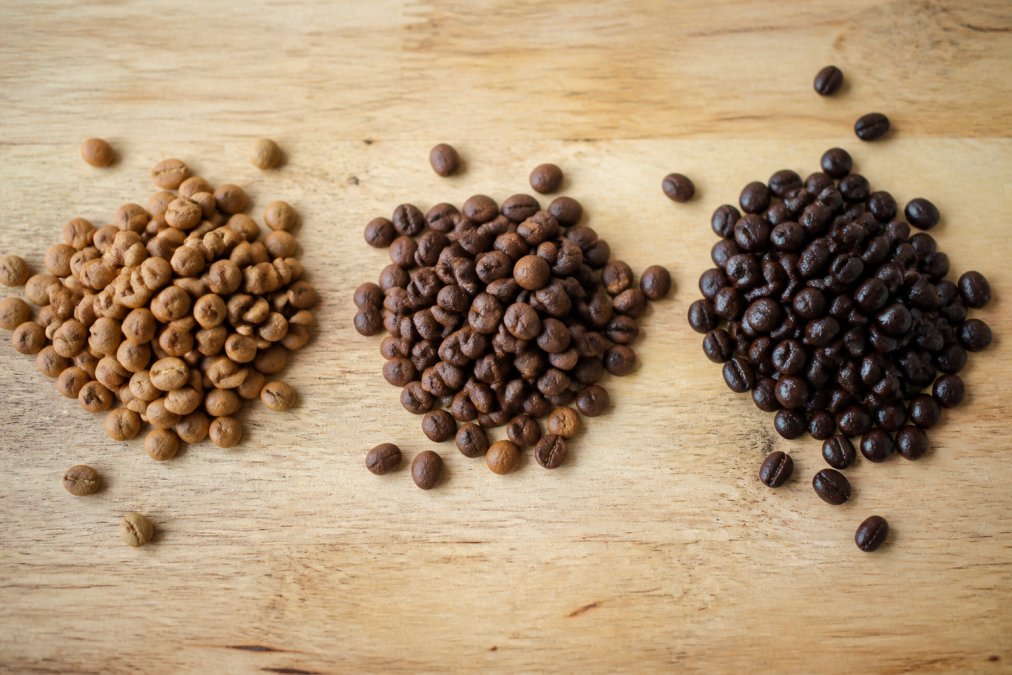
Light, Medium, and Dark: What Each Roast Level Reveals
Light roasts retain more caffeine by weight and show higher acidity, floral notes, and fruit-forward flavors. Medium roasts balance acidity and body across brewing methods. Dark roasts develop surface oil and deeper chocolate or smoky notes.
Oil release is normal in dark roasts. Oil on a bag labeled light roast is a sign of age or a roasting mistake.
Washed, Natural, and Honey Process Differences
Washed process removes the fruit before drying, producing clean, bright cups. Natural process dries the fruit on the bean, creating heavier body and fermented fruit notes. Honey process leaves part of the mucilage on during drying, landing between the two.
Roasters who label processing method clearly set a real expectation of what's in the cup, a transparency signal worth weighing.
Equipment Transparency and the Cupping Process for Home Buyers
Equipment transparency is the angle most buyers never check, and it separates a roaster who understands their craft from one who simply owns a machine. Roasting profile, batch size, and machine type shape the cup as much as the green coffee does.
Drum vs. Air Roasters: What the Machine Tells You
Most specialty roasters use one of two machine families:
- Drum roasters tumble beans in a heated rotating drum, conducting heat through the metal and building momentum many roasters prefer for body and caramelized sweetness. They reward experience, a roaster who knows their drum can repeat a profile batch after batch.
- Fluid-bed (air) roasters suspend beans in a stream of hot air, transferring heat faster and more evenly for cleaner, brighter cups and shorter roast times. They're less forgiving of a roaster who doesn't adjust for the faster curve.
Neither is inherently better. What matters is whether the roaster can explain why they chose their machine and how they use it. A roaster who says "we roast on a drum because we want to develop body in our espresso lots" is showing you a decision; one who can't name their equipment is showing you a gap.
Batch Size, Profile, and Repeatability
Batch size is the most underrated transparency signal. Small batches allow tighter control over the roast curve, the time-and-temperature path the beans follow, because there's less mass and less variance between drum edge and center. Many specialty roasters deliberately cap batch sizes below their machine's maximum.
Publishing batch size, roast profile notes, or development time signals confidence in repeatability, the real test of roasting skill. Ask how they ensure consistency between batches; the good ones give specifics like probe placement, rate-of-rise targets, or cupping every batch before it ships.
A Simplified Home Cupping Protocol
Cupping is the standardized tasting method professionals use. Run a simplified version at home to test a roaster directly instead of trusting the bag's description.
What you need: a scale, grinder, kettle, several identical small cups or bowls, a spoon, and a timer.
The protocol:
- Weigh and grind. Use a 1:16 to 1:18 coffee-to-water ratio by weight (for example, 12 grams of coffee to about 200 grams of water). Grind coarse, like French press.
- Smell the dry grounds. Note the aroma before water touches them, your first read on freshness and roast level.
- Pour and steep. Pour water just off a boil over the grounds and start a timer. Let it steep for 4 minutes without stirring.
- Break the crust. At 4 minutes, push aside the floating grounds with your spoon and smell the released aroma, the moment most volatile compounds escape.
- Skim and taste. Remove the floating grounds, then wait a few minutes for the coffee to cool slightly. Slurp from the spoon, slurping spreads the coffee across your palate and aerates it, which is why professionals do it.
- Taste at multiple temperatures. Flavor shifts as coffee cools. Note acidity, body, sweetness, and any off-flavors separately at hot, warm, and room temperature.
What to look for: clean, distinct flavors matching the roaster's description are good. Muddy, flat, or cardboard-like notes suggest stale beans or a bad roast; harsh, ashy, or rubbery notes point to over-development or poor green coffee.
Using Equipment and Cupping Together
Equipment transparency tells you whether a roaster can control quality; cupping tells you whether they did. Together they turn a subjective purchase into a testable one. A roaster who shares machine, batch size, and profile, and whose coffee holds up in a home cupping, shows both capability and execution.
Red Flags: Signs a Roaster Is Cutting Corners
A missing roast date is the clearest red flag, as is a bag with no one-way valve, no origin information, and adjectives instead of a farm name.
Here's a quick reference for what to check and what it signals:
| What to Check | Weak Signal | Strong Signal |
|---|---|---|
| Date on bag | Best-by only | Exact roast date |
| Origin detail | "South America" | Farm and region named |
| Packaging | Paper bag, no valve | Barrier bag with one-way valve |
| Roast range | One dark option | Multiple levels, explained |
| Sourcing | "Ethically sourced" | Farm names, pricing details |
| Equipment | Not mentioned | Batch size and profile shared |
Beyond the bag, watch for stale coffee beans sold as fresh: oily surface on a light roast, flat aroma on opening, or a cardboard smell instead of fruit or chocolate. One alone isn't fatal; three together means find another roaster.
Finding a roaster you trust takes a few orders and some label-reading, but the payoff shows up in every cup. Lux Brew Coffee Co. roasts every batch to order and ships within hours, so your beans arrive inside their peak degassing window. We source specialty grade coffee from ethical family farms and publish the origin details behind each lot, so you can verify what you're drinking. Get started with Lux Brew Coffee Co. and taste what freshly roasted, transparently sourced coffee actually delivers.
Frequently Asked Questions
How can you tell if coffee beans are high quality?
Start with the roast date. Beans taste best between 4 and 21 days after roasting, so a printed roast date (not a best-by date) is the single strongest signal. Next, check for a one-way valve on the bag, which lets carbon dioxide escape without letting oxygen in. Finally, look for a named origin, a processing method, and a stated grade. If the bag lists none of these, the roaster is likely prioritizing shelf life over flavor.
Does roast date matter when buying coffee beans?
It matters more than almost any other label detail. Coffee stales as it oxidizes, and most of the aroma compounds fade within four to six weeks of roasting. A bag stamped with a roast date lets you judge freshness yourself. A bag with only a best-by date, often set twelve months out, tells you nothing about when the beans were actually roasted. Buy from roasters who print the roast date and ship within days of roasting.
What is the difference between specialty grade and commercial coffee?
Specialty grade coffee scores 80 points or higher on the 100-point scale used by licensed graders, and it allows very few defects per sample. Commercial grade falls below that threshold and permits far more defects, which show up as flat or bitter flavors in the cup. Specialty grade also typically means single-origin or traceable lots rather than anonymous blends, so you can verify where the beans came from and how they were processed.
What should you look for on a coffee bag label?
A quality label includes the roast date, the country or farm of origin, the processing method (washed, natural, or honey), the roast level, and the variety or grade. Ethical coffee sourcing practices often appear as named farm relationships or certification logos rather than vague phrases like "sustainably sourced." Packaging should have a one-way valve and an opaque or foil-lined interior. The more specific the label, the more confident you can be in the roaster.