

Table of Contents
- Why the Original Bag Matters for Coffee Storage
- Understanding the One-Way Valve and Degassing
- The Four Enemies of Coffee Freshness: Light, Heat, Moisture, and Air
- Best Coffee Storage Canisters and Container Materials
- Can You Freeze Coffee Beans? Storage Temperature Guide
- How Long Does Coffee Stay Fresh and Signs of Stale Beans
- Step-by-Step: How to Store Fresh Coffee Beans Properly
- Conclusion
Last Updated: August 10, 2026
Why the Original Bag Matters for Coffee Storage
The bag your coffee arrives in is engineered to protect freshness. Most specialty roasters, including Lux Brew Coffee Co., ship beans in bags with kraft paper or foil exteriors combined with inner moisture barriers, creating dual-layer defense against staling. When you transfer beans to a different container, you remove that engineered protection. Even seemingly airtight containers may lack the light-blocking properties or valve system professional bags include.
The roast date printed on the bag serves as your freshness baseline. Coffee begins degassing the moment it cools from roasting, releasing carbon dioxide that would otherwise create pressure inside a sealed container. Your storage approach should work with this natural process, not against it, which is where the one-way valve becomes critical.
Understanding the One-Way Valve and Degassing
A one-way valve allows carbon dioxide to escape from the bag while preventing oxygen from entering. This mechanism is essential because freshly roasted beans continue degassing for 24 to 48 hours after roasting. Without this valve, pressure would build inside a sealed bag, compromising the seal.
Degassing is the release of volatile compounds and carbon dioxide that beans naturally emit after roasting. This process is necessary, it's how beans reach their optimal flavor profile for brewing. However, oxygen exposure during degassing accelerates oxidation, which stales coffee. The one-way valve solves this paradox by letting gas out while keeping oxygen out.
When evaluating storage containers, look for a similar valve mechanism. Many ceramic and glass canisters lack this feature entirely, making them best used only after beans have finished degassing. If using a container without a valve, store the original bag in a cool, dark place for the first two days, then transfer the beans once degassing is complete.
The valve itself is typically made from plastic or rubber and sits flush against the bag's exterior. If storing beans in the original bag for more than two weeks, occasionally flex the bag gently to ensure the valve moves freely. A stuck valve can trap carbon dioxide and damage the seal.
The Four Enemies of Coffee Freshness: Light, Heat, Moisture, and Air
Coffee's freshness is threatened by four primary factors, each degrading flavor through different mechanisms.
Light is the most underestimated threat. Direct sunlight triggers photodegradation of coffee oils and volatile compounds responsible for flavor and aroma. Even indirect sunlight causes measurable flavor loss over days. This is why opaque containers are non-negotiable. Clear glass jars look beautiful but actively stale your coffee. Opaque containers, ceramic, stainless steel, or opaque plastic, provide the best defense.
Heat accelerates every chemical reaction that stales coffee. Coffee oils oxidize faster at higher temperatures, and heat speeds up the breakdown of volatile flavor compounds. Your pantry should be cool, ideally between 60 and 70 degrees Fahrenheit. Avoid storing beans above the stove, near the oven, or on counters near windows where afternoon heat accumulates.
Moisture causes problems because coffee is hygroscopic, it absorbs moisture from the air. Excess humidity causes beans to swell, changing their density and affecting how they grind and extract during brewing. More critically, moisture promotes mold growth and accelerates oxidation. Sealed, airtight containers prevent moisture infiltration far more effectively than loosely closed jars.
Air exposure introduces oxygen, which oxidizes coffee oils and volatile compounds. This is why many coffee enthusiasts vacuum seal their beans or use containers that minimize headspace. Even small amounts of oxygen cause measurable flavor degradation over weeks. Some storage solutions address this by using nitrogen flushing instead of vacuum sealing, since nitrogen is inert and doesn't degrade coffee the way oxygen does.
These four factors work together. A clear jar on a warm kitchen counter near the sink creates the worst possible storage environment. A sealed, opaque container in a cool, dark pantry creates the best one.
Best Coffee Storage Canisters and Container Materials
The right container makes a measurable difference in how long your beans stay fresh.
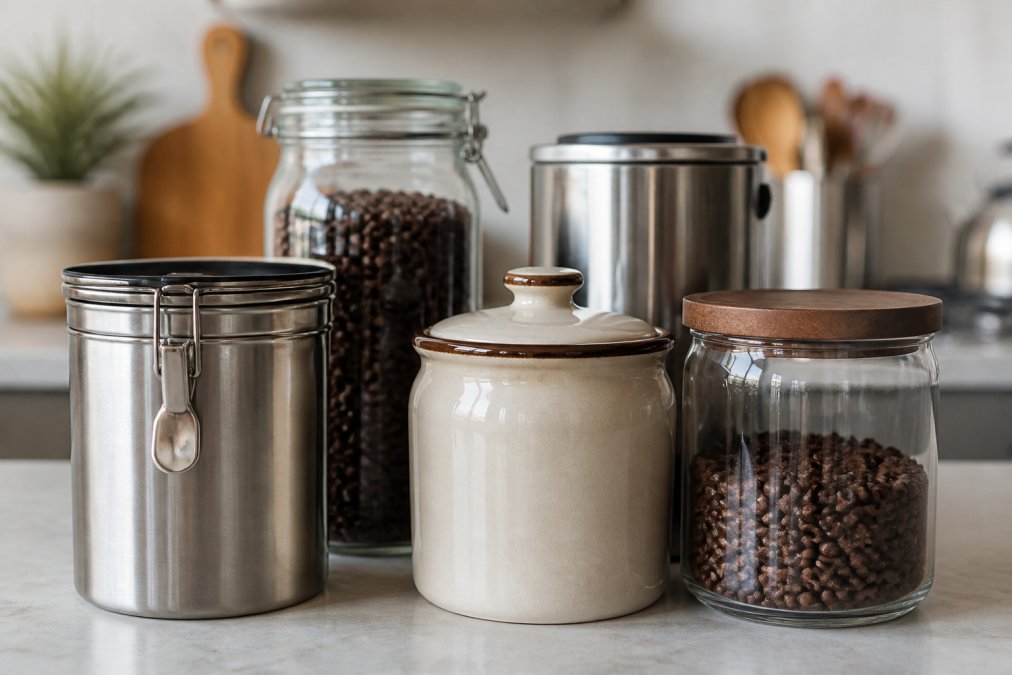
Stainless steel canisters are the gold standard for most home storage. Steel blocks light completely, doesn't absorb odors, and provides excellent airtight seals when fitted with proper lids. Look for canisters with rubber gaskets or silicone seals that create an airtight environment. A quality stainless steel canister will maintain freshness for three to four weeks.
Ceramic or porcelain canisters offer aesthetic appeal and decent protection if they have airtight lids. Glazed ceramic with a tight-fitting lid works reasonably well, though it's not quite as protective as stainless steel.
Glass canisters are popular but problematic. Clear glass offers zero light protection and is the worst choice for long-term storage. Opaque or amber glass is better but still inferior to stainless steel. If you prefer glass, use it only for beans you'll consume within one to two weeks, stored in a dark cupboard.
Vacuum-sealed bags or containers provide excellent protection by removing most oxygen from the storage environment, dramatically slowing oxidation. The downside is that every time you open a vacuum-sealed container, you introduce fresh oxygen. This approach works best if you divide your coffee into smaller portions and only open one portion at a time.
Regardless of container material, prioritize these features: airtight seal, opaque construction, and minimal headspace. Headspace is the air above your beans inside the container. More headspace means more oxygen available for oxidation. Fill your container as full as practical.
Can You Freeze Coffee Beans? Storage Temperature Guide
Many coffee enthusiasts wonder whether freezing extends freshness. The answer is conditional: freezing can preserve beans, but it introduces complications that make it unsuitable for most home storage.
Freezing coffee beans slows chemical reactions that cause staling. However, freezing creates a new problem: condensation. When frozen beans warm to room temperature, moisture condenses on their surface, accelerating degradation and promoting mold growth. Every freeze-thaw cycle causes additional damage.
Freezing works only if you eliminate condensation risk through vacuum-sealed or airtight packaging that prevents moisture exposure during thawing. You should freeze beans in small portions, enough for one to two weeks of brewing, and thaw only what you need. Once thawed, never refreeze the same beans.
The practical recommendation for most people: don't freeze. A cool pantry between 60 and 70 degrees Fahrenheit preserves beans far better than freezer storage with its inherent condensation risks.
Refrigeration is similarly problematic. Refrigerators are humid environments, and temperature fluctuations every time you open the door create condensation risk. Avoid refrigerator storage unless your pantry temperature regularly exceeds 75 degrees Fahrenheit.
Your ideal storage temperature is 60 to 70 degrees Fahrenheit, which most pantries maintain naturally. Consistency matters more than absolute temperature, avoid locations where temperature fluctuates significantly throughout the day.
How Long Does Coffee Stay Fresh and Signs of Stale Beans
Coffee doesn't go bad suddenly. Instead, it gradually loses flavor, aroma, and complexity over time.
Peak freshness occurs between 5 and 30 days after roasting. During this window, coffee has finished degassing but retains maximum volatile compounds and aromatic complexity. Lux Brew Coffee Co. roasts to order and ships within hours, ensuring your beans arrive during this peak window.
Acceptable freshness extends from 30 to 60 days after roasting. Beans are still quite good during this period, though some subtle flavor notes may fade.
Declining quality begins around 60 to 90 days post-roast. Flavor becomes noticeably flatter, aroma diminishes, and complexity disappears.
Stale coffee is anything beyond 90 days from roasting. Significant flavor loss has occurred, and the coffee tastes dull, bitter, or one-dimensional.
These timelines assume proper storage. Beans stored in clear jars on a warm counter may decline within two to three weeks. Beans stored in an opaque container in a cool pantry may stay fresh toward the longer end of these ranges.
Signs of stale beans include flat or muted aroma, lack of crema when brewing espresso, thin body in brewed coffee, absent or one-dimensional flavor, and dull appearance. If your beans show these signs, they're past their prime. Use them for cold brew or compost them and order fresh beans.
Step-by-Step: How to Store Fresh Coffee Beans Properly
Proper storage is straightforward once you understand the principles.
Step 1: Inspect the bag upon arrival. Check the roast date immediately. Verify that the one-way valve is intact and the seal is unbroken. Store the original bag in a cool, dark pantry for the first 24 to 48 hours to allow degassing to complete.
Step 2: Prepare your storage container. If you're transferring to a different container, choose an opaque, airtight option made from stainless steel, ceramic, or opaque glass. Clean the container thoroughly and ensure the seal functions properly.
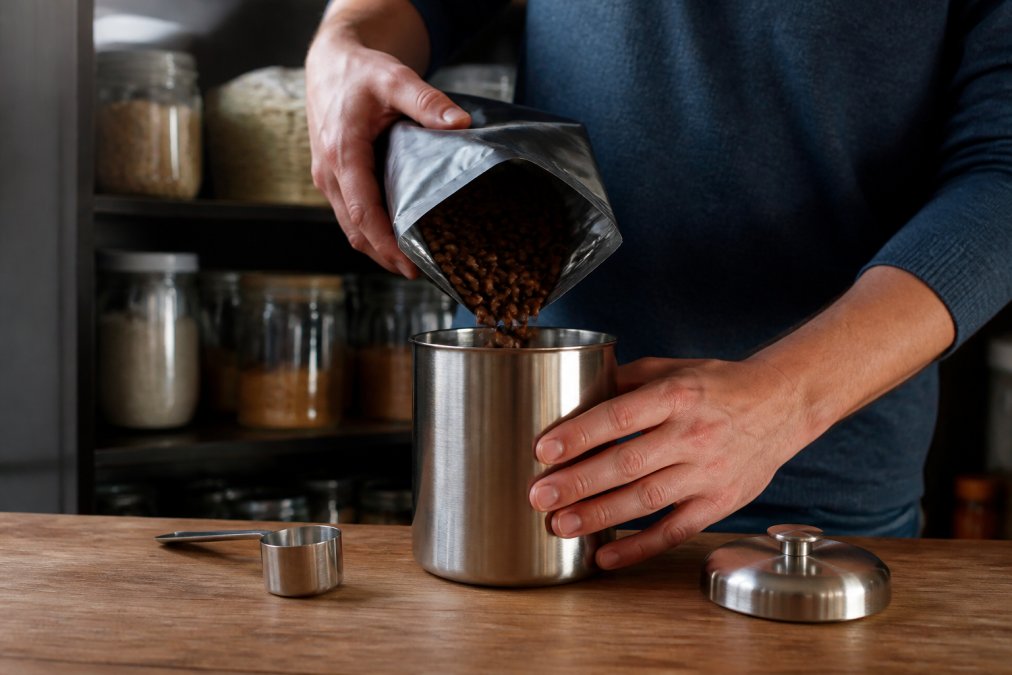
Step 3: Transfer beans after degassing. After 48 hours, if you're switching containers, transfer the beans carefully to minimize air introduction. Work quickly and seal the container immediately. Fill the container as completely as practical to minimize headspace.
Step 4: Store in the optimal location. Place your container in a cool, dark pantry away from heat sources, direct sunlight, and moisture. Ideal temperature is 60 to 70 degrees Fahrenheit. A back corner of a kitchen cupboard is typically ideal.
Step 5: Monitor and use. Check your beans weekly for any signs of moisture or damage. Use beans within 30 days of roasting for peak flavor, though they'll remain quite good for up to 60 days with proper storage. Keep the container sealed between uses.
Conclusion
How you store fresh coffee beans determines whether you're tasting the full complexity of what the roaster intended or a flattened, oxidized approximation. The principles are simple: cool, dark, airtight, and away from heat and moisture.
At Lux Brew Coffee Co., we roast to order and ship within hours specifically because we understand that freshness is non-negotiable. When your beans arrive at peak freshness, proper storage becomes the final step in preserving that quality. Use an opaque, airtight container in a cool pantry, respect the timeline from roasting to brewing, and you'll experience why specialty coffee commands the premium it does.
The Specialty Coffee Association's guide to coffee storage standards
USDA guidance on proper food storage and shelf life
Research on coffee oxidation and volatile compound preservation
Frequently Asked Questions
How long do fresh coffee beans stay fresh?
Freshly roasted coffee beans typically stay fresh for 2-4 weeks when stored properly in an airtight container away from light, heat, and moisture. Peak flavor occurs within the first 2 weeks after roasting. After 4 weeks, beans begin to lose their aromatic compounds and flavor profile, though they remain drinkable. Beans roasted to order and shipped within hours, like those from Lux Brew Coffee Co., maximize this freshness window since you're starting with the shortest possible time from roast date to your cup.
Can you freeze coffee beans to extend their shelf life?
Yes, you can freeze coffee beans, but it requires careful handling. Freezing slows oxidation and preserves volatile compounds, extending freshness to 3-4 months. However, temperature fluctuations cause condensation and freezer burn, which damages flavor. Store beans in an airtight, vacuum-sealed container in the freezer, and thaw them fully before opening to prevent moisture exposure. For most home brewers, proper pantry storage in an airtight container is simpler and yields better results than freezing.
What's the difference between storing coffee in the original bag versus a storage canister?
The original bag, especially one with a one-way valve, is designed to release carbon dioxide from degassing while blocking oxygen and light. However, once opened, the bag's seal weakens. A quality opaque, airtight storage canister (ceramic, glass, or stainless steel) provides superior long-term protection by creating a complete airtight seal that prevents oxygen exposure and air oxidation. For beans you'll use within 2-3 weeks, the original bag works fine. For longer storage or frequent opening, transfer to a dedicated canister.
Should I store coffee beans in the refrigerator?
Storing coffee in the refrigerator is not recommended. Refrigerators introduce moisture and temperature fluctuations that accelerate staling. The constant opening and closing exposes beans to air and humidity changes. A cool, dry pantry away from heat-producing appliances, direct sunlight, and temperature swings is ideal. Keep beans at 60-70°F in a stable environment. If your kitchen is very warm, a cool closet or cupboard away from the oven is better than the fridge.
This article was written using GrandRanker