

Table of Contents
- Why Fresh Coffee Beans Delivered to Rural Areas Matter
- Coffee Roasting Dates Explained: What Freshness Really Means
- Best Coffee Subscription Services for Rural Delivery
- How to Store Coffee Beans for Freshness During Long Transit
- Shipping Logistics: Getting Fresh Coffee to Remote Locations
- What to Expect From Roasted-to-Order Coffee Delivery
- Conclusion: Freshness Guaranteed, Even in Rural Areas
Last Updated: August 8, 2026
Why Fresh Coffee Beans Delivered to Rural Areas Matter
Getting specialty-grade coffee to remote locations has always been a challenge. Distance, transit time, and standard shipping methods conspire against freshness. Yet rural coffee enthusiasts deserve the same access to premium roasted-to-order beans that urban customers take for granted. This guide covers everything you need to know about sourcing fresh coffee beans delivered to rural areas, from understanding roast dates to selecting subscription services built for remote delivery.
At Lux Brew Coffee Co., we've watched rural customers struggle with stale coffee arriving weeks after roasting. The solution isn't complicated: it requires roasters who prioritize speed, vacuum-sealed packaging designed for long transit, and a genuine commitment to freshness guarantees. The difference between coffee roasted yesterday and coffee roasted two weeks ago shows up immediately in your cup.
Rural delivery isn't an afterthought for the best specialty coffee roasters. It's a core operational priority. Many roasters now ship directly from their facilities within hours of roasting, using USPS Commercial Cubic Rates and other cost-effective methods optimized for remote addresses. Understanding how these systems work helps you choose the right subscription service for your location.
Coffee Roasting Dates Explained: What Freshness Really Means
The roast date is the single most important indicator of coffee freshness. Unlike packaged goods with expiration dates, specialty coffee doesn't "go bad", it simply loses its peak flavor window. Most specialty roasters recommend consuming coffee within 2-4 weeks of the roast date, with the sweet spot landing between days 3-14 after roasting.
Here's why timing matters. Immediately after roasting, CO2 continues escaping from the beans for several days. This degassing period is essential, coffee consumed on day one tastes harsh and underdeveloped. By day 3, the beans have stabilized enough for optimal flavor extraction. After day 14, the beans begin losing their brightness and complexity. By week 4, you're drinking coffee that's still acceptable but noticeably flatter than its peak.
When you order from a roasted-to-order service, the roast date appears on every bag. This transparency is non-negotiable for quality. You can verify exactly how fresh your coffee is before brewing. Services like Trade Coffee and Atlas Coffee Club print roast dates prominently, and Rural Route Coffee Roasters ships coffee within days of roasting specifically to preserve that window.
Single-Origin vs. Blends: Understanding Flavor Profiles
Single-origin coffees come from one specific region, farm, or microlot. They showcase distinct flavor characteristics tied to altitude, soil, processing method, and climate. A single-origin Ethiopian Yirgacheffe tastes completely different from a Colombian Huila, even if both are medium roasts. This variability is the appeal, you're tasting geography and craft in every sip.
Blends combine beans from multiple origins to create balanced, consistent flavor profiles. A blend might pair bright African notes with the body of South American beans, creating complexity that neither origin achieves alone. Blends also offer operational consistency, roasters can maintain the same taste profile across multiple batches by adjusting the ratio of component origins.
For rural customers, single-origin subscriptions like Atlas Coffee Club make sense if you want to explore different flavor profiles monthly. Blends work better if you prefer consistency and don't want to adjust your brewing method as flavors shift. Most serious roasters offer both options within their subscription models.
Best Coffee Subscription Services for Rural Delivery
Lux Brew Coffee Co.: Roasted-to-Order Specialty Grade
Lux Brew Coffee Co. specializes in what rural customers need most: roasted-to-order coffee shipped within hours of roasting. Every batch uses specialty-grade beans sourced from ethical family farms globally, ensuring both freshness and transparent sourcing. The roast-to-order model eliminates the inventory lag that plagues other services.
What sets Lux Brew apart is the operational commitment to rural delivery. Beans ship in vacuum-sealed packaging designed for long transit times, preserving peak freshness even when crossing multiple states. You receive coffee roasted specifically for your order, not leftover stock from last week's batch. The freshness guarantee isn't marketing language, it's built into the fulfillment process.
The selection spans single-origin coffees and curated blends, with detailed tasting notes for each offering. Sourcing from family farms means direct relationships with growers, not commodity brokers. This translates to better traceability and more consistent quality than mass-market alternatives. For rural customers prioritizing freshness above all else, Lux Brew Coffee Co. is the strongest choice.
Trade Coffee: Nationwide Network of Craft Roasters
Trade Coffee operates differently than single-roaster models. They partner with over 55 specialty roasters across the United States, giving you access to 500+ coffees without geographic limitations. Their matching algorithm asks about your taste preferences, brewing method, and roast level, then recommends coffees from their network.
The advantage for rural customers is selection. You're not limited to one roastery's current inventory, you can explore coffees roasted by different specialists. Trade ships directly from participating roasters, so your coffee travels the shortest distance possible. This matters significantly for transit times in remote areas.
The trade-off is consistency. Each roaster has different roasting profiles and flavor interpretations. Some months you might receive a lighter roast that tastes brighter; other months a darker roast that emphasizes body. This variability appeals to adventurous drinkers but frustrates those seeking repeatability. Shipping fees apply per order, which adds cost compared to some alternatives.
Atlas Coffee Club: Global Single-Origin Exploration
Atlas Coffee Club takes a curated approach to single-origin sourcing. Each month features coffee from a different country, arriving with educational materials including tasting notes and information about the region. The beans are roasted to order and ship within days, prioritizing freshness.
This service works best for customers who view coffee as an exploration hobby rather than a daily commodity. You'll develop palate awareness as you taste distinct flavor profiles from Ethiopia, Kenya, Colombia, and beyond. The educational component, postcards and brewing guides, adds value beyond the beans themselves.
For rural delivery, Atlas offers flexible frequency (every two or four weeks, with custom options available). Whole bean or pre-ground options let you match your equipment. The subscription is more expensive than bulk commodity options, but you're paying for sourcing quality and educational value. Rural customers with time to invest in learning coffee will find this worthwhile.
Rural Route Coffee Roasters: Built for Remote Delivery
Rural Route Coffee Roasters literally names their commitment to remote customers. They source specialty Arabica directly from farmers with long-term relationships, roast in small batches, and ship via USPS using Commercial Cubic Rates, the most economical option for rural addresses.
The roaster specializes in sustainable practices and transparent sourcing. Their coffee series (Solo, Global Staples, Heritage, Crafted Series) rotate seasonally, offering variety while maintaining quality standards. Roast dates are printed on every bag, and they ship coffee within days of roasting.
What makes them specifically valuable for rural areas is the USPS shipping strategy. Commercial Cubic Rates charge by volume rather than weight, making them ideal for lightweight coffee bags traveling long distances. Rural customers often pay premium shipping with other services; Rural Route has optimized their logistics specifically for this market. Per-bag pricing starts at $16, making them competitive without requiring subscription commitments.
How to Store Coffee Beans for Freshness During Long Transit
Proper storage begins the moment your coffee arrives, not when you open it. Coffee's enemies are light, heat, oxygen, and moisture. Whole beans stay fresh longer than ground coffee because their surface area is smaller, slowing oxidation.
The ideal storage container is airtight and opaque. Vacuum-sealed bags with one-way valves (the standard for roasted-to-order shipments) are excellent for short-term storage, up to two weeks after opening. After opening, transfer beans to an airtight glass or ceramic container away from sunlight. Avoid clear containers and windowsill storage; light degrades flavor compounds rapidly.
Temperature matters more than most people realize. Room temperature (around 70°F) is ideal. Refrigerators introduce moisture through condensation when you repeatedly open and close the door. Freezers work only if you use airtight, moisture-proof containers and allow beans to reach room temperature before opening. The temperature fluctuation from freezing and thawing can damage beans.
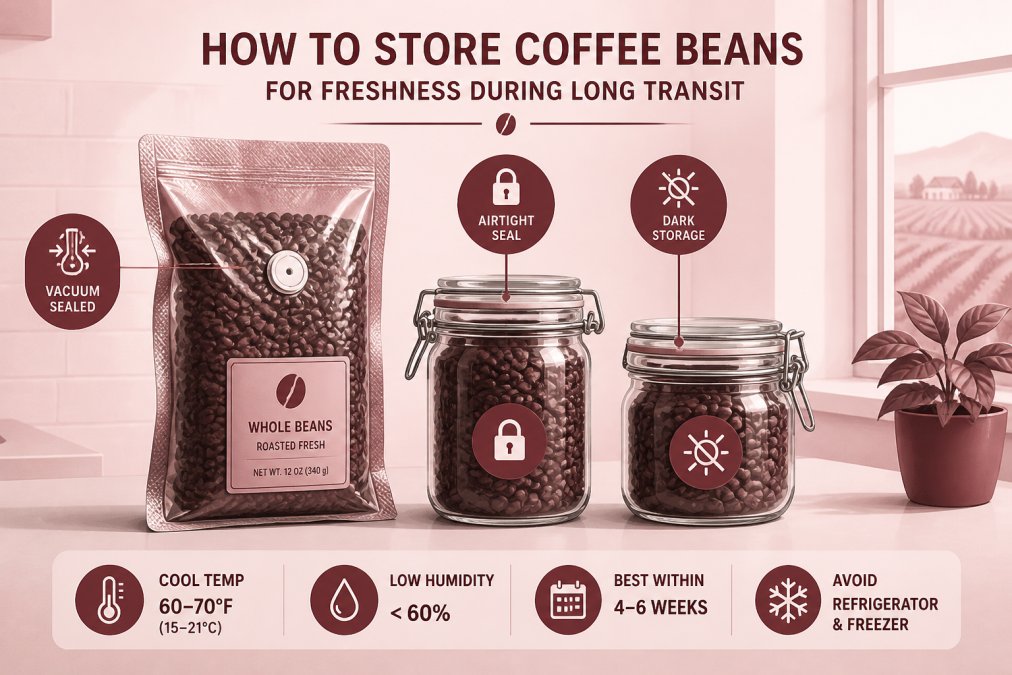
For rural customers receiving shipments with longer transit times, the beans arrive in optimal packaging. Keep them sealed until you're ready to use them. Once opened, consume within two weeks for peak flavor. This timing aligns with the ideal consumption window after roasting, you're working with the bean's natural freshness curve, not fighting against stale inventory.
Whole Bean vs. Pre-Ground for Rural Shipping
Whole beans are superior for rural shipping. They retain freshness significantly longer because the internal structure protects the flavor compounds. A whole bean roasted three weeks ago still tastes substantially better than pre-ground coffee from the same batch.
Pre-ground coffee oxidizes rapidly due to increased surface area. Within 15 minutes of grinding, you've lost volatile aromatic compounds. Within 24 hours, pre-ground coffee tastes noticeably flatter. For rural delivery involving multi-day transit, pre-ground arrives already degraded.
The downside of whole beans is that you need a grinder. Burr grinders (either blade or conical) are essential, blade grinders produce inconsistent particle sizes that lead to uneven extraction. A quality burr grinder costs $40-150 and transforms your brewing results. For rural customers, the investment pays dividends across every bag of specialty coffee you buy.
Some services offer both options. Atlas Coffee Club and Trade Coffee let you select whole bean or pre-ground at checkout. Choose whole bean every time if you have any grinding capability. The flavor difference justifies the extra step.
Shipping Logistics: Getting Fresh Coffee to Remote Locations
Rural delivery success depends on three factors: roaster location, shipping method, and packaging. The best roasters maintain fulfillment speed as their competitive advantage. Roasting to order and shipping within hours means your coffee spends minimal time in transit.
USPS is the standard carrier for specialty coffee to rural areas. Commercial Cubic Rates charge by volume, making lightweight coffee bags economical for remote addresses. UPS and FedEx charge by weight and distance, which penalizes rural delivery. Most roasted-to-order services partner with USPS specifically because it reaches every address efficiently.
Transit time varies by distance but typically ranges from 3-7 days for USPS delivery to rural areas. Coffee roasted on Monday can arrive by Friday, still well within the peak freshness window. This timeline is achievable because roasted-to-order services ship immediately after roasting, not after waiting for inventory to accumulate.
Transit Time and Vacuum-Sealed Packaging
Vacuum-sealed bags with one-way valves are the standard for specialty coffee shipping. The seal prevents oxygen from entering during transit while allowing residual CO2 to escape. This maintains the beans' integrity across long distances and temperature fluctuations.
The one-way valve (called a degassing valve) is critical. It lets CO2 escape for several days after roasting without allowing oxygen back in. This design lets roasters ship coffee immediately after roasting without the bag exploding. The valve seals itself once degassing completes, creating an oxygen-free environment for the remaining shelf life.
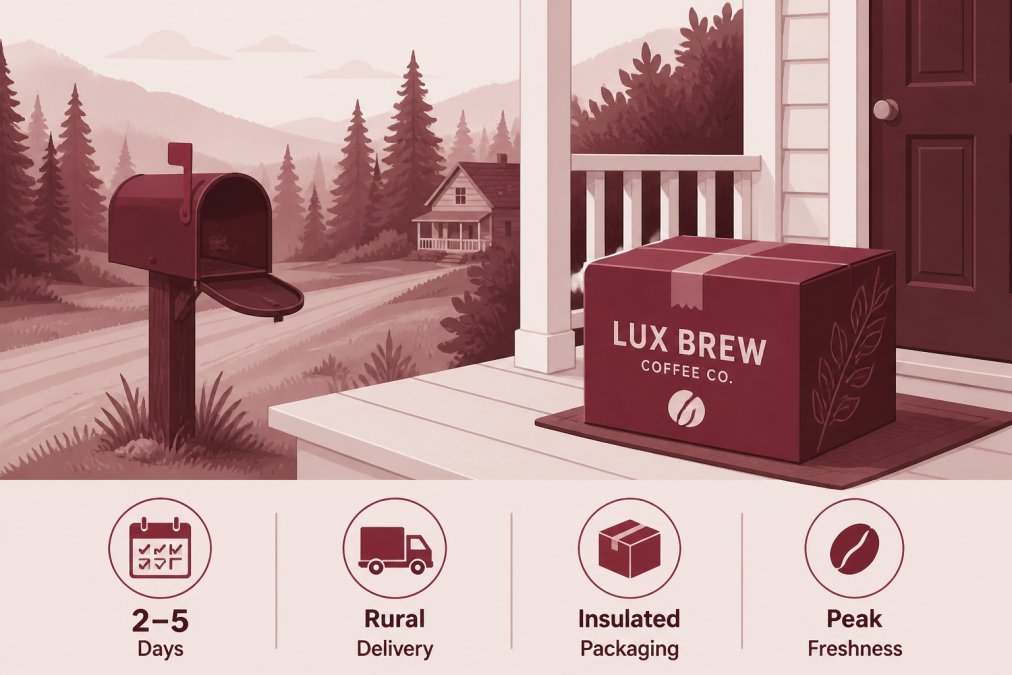
For rural customers, this packaging means coffee arrives in optimal condition regardless of transit time. Temperature fluctuations during shipping don't degrade the beans because they're sealed and protected. Vacuum-sealed bags maintain freshness for 4-6 weeks after roasting if kept sealed. Once opened, consume within two weeks for peak flavor.
Quality roasters use food-grade materials and commercial-grade sealing equipment. Cheap vacuum bags let oxygen penetrate over time. Lux Brew Coffee Co., Rural Route Coffee Roasters, and other specialty services invest in proper packaging because it directly impacts customer satisfaction.
What to Expect From Roasted-to-Order Coffee Delivery
Roasted-to-order services operate differently than traditional coffee retail. You're not buying pre-roasted inventory; you're ordering a custom roast batch. This changes expectations around timing and freshness.
Most roasted-to-order services process orders within 24 hours of placement. The roaster receives your order, sources the green beans from their inventory, roasts them to your specifications, cools them, packages them, and ships them, often all within 24-48 hours. This speed is the defining feature.
You'll notice the coffee tastes different than grocery store bags. The flavor is brighter, more complex, and more nuanced. Single-origin beans showcase regional characteristics clearly. Blends achieve balance without the staleness of aged inventory. This quality difference is what roasted-to-order delivers, you're tasting the coffee at its peak, not weeks after its prime.
Some customers hesitate about roasted-to-order because they assume it means waiting weeks. The reality is opposite. You receive coffee faster than traditional retail because it ships immediately after roasting, not after sitting in a warehouse. Rural customers actually benefit most because the speed compensates for longer transit times.
Subscription flexibility varies. Most services let you pause or skip months without penalty. Some charge per shipment; others charge monthly regardless of usage. Read the terms carefully. For rural customers who might experience supply disruptions, flexibility matters.
Fresh coffee beans delivered to rural areas represent a significant shift in how specialty coffee reaches remote customers. The combination of roasted-to-order models, optimized shipping logistics, and vacuum-sealed packaging makes premium freshness achievable regardless of location. Lux Brew Coffee Co. leads this category by prioritizing speed and sourcing quality equally. The roasted-to-order model with shipment within hours, paired with specialty-grade beans from ethical family farms, delivers the freshness guarantee that rural customers deserve. Explore Lux Brew Coffee Co.'s single-origin and blend options to experience how roasted-to-order coffee transforms your daily brewing ritual.
Frequently Asked Questions
Do coffee subscription services actually ship to rural zip codes?
Yes, most specialty coffee subscription services ship nationwide, including rural areas. Services like Lux Brew Coffee Co., Trade Coffee, and Rural Route Coffee Roasters specifically handle remote delivery. However, shipping times may be 5-7 business days depending on your location. Always check the roaster's shipping policy before subscribing, as some use USPS for rural areas while others rely on UPS. Vacuum-sealed packaging ensures your fresh coffee beans stay protected during longer transit times.
How long does coffee stay fresh after roasting?
Coffee beans peak in flavor 3-10 days after roasting and remain fresh for 2-4 weeks when stored properly in an airtight container away from light and heat. The roast date on your bag is critical, this is why roasted-to-order services matter for rural customers facing longer shipping times. If your coffee takes 5-7 days to arrive, it's still within the optimal freshness window. Once opened, consume whole beans within 2-3 weeks for best flavor.
What makes roasted-to-order coffee different from regular subscriptions?
Roasted-to-order coffee is roasted specifically for your order and shipped within hours, guaranteeing maximum freshness. Unlike coffee roasted weeks or months before shipping, roasted-to-order services eliminate stale beans. For rural customers, this model is especially valuable because even with 5-7 day transit times, your beans arrive fresher than coffee pre-roasted and stored in warehouses. Lux Brew Coffee Co. roasts and ships within hours, ensuring peak flavor regardless of delivery distance.
How should I store fresh coffee beans to maintain quality during rural delivery?
Store beans in an airtight container away from direct sunlight, heat, and moisture. Keep them at room temperature, never in the refrigerator or freezer, as condensation damages flavor compounds. Vacuum-sealed bags from specialty roasters provide excellent initial protection. Once opened, transfer to an opaque, airtight container like a glass jar with a rubber seal. Keep beans whole rather than grinding in advance, as ground coffee loses flavor faster. For rural areas with longer shipping times, proper storage extends freshness by 1-2 weeks beyond the roast date.
This article was written using GrandRanker