

Table of Contents
-
Best Coffee Beans for Home Brewing: Top Roasters & Blends
- Lux Brew Coffee Co.: Specialty Grade, Roasted to Order
- Onyx Coffee Lab Southern Weather: Balanced Everyday Blend
- Stumptown Coffee Roasters Hair Bender: Espresso Excellence
- Counter Culture Coffee Hologram: Bright & Complex Pour-Over
- George Howell Coffee Worka Chelbessa: Single-Origin Ethiopian
- Heart Coffee Roasters Stereo: Seasonal & Versatile
- Intelligentsia Coffee Black Cat: Dark Roast Espresso Classic
- How to Choose the Best Coffee Beans for Home Brewing
- Coffee Bean Freshness: Why Roast Date Matters
- Best Espresso Beans for Home: Extraction & Body
- Coffee Brewing Methods: Matching Beans to Equipment
- Water Chemistry & Budget-to-Quality Ratio
- Subscription vs. One-Time Purchase: What Works Best
- Tasting Notes & Flavor Profiles Explained
Best Coffee Beans for Home Brewing: A 2026 Guide
Last Updated: July 25, 2026
Finding the best coffee beans for home brewing requires understanding roast levels, bean origins, freshness standards, and how your brewing equipment interacts with coffee chemistry. Specialty coffee research shows peak flavor occurs within 2-4 weeks of roasting. At Lux Brew Coffee Co., we source specialty-grade beans from ethical family farms and roast to order specifically because that freshness window is where the real magic happens.
Best Coffee Beans for Home Brewing: Top Roasters & Blends
1. Lux Brew Coffee Co.: Specialty Grade, Roasted to Order
Lux Brew Coffee Co. roasts every batch to order and ships within hours, eliminating freshness degradation from warehouse storage. The selection focuses on specialty-grade coffee sourced directly from ethical family farms, with beans scoring 80+ on the Specialty Coffee Association scale. For pour-over and espresso enthusiasts, this measurably improves your cup.
Best for: Coffee drinkers prioritizing freshness and those willing to invest in quality.
2. Onyx Coffee Lab Southern Weather: Balanced Everyday Blend
Southern Weather combines Ethiopian and Colombian coffees, creating chocolate undertones with subtle fruit notes. This blend maintains consistent flavor profiles across batches, essential for dialing in espresso or perfecting pour-over technique. It handles drip, espresso, and immersion brewing competently.
Best for: Everyday drinkers wanting quality without overthinking variables, and households valuing consistency.

3. Stumptown Coffee Roasters Hair Bender: Espresso Excellence
Hair Bender combines coffees from Indonesia, Latin America, and Africa, creating syrupy sweetness with citrus and dark chocolate notes that cut through milk beautifully. Engineered specifically for espresso extraction, it handles slight variations in tamping pressure and water temperature better than many single-origins.
Best for: Espresso machine owners seeking reliable, well-balanced shots without extensive dialing-in.

4. Counter Culture Coffee Hologram: Bright & Complex Pour-Over
Hologram features Ethiopian and Central American coffees, delivering bright acidity with berry and citrus notes that evolve as the cup cools. Built for clarity, it shines in pour-over and drip methods. Counter Culture's transparency about sourcing means you're supporting specific farming communities.
Best for: Pour-over and drip brewers appreciating nuanced flavor profiles and exploring how origin differences affect taste.

5. George Howell Coffee Worka Chelbessa, Ethiopia: Single-Origin Excellence
This Ethiopian single-origin showcases cherry blossom, rose, and lychee notes that emerge clearly in the cup. George Howell's direct farm relationships mean you're getting coffee from known producers. Single-origins teach you how climate, altitude, and processing affect flavor.
Best for: Manual brewing enthusiasts (pour-over, Aeropress, Chemex) exploring origin-specific flavors.
6. Heart Coffee Roasters Stereo: Seasonal & Versatile
Stereo is Heart's seasonal blend, with component coffees changing throughout the year to reflect fresh harvests. This rotating approach ensures freshness and prevents staleness of year-round identical blends. The blend performs across brewing methods.
Best for: Coffee drinkers enjoying seasonal variety without committing to a single flavor profile year-round.

7. Intelligentsia Coffee Black Cat Classic Espresso: Dark Roast Tradition
Black Cat is unapologetically dark, syrupy, sweet, with chocolate and cocoa notes dominating. The dark roast tolerates brewing variables well; slightly off on your espresso machine, Black Cat still delivers a satisfying shot. This blend has been refined over years and is widely distributed.
Best for: Espresso lovers prioritizing bold, sweet shots and milk-based drinks.
How to Choose the Best Coffee Beans for Home Brewing
Selecting beans matching your brewing method, taste preferences, and freshness standards separates mediocre cups from exceptional ones.
Roast Levels: Light, Medium, and Dark
Light roast coffees stop shortly after the first crack, retaining origin characteristics. You taste terroir, altitude, and processing method. Light roasts work beautifully in pour-over and Aeropress but are more sensitive to grind size, water temperature, and brew time.
Medium roast balances origin character with roast-induced sweetness. Medium roasts work well across brewing methods and are forgiving of slight technique variations.
Dark roast develops deep chocolate, cocoa, and sometimes smoky notes. The roast profile dominates, and dark roasts excel in espresso and milk-based drinks.
Arabica vs. Robusta: Bean Type Differences
Arabica accounts for 60-70% of global coffee production and is considered superior for specialty coffee. Arabica beans are more complex with nuanced flavor profiles, grown at higher altitudes (600-2,200 meters) that slow ripening and develop complexity.
Robusta is hardier, grows at lower altitudes, and produces higher yields. It has higher caffeine, lower acidity, and straightforward flavor, often earthy, nutty, or bitter.
For specialty home brewing, you're buying Arabica.
Single-Origin Coffee Beans vs. Blends
Single-origin coffees come from one specific region or farm, letting you taste how geography shapes flavor. Single-origins cost more and require precise brewing technique but are ideal for exploring coffee geography.
Blends combine multiple origins, engineered to achieve specific flavor profiles or perform across brewing methods. Well-designed blends balance acidity, body, and sweetness intentionally and are more forgiving and consistent batch to batch.
Coffee Bean Freshness: Why Roast Date Matters
A coffee bean's flavor peaks within a specific window after roasting, then gradually declines. Understanding this window changes how you buy and store coffee.
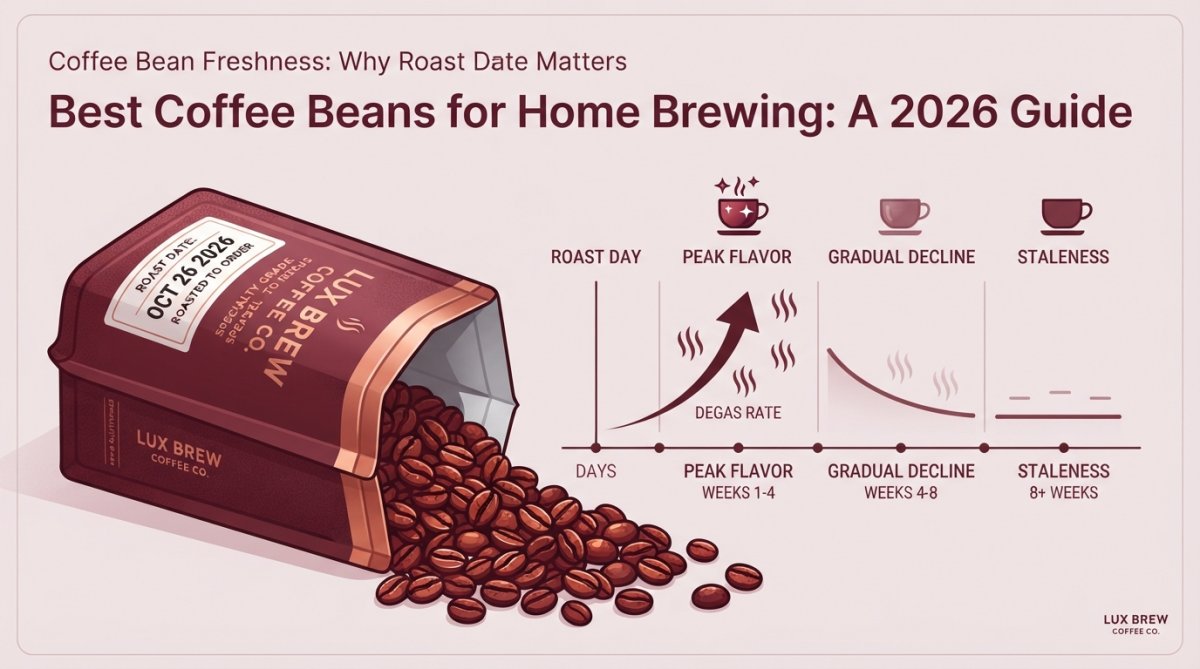
Roasted to Order vs. Pre-Roasted Stock
Roasted to order means the roaster roasts after you order, then ships immediately. You receive coffee at peak freshness, typically 2-5 days post-roast. This is the gold standard for flavor.
Pre-roasted stock is roasted in batches and held in inventory. By the time it reaches you, it might be 2-4 weeks post-roast, with declining flavor.
For serious home brewers, roasted-to-order is worth the wait.
Storage Tips for Maximum Freshness
Store in airtight containers away from light, heat, and moisture. A sealed, opaque container in a cool cupboard is ideal.
Keep beans whole until brewing. Grind immediately before brewing to prevent oxidation.
Use within 4 weeks of the roast date. Peak flavor occurs days 5-21 post-roast.
Best Espresso Beans for Home: Extraction & Body
Espresso demands different bean characteristics than drip or pour-over. High-pressure extraction and short contact time require beans with specific density and flavor profiles.
Full-Bodied Blends for Espresso Machines
Espresso blends are typically darker roasted than filter coffee, developing sweetness and body that cut through milk. Look for blends specifically labeled for espresso, engineered to pull balanced shots. A common formula combines 40-50% Indonesian (earthy, full-bodied), 30-40% Latin American (sweet, balanced), and 10-20% African (brightness, complexity).
Grind Size Correlation with Extraction
Grind size directly controls how quickly water flows through grounds during extraction.
Too coarse: Water rushes through in 15-20 seconds, tastes sour and thin.
Too fine: Water moves slowly, shot takes 35+ seconds, tastes bitter and muddy.
Correct: Water flows in 25-30 seconds, extracting sugars and pleasant compounds while leaving bitter compounds behind.
Espresso grinders are essential because espresso demands consistency. Burr grinders (flat or conical) produce uniform particles; blade grinders produce uneven sizes, making proper dialing impossible.
Coffee Brewing Methods: Matching Beans to Equipment
Different brewing methods extract coffee differently, meaning different beans perform optimally with different equipment.
Drip Brewing: Best Beans & Grind Consistency
Drip coffee makers rely on gravity to move water through grounds over 4-6 minutes. This extended contact time allows full extraction.
Best beans for drip: Medium roasts and balanced blends work beautifully. The longer brew time means you don't need dark roast for full body.
Grind size: Medium grind is standard, slightly coarser than espresso, finer than French press.
Water quality matters here more than with espresso. Filtered water at moderate hardness is ideal.
Pour-Over & French Press: Processing Methods Matter
Pour-over methods (Chemex, V60, Melitta) require active control, you control water temperature, pour rate, and timing.
Best beans for pour-over: Light to medium roasts shine here. Single-origins showcase terroir beautifully.
Processing method impact: Washed-process coffees produce cleaner, brighter cups ideal for pour-over. Natural-process coffees are fruitier and fuller-bodied. Honey-process coffees split the difference.
French press uses immersion brewing; grounds steep in hot water for 4 minutes before pressing. Medium to dark roasts work best. The metal mesh filter allows oils through, creating heavier body.
| Brewing Method | Ideal Roast | Grind Size | Brew Time | Best For |
|---|---|---|---|---|
| Drip | Medium | Medium | 4-6 min | Balanced, forgiving brewing |
| Pour-Over | Light-Medium | Medium-Fine | 3-4 min | Nuanced, origin-focused flavors |
| French Press | Medium-Dark | Coarse | 4 min | Full body, oils, richness |
| Espresso | Dark | Fine | 25-30 sec | Intensity, milk drinks |
| Cold Brew | Medium-Dark | Coarse | 12-24 hrs | Smooth, low acidity |
Cold Brew: Bean Selection & Extraction Time
Cold brew steeps coarsely ground coffee in room-temperature water for 12-24 hours. The extended time and low temperature extract differently than hot brewing, producing a smoother, less acidic cup. Medium to dark roasts work well, with chocolate and nut notes shining in cold brew.
Water Chemistry & Budget-to-Quality Ratio
Two factors separate exceptional home coffee from mediocre: water quality and understanding when to invest in better beans.
How Water Affects Flavor Profile & Acidity
Water is 98% of your final cup, yet most home brewers ignore it. Mineral content is the key variable. Minerals facilitate extraction, helping dissolve coffee's desirable compounds. Pure distilled water under-extracts, producing flat, thin coffee. Water with moderate mineral content (150-200 ppm) extracts optimally.
Hard water over-extracts, pulling too many bitter compounds. Soft water under-extracts, leaving sweetness and complexity behind.
The practical fix: Use filtered water. A basic pitcher filter or faucet-mounted filter removes chlorine and reduces mineral content to reasonable levels. This single change improves coffee more than upgrading beans for many home brewers.
Premium vs. Affordable: When Freshness Justifies Price
A fresh, affordable coffee often tastes better than stale, premium coffee. A freshly roasted medium-grade coffee (roasted 2 days ago) outperforms a premium single-origin that's 6 weeks old. Freshness trumps quality when the gap is that large.
Budget-conscious approach: Buy affordable, fresh coffee from a local roaster roasted to order.
Quality-focused approach: Invest in specialty-grade, fresh coffee. The flavor difference between good and excellent is noticeable.
Subscription vs. One-Time Purchase: What Works Best
Subscriptions deliver coffee on a set schedule with modest discounts (5-15%). You never run out but commit to a schedule.
One-time purchases give complete control. Order when you need coffee, pause when you have inventory, switch roasters whenever you want.
For consistent daily brewers, subscriptions make sense. For casual drinkers or those wanting flexibility, one-time purchases are better.
Shipping Speed & Rural Delivery Reliability
Urban areas typically receive roasted-to-order coffee within 5-7 business days.
Rural areas face complications. Shipping costs are higher, delivery times longer. Some roasters don't ship to remote areas. Confirm shipping options before committing.
Tasting Notes & Flavor Profiles Explained
Coffee tasting notes describe flavors you can expect. Understanding how to interpret them helps you choose beans matching your preferences.
Understanding Acidity, Sweetness & Bitterness
Acidity in coffee is desirable, the bright, lively quality making coffee taste alive. High-altitude coffees and light roasts have more acidity. Acidity is often described with fruit descriptors: citric acidity (lemon, orange), berry acidity (blueberry, raspberry), or wine-like acidity.
Sweetness comes from sugars in coffee. Roasting develops sugars; darker roasts are sweeter than light roasts. Natural-process coffees are sweeter than washed-process coffees.
Bitterness is the harsh, unpleasant quality from over-extraction or poor bean quality. Some bitterness is normal and pleasant (dark chocolate bitterness). Excessive bitterness is a flaw.
A balanced coffee has all three in harmony: enough acidity to be lively, enough sweetness to be pleasant, minimal harsh bitterness.
Processing Methods: Washed, Natural & Honey
Washed process removes the fruit immediately after harvest, then dries just the bean. This produces clean, bright, acidic coffees with clear origin characteristics. Most specialty coffees use washed processing.
Natural process dries the entire cherry intact, then removes it. The bean ferments in the fruit, absorbing sugars and developing fruity, wine-like flavors.
Honey process removes the fruit skin but leaves the sticky mucilage on the bean while drying. This creates a middle ground: fruitier than washed, cleaner than natural.
For home brewing: Washed coffees work beautifully in pour-over and drip. Natural-process coffees excel in French press and espresso. Honey-process coffees are versatile across methods.
Finding the best coffee beans for home brewing comes down to three factors: freshness, method alignment, and personal preference. Roasted-to-order coffee from ethical sources like Lux Brew Coffee Co. eliminates guesswork around freshness, your beans arrive at peak flavor, not weeks into decline. Specialty-grade selection and direct farm relationships mean you're tasting coffee the way it was meant to be tasted. Start with a medium roast blend to dial in your technique, then explore single-origins and processing methods as your palate develops.
Frequently Asked Questions
What type of coffee beans are best for home brewing?
The best coffee beans for home brewing depend on your brewing method and taste preferences. Specialty-grade whole bean coffee offers superior flavor compared to pre-ground options. For drip brewing, medium roasts with balanced acidity work well. For espresso, look for full-bodied blends or darker roasts. Single-origin beans showcase distinct regional flavors, while blends provide consistency. Freshly roasted beans, ideally roasted within 1-2 weeks, deliver optimal flavor in your cup.
How does coffee bean freshness affect home brewing quality?
Coffee bean freshness is critical because flavor compounds peak 3-10 days after roasting, then gradually diminish. Beans roasted to order and shipped within hours maintain peak freshness, delivering brighter acidity and more complex flavor profiles. Pre-roasted beans sitting in warehouses or retail shelves lose aromatic oils and taste flat. Proper storage in airtight containers away from light and heat preserves freshness longer. For the best results, purchase whole beans and grind just before brewing.
What are the best espresso beans for home espresso machines?
The best espresso beans for home machines are typically medium to dark roasts with full-bodied profiles and lower acidity. Look for blends designed specifically for espresso extraction, these balance sweetness, body, and crema development. Single-origin beans can work but require precise grind adjustment. Consistency matters: espresso demands uniform grind size correlated to your machine's pressure. Specialty roasters like Stumptown Hair Bender and Intelligentsia Black Cat are engineered for espresso, delivering syrupy sweetness and chocolate notes that complement milk-based drinks.
Should I buy a subscription or one-time purchases for coffee beans?
Subscription services work best if you brew daily and enjoy trying seasonal or rotating selections, many offer flexibility to skip months or adjust frequency. One-time purchases suit casual drinkers or those experimenting with different roasters. Consider shipping speed: roasters offering fast delivery (within hours of roasting) preserve freshness better than standard shipping. Evaluate your consumption rate to avoid stockpiling. Some subscriptions include discounts; compare per-bag pricing to one-time purchases to determine true value.
How do water chemistry and grind size affect coffee flavor?
Water chemistry significantly impacts extraction: mineral content affects how water dissolves coffee compounds, influencing acidity, sweetness, and body. Soft water extracts too quickly; hard water may under-extract. Grind size directly correlates with extraction time, finer grinds slow water flow (ideal for espresso), while coarser grinds speed it (better for French press). Matching grind consistency to your brewing method ensures balanced flavor. Poor water quality or incorrect grind size can make premium beans taste flat or bitter, regardless of origin or roast.
This article was written using GrandRanker