

Last Updated: November 9, 2026
Quick Summary
To prevent heat loss during coffee brewing, preheat your mug, dripper and carafe with hot water, then dump it right before brewing. Brew between 195°F and 205°F, cover the dripper between pours, and brew into a preheated thermal carafe instead of a cold glass one.
- The best water temperature for coffee brewing sits between 195°F and 205°F.
- Fill your mug with hot water and let it sit while you grind and set up.
- Pour-over loses heat fast because water is exposed to air in a thin stream and wide cone.
- A thermal carafe holds heat far longer than glass, which cools noticeably within the first hour.
- Set your gear on a towel, not bare stone, and keep the kettle on low heat between pours.
Table of Contents
- Why Heat Loss Ruins Coffee and How to Measure It
- The Best Water Temperature for Coffee Brewing
- How to Preheat a Coffee Mug and Brewing Vessel
- How to Keep Pour-Over Coffee Hot From First Drop to Last
- Thermal Coffee Carafe vs Glass Carafe: Which Holds Heat
- Equipment Hacks That Prevent Heat Loss During Brewing
- Brewing With Freshly Roasted Beans From Lux Brew Coffee Co.
- Frequently Asked Questions
Why Heat Loss Ruins Coffee and How to Measure It
Heat loss is the quiet killer of a good cup. Water that starts at the right temperature and drops too fast pulls sour, weak, or bitter notes out of your beans. Temperature control is the first step in any brew method, not an afterthought. Here is the core problem in one sentence: heat loss during coffee brewing is the drop in water temperature between your kettle and your cup, and even a small drop changes how your coffee tastes.
The mechanism is straightforward thermodynamics. Heat moves from the hot water to any cooler surface it touches, the dripper wall, the carafe, the mug, the surrounding air, through conduction and convection. The rate of that transfer depends on three things: the temperature difference between the water and the surface, the surface area the water contacts, and the material's thermal conductivity. A thin glass carafe on a cold stone counter maximizes all three. A preheated thick-walled ceramic vessel on a towel minimizes them.
That is why the same beans and the same ratio can taste different on two mornings: the vessel and the room, not the coffee, are the variable.
You do not need lab gear to spot it. A simple instant-read thermometer tells you most of what you need to know.
- Check water temp in the kettle right before you pour.
- Check it again in the brewing vessel mid-pour.
- Check the final cup temp once brewing finishes.
A drop of more than a few degrees between those three points means your gear is stealing heat. Watch out: many people blame their beans for a flat cup when the real issue is a cold mug or an unheated dripper.
What counts as a meaningful drop. The exact number varies by method, but the pattern is consistent: pour-over in a thin cone loses heat fastest, immersion methods in a preheated vessel lose least, and anything brewed into a cold carafe loses heat at the finish line.
A simple three-point measurement routine. Log the three readings above for one week. You will quickly see whether your loss is concentrated in the vessel (a big kettle-to-vessel drop) or in the finish (a big vessel-to-cup drop). That tells you which piece of gear to fix first, instead of buying a new kettle when the real problem is a cold mug.
Why the drop changes flavor, not just temperature. Extraction is a rate process: hotter water dissolves compounds faster. When the temperature falls early in the brew, the acids and sugars that need sustained heat to dissolve stay in the grounds, and the cup reads sour and thin. When the temperature stays high but the brew runs long, the later-extracting bitter compounds come through. Stable heat is what lets you control which of those you get.
The Best Water Temperature for Coffee Brewing
The best water temperature for coffee brewing sits between 195°F and 205°F. That range gives you full extraction without scalding the grounds. Specialty Coffee Association brewing standards points to this same window as the target for most brew methods.
Start at the higher end for light roasts and the lower end for dark roasts. Then adjust by taste.
- Too cool: sour, thin, under-extracted cup.
- Too hot: bitter, harsh, burnt notes.
- Just right: sweet, balanced, clear flavor.
If you want the full science behind this range, our water temperature coffee extraction guide breaks down how each degree shifts flavor. The key takeaway: pick a temp, hold it, and stop losing it before the water hits the grounds.
How to Preheat a Coffee Mug and Brewing Vessel
Knowing how to preheat a coffee mug is simple: fill it with hot water and let it sit while you grind and set up. A cold mug pulls heat out of your coffee the moment they meet. The same is true for your dripper, carafe, or press.
Do this in order before every brew:
- Boil a little extra water.
- Pour it into your mug and let it stand.
- Pour the rest through your dripper or into your carafe.
- Dump the water right before you brew.
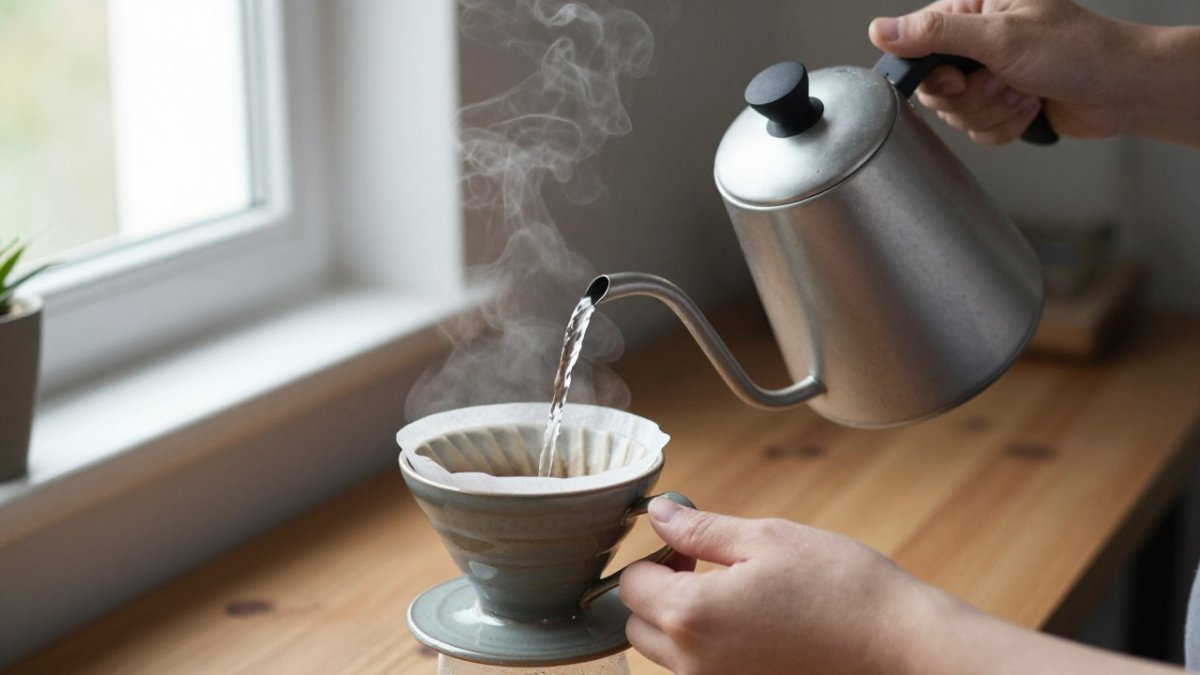
This one habit fixes more temperature problems than any gadget. A common mistake is preheating the mug but forgetting the dripper. Both matter.
How to Keep Pour-Over Coffee Hot From First Drop to Last
To keep pour-over coffee hot, preheat everything, brew in a warm room, and use a lid or cover between pours. Pour-over loses heat fast because the water is exposed to air in a thin stream and a wide cone.
Try these moves:
- Rinse the filter with hot water, then dump it.
- Keep the kettle on low heat between pours.
- Cover the dripper with a saucer between pours.
- Brew into a preheated carafe, not a cold one.
For a full walkthrough, see our guide on how to make perfect pour over coffee at home. And if you want a dripper built to hold heat, our list of the best pour over coffee drippers for beginners covers the options worth a look.
Thermal Coffee Carafe vs Glass Carafe: Which Holds Heat
A thermal coffee carafe holds heat far longer than glass. Glass looks lovely on the counter, but it lets heat escape through the walls and the open top.
The mechanism is worth understanding because it explains every trade-off below. A vacuum layer between two walls removes the air that would otherwise carry heat by conduction and convection, so the only remaining path is radiation across the gap, a much slower route. A single-wall glass carafe has no such barrier: heat conducts straight through the glass and then convects away into the room air, and the open top lets warm air rise out of the vessel the whole time it sits.
| Feature | Thermal Carafe | Glass Carafe |
|---|---|---|
| Heat retention | Strong; most models hold drinkable heat for several hours | Weak; cools noticeably within the first hour |
| Mechanism | Double wall plus vacuum layer blocks conduction and convection | Single wall conducts heat out; open top vents warm air |
| Best for | Slow mornings, second cups, brewing more than you drink at once | Serving right away, watching the brew level |
| Care | Often hand wash only; some models are not dishwasher safe | Usually dishwasher safe |
| Visibility | Cannot see the level | See-through |
| Weight and fragility | Heavier, but resistant to knocks | Lighter, but breakable |
If you want to carry heat past the carafe, our picks for the best travel coffee mugs that keep drinks hot are a natural next step.
Equipment Hacks That Prevent Heat Loss During Brewing
Small gear changes prevent heat loss without buying a whole new setup. The goal is to slow heat transfer at every point between kettle and cup.
- Use a preheated, thick-walled vessel. Thin ceramic and glass lose heat fast.
- Cover the top. A lid or saucer traps rising heat.
- Warm the room. Cold air pulls heat from an open vessel.
- Grind just before brewing. Fresh grounds and hot water work better together.
- Skip the cold counter. Set your gear on a towel, not bare stone.
A common mistake is pouring a full kettle and letting it sit. Water cools in the kettle too. Pour in stages and keep the rest hot.
Brewing With Freshly Roasted Beans From Lux Brew Coffee Co.
Fresh beans and steady heat work as a team. Beans roasted to order and shipped within hours of roasting carry brighter, clearer flavors that a warm, stable brew brings out. Stale beans taste flat no matter how well you control temperature.
Lux Brew Coffee Co. roasts every batch to order and ships it within hours of roasting. Our specialty grade coffee comes from ethical family farms, and we offer single-origin beans and specialty blends. If you want to understand why roast date matters, our guide on the benefits of freshly roasted coffee beans explains it.
Pair fresh beans with a preheated setup and a steady temp, and your morning cup changes. The flavor you paid for actually shows up.
Heat loss is a solvable problem, and it starts with a few simple habits: preheat, cover, and keep your water hot. When you are ready to brew with beans at their freshest, Lux Brew Coffee Co. roasts to order and ships within hours, so every bag reaches you close to peak flavor. Explore our single-origin beans, specialty blends, and artisan tea, all sourced with ethical family farms in mind. Get started with Lux Brew Coffee Co. and taste what fresh, well-brewed coffee can do.
Frequently Asked Questions
How do you keep coffee hot while brewing?
Preheat everything the hot water touches: the mug, the dripper, and the carafe. Rinse each with hot tap water or a splash from your kettle before brewing. Brew at 195-205°F, then serve the finished coffee promptly rather than leaving it on a hot plate. Small steps like these slow heat loss at every stage, so the coffee reaches your cup closer to brewing temperature.
Does a cold coffee mug affect brewing temperature?
Yes. A cold ceramic mug pulls heat out of the coffee the moment it touches the walls, dropping the drink's temperature by several degrees. Preheating the mug with hot water for 30 seconds warms the ceramic so it stops stealing heat from your brew. The same logic applies to your dripper and carafe: cold glass or ceramic absorbs heat that should stay in the coffee.
Does a thermal carafe keep coffee hotter than a glass carafe?
A thermal coffee carafe vs glass carafe comparison usually favors thermal. Double-wall stainless steel carafes hold coffee hot for hours without a heat source, while glass carafes lose heat quickly and often rely on a warming plate that can scorch the coffee. If you brew more than you drink in one sitting, a preheated thermal carafe keeps the second cup tasting fresh instead of burnt.
How can I keep pour-over coffee from cooling too quickly?
Preheat the dripper, carafe, and mug with hot water, then brew at the best water temperature for coffee brewing, roughly 195-205°F. Keep the kettle lid on between pours and work at a steady pace so the slurry stays hot. After brewing, pour immediately into a preheated mug rather than letting the coffee sit in an open vessel where it loses heat fastest.
