

Table of Contents
- Why Roast Date Matters More Than You Think
- Antioxidants and Chlorogenic Acid in Freshly Roasted Coffee
- How the Coffee Degassing Process Affects Your Brew
- How to Store Fresh Coffee Beans for Peak Flavor
- Signs of Stale Coffee Beans and What They Cost You
- Health Benefits of Freshly Roasted Coffee: What the Evidence Shows
- Brewing Methods That Preserve Freshness and Nutrients
- Frequently Asked Questions
Last Updated: September 25, 2026
Why Roast Date Matters More Than You Think
Walk into most grocery stores and you will find bags of coffee with no roast date printed anywhere on the packaging. That omission is not an accident, it signals that the beans inside may have sat in a warehouse for months. Coffee is an agricultural product, not a shelf-stable commodity, and it begins losing the qualities that make it worth drinking almost immediately after roasting.
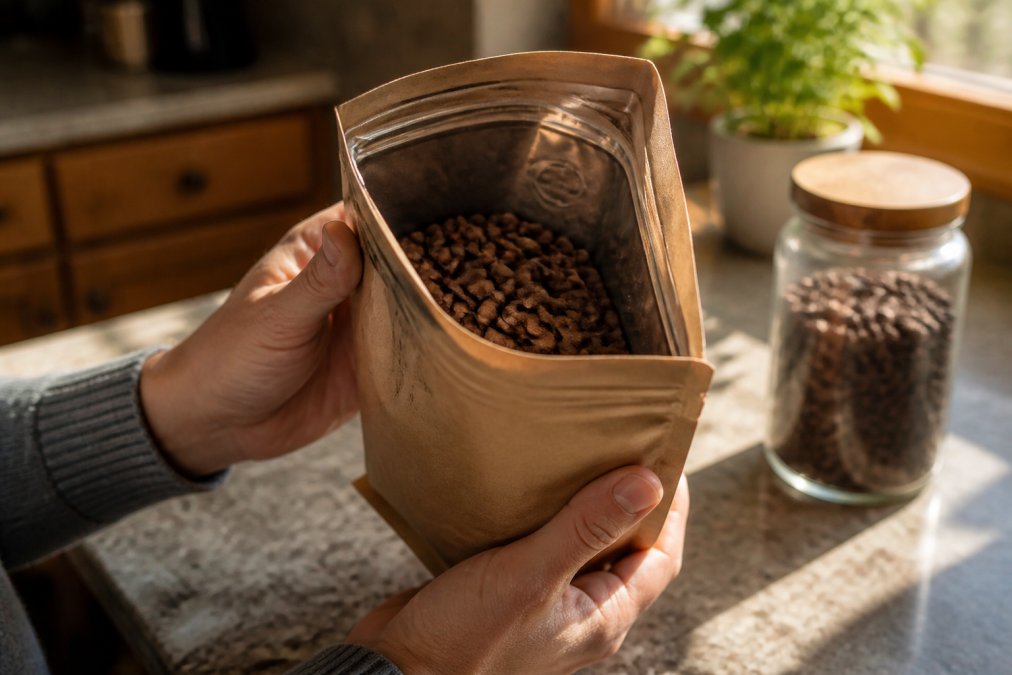
The Gap Between Roasting and Your Grocery Shelf
Supermarket coffee is often roasted in large batches and stored for extended periods before sale. The result is technically safe to drink but has lost most of its aromatic complexity, the beans have already passed their peak window.
What Freshness Does to Flavor and Aroma
Freshly roasted coffee is defined by its volatile aroma compounds, most intense within the first few weeks after roasting. These give coffee its distinctive notes, from fruity and floral to chocolatey and nutty. Oxidation degrades them over time, which is why a stale bag tastes flat and papery.
Antioxidants and Chlorogenic Acid in Freshly Roasted Coffee
Coffee is one of the largest sources of antioxidants in many diets, and chlorogenic acid is the most studied. It belongs to a family of polyphenols that help neutralize free radicals. Its concentration in your cup depends on how the beans were roasted and how long they sat on a shelf.
How Roasting Profiles Change Antioxidant Levels
Roasting profiles directly affect how much chlorogenic acid survives. Lighter roasts retain more; darker roasts break down more through prolonged heat. That does not make light roasts automatically healthier, the trade-off is a sharper, more acidic cup that some drinkers find harder on the stomach.
Fresh vs. Stale: What the Research Suggests
Roasters and researchers have observed that antioxidant activity declines as beans age. Oxidation does not just ruin flavor; it degrades the polyphenols that give coffee much of its health appeal. A common mistake is buying in bulk to save money, only to drink stale coffee for weeks.
How the Coffee Degassing Process Affects Your Brew
The coffee degassing process is the release of carbon dioxide trapped inside beans during roasting. Heat drives off moisture and triggers the Maillard reaction and caramelization, generating CO2 that becomes trapped in the bean's porous cell structure. Once roasting stops, that gas slowly escapes over days to weeks and directly affects how your coffee extracts.
The Chemistry Behind the CO2 Release
Two things drive degassing: a pressure differential, since the bean holds gas at a far higher concentration than the surrounding air, and the breakdown of the bean's brittle, porous internal structure, which gives gas an easy path out. Roast level changes the rate. Darker roasts are more porous and degas faster, so they can taste flat sooner; light roasts are denser, hold CO2 longer, and often need more rest before hitting their stride.
Why Freshly Roasted Beans Need Resting Time
Brew too soon and escaping gas disrupts water contact with the grounds. CO2 bubbles push water away from the particles, so extraction becomes uneven, sour, hollow, or inconsistent cups even with good technique. That is why a bag roasted yesterday can brew worse than the same coffee rested a week.
Resting windows vary by method:
- Pour-over and drip: 3 to 7 days post-roast. Gentle, continuous water contact tolerates a little residual gas.
- French press and immersion: 5 to 10 days. Immersion is forgiving, but too-fresh beans still produce a muddy, gassy cup.
- Espresso: 7 to 14 days. The short, high-pressure shot magnifies any inconsistency in the puck, so espresso roasters recommend longer rests than filter roasters.
- Cold brew: 5 to 14 days. The long, low-temperature steep extracts slowly, so slightly fresher beans are workable.
How to Tell Where a Bag Is in Its Degassing Cycle
A simple way to judge degassing: seal beans in a one-way valve bag and check whether it has puffed up. Once the puffing slows, the beans are usually ready. You can also watch the bloom, the swelling and bubbling when hot water hits the grounds.
Why Degassing Matters Beyond Flavor
Degassing is not just a flavor issue. The oxidation that follows degassing degrades the polyphenols and volatile aroma compounds that give coffee its health appeal. A bean that has fully degassed and then sat on a shelf for months has lost much of what made it worth drinking.
How to Store Fresh Coffee Beans for Peak Flavor
Storing fresh coffee beans correctly is the biggest factor in how long they stay enjoyable after opening. The enemies are oxygen, moisture, heat, and light. Keep beans in an airtight, opaque container at room temperature, and buy only what you will drink within a few weeks.
Common Storage Mistakes That Ruin Fresh Beans
- Storing beans in the freezer without sealing them properly, which introduces moisture
- Leaving the bag open on the counter between brews
- Transferring beans to a clear glass jar that lets light through
- Grinding the entire bag at once instead of grinding per brew
- Buying more than you can realistically drink before it goes stale
Signs of Stale Coffee Beans and What They Cost You
Knowing the signs of stale coffee beans saves you from brewing disappointment. Watch for a flat, cardboard-like smell, a dull surface with no oily sheen, and no aroma when you open the bag. If your coffee tastes weak no matter how much you use, staleness is often the culprit.
Health Benefits of Freshly Roasted Coffee: What the Evidence Shows
Coffee's health benefits are widely discussed, but freshness is often left out. The compounds responsible for coffee's potential benefits are the same ones that degrade with age. Drinking fresh coffee means getting more of what makes coffee worth drinking, though the picture is more nuanced than "fresh equals healthier."
Cardiovascular Health and Blood Circulation
Moderate coffee consumption is commonly associated with cardiovascular health and healthy blood circulation. Polyphenols, particularly chlorogenic acid and its metabolites, may support blood vessel function by influencing nitric oxide availability and reducing oxidative stress. Freshness matters because those polyphenols decline as beans oxidize, a stale bean has already lost a meaningful share of the compounds behind the cardiovascular association.
Metabolism, Mental Health, and Inflammation
Caffeine is well known for its effect on metabolic rate and alertness, and coffee's antioxidants may help manage inflammation. Many people also report improved mood and focus from their morning cup. Freshly roasted coffee delivers these compounds at their most potent, but caffeine content is fairly stable over time, so the freshness benefit here is mostly polyphenols and aroma compounds, not caffeine.
The Roast-Level Trade-Off Nobody Explains
Lighter roasts retain more chlorogenic acid but tend to be more acidic. Darker roasts break down more chlorogenic acid through prolonged heat but are often easier on the stomach. So "healthiest roast" depends on what you are optimizing for: a light or medium roast for antioxidant content, a darker roast if you have a sensitive stomach or reflux.
Acidity, Digestive Health, and GERD
If coffee bothers your stomach, the roast profile matters more than most people realize. The compounds that give coffee its bright, sharp acidity, and can trigger reflux, are more concentrated in lighter roasts. Darker roasts lose some of those acids during the longer roast, which is why many people with GERD or general stomach sensitivity find them easier to tolerate.
Mycotoxins and Mold: A Question Worth Asking
A topic most coffee blogs skip: mycotoxins, compounds produced by certain molds that can grow on coffee beans, particularly during humid storage. Regulators and importers screen for them, and most reputable roasters source beans that have passed testing. The practical takeaway: buy from roasters who can speak to their sourcing and testing practices, store beans in a cool, dry place, and avoid beans that smell musty or show visible mold.
Brewing Method and Nutrient Retention
How you brew affects how much of coffee's beneficial compounds end up in your cup. Paper filters trap some oils and lipids, while metal filters let more through, including the diterpenes cafestol and kahweol, which some research links to changes in cholesterol. If cholesterol is a concern, paper-filtered methods like drip or pour-over are the more conservative choice.
| Factor | Freshly Roasted Beans | Stale Grocery Beans |
|---|---|---|
| Aroma compounds | Peak intensity | Largely degraded |
| Chlorogenic acid | Higher retention | Reduced by oxidation |
| Flavor notes | Distinct and layered | Flat and papery |
| Brew consistency | Predictable extraction | Uneven results |
| Best window | Days to weeks after roast | Unknown roast date |
What This Means for Your Daily Cup
The honest summary: freshly roasted coffee gives you more of the compounds that make coffee interesting, but "more" is not "medically proven." The strongest case for freshness is that it preserves both flavor and the polyphenols researchers study. The strongest case for watching roast level and brewing method is that they let you tune coffee to your own body, a light roast for antioxidant content, a dark roast for stomach comfort, or a paper-filtered brew if cholesterol is on your radar.
Brewing Methods That Preserve Freshness and Nutrients
Grinding fresh right before brewing is the most impactful habit you can build. Match your grind size to your method, use filtered water, and drink your coffee soon after brewing rather than letting it sit on a hot plate. These small choices compound over time.
Frequently Asked Questions
How soon should you use freshly roasted coffee beans?
Freshly roasted coffee beans peak between 4 and 14 days after the roast date, once the degassing process has released most of the carbon dioxide. Use them within 2 to 4 weeks for the best flavor and aroma. Beyond that window, oxidation and stale flavors set in. Buying from a roaster that ships within hours of roasting, like Lux Brew Coffee Co., means your beans arrive in the ideal window rather than sitting on a shelf for months.
Does freshly roasted coffee have more antioxidants than stale coffee?
Yes. Freshly roasted coffee retains higher levels of chlorogenic acid and other polyphenols, the compounds responsible for most of coffee's antioxidant activity. As beans age, oxidation degrades these compounds, so a bag that has sat for months delivers less antioxidant value per cup. Roast profile also matters: light and medium roasts generally preserve more chlorogenic acid than dark roasts, which lose some during extended roasting.
What are the signs of stale coffee beans?
Signs of stale coffee beans include a dull, flat aroma instead of a bright one, beans that look oily or faded rather than matte, and a brew that tastes papery, cardboard-like, or sour without sweetness. Another clue is a lack of bloom when you pour hot water over the grounds, since fresh beans release carbon dioxide that creates that bubbling. If your coffee tastes lifeless no matter how you brew it, the beans are likely past their prime.
Is there a difference in caffeine content between fresh and old coffee beans?
Caffeine itself is stable and does not degrade much with age, so a stale bean and a fresh bean of the same origin and roast level contain roughly similar caffeine. What changes is how you perceive it. Fresh beans extract more evenly, giving you a balanced cup where caffeine's effects feel smoother. Stale beans can extract unevenly, sometimes pulling more bitterness and less of the compounds that round out the caffeine. Freshness is about quality, not a caffeine boost.
Most coffee drinkers have never tasted their beans at peak freshness, and that gap is exactly what Lux Brew Coffee Co. exists to close. We roast every batch to order, ship within hours of roasting, and source specialty grade beans from ethical family farms, so the bag that arrives at your door is closer to the roaster than anything on a grocery shelf. If you want to taste the difference that roast date makes, explore the Lux Brew Coffee Co. collection and start your subscription today.