

Table of Contents
- Why Freshly Brewed Coffee Tastes Bitter: The Core Causes
- Over-Extracted vs Under-Extracted Coffee: How to Tell the Difference
- How to Adjust Coffee Grind Size to Control Bitterness
- Water Temperature and Brew Time: The Extraction Window
- The Ideal Coffee to Water Ratio for Balanced Flavor
- Bean Quality, Roast Level, and Freshness: Why Stale Beans Taste Bitter
- Water Quality and Clean Equipment: Hidden Sources of Bitterness
- Frequently Asked Questions
Last Updated: September 16, 2026
Why Freshly Brewed Coffee Tastes Bitter: The Core Causes
Bitterness in freshly brewed coffee almost always traces back to over-extraction: hot water pulling too many soluble compounds out of the grounds. This guide from Lux Brew Coffee Co. breaks down what causes bitter taste in freshly brewed coffee and how to fix it at the source.
When coffee tastes harsh or drying, the culprit is rarely the bean itself. It's the brewing variables working against you.
Over-extraction is the process of dissolving too much from the coffee grounds during brewing. When water stays in contact with grounds too long, or at too high a temperature, it strips out bitter compounds that would otherwise stay locked in the puck.
Here's what most guides gloss over: bitterness and sourness are two ends of the same dial. Under-extract and you get sharp, acidic sourness. Over-extract and you get the bitter, astringent bite. The goal is landing in the middle.
Over-Extracted vs Under-Extracted Coffee: How to Tell the Difference
The fastest way to diagnose your brew is by taste, not by guesswork. Under-extracted coffee tastes sour, salty, and thin. Over-extracted coffee tastes bitter, dry, and hollow.
Your palate is the first diagnostic tool. If the finish makes you wince and coats your tongue with a drying sensation, you've pushed extraction too far.
Astringency is that drying, chalky feeling on the palate, and it's the clearest sign of over-extraction. It comes from tannins and other bitter compounds released late in the brew cycle.
Under-extraction shows up differently. The cup tastes weak but also sharp, with an acidic edge that lingers. Many drinkers misread this as "brightness" when it's actually a brewing fault.
A useful habit: taste your coffee black before adding anything. Milk and sugar mask the exact signals you need to read.
[Specialty Coffee(/blogs/news/is-fresh-roasted-coffee-worth-it) Association brewing standards | sca.coffee]
How to Adjust Coffee Grind Size to Control Bitterness
Grind size is the single most powerful lever you control. Finer grinds extract faster and push toward bitterness; coarser grinds slow extraction and reduce it.
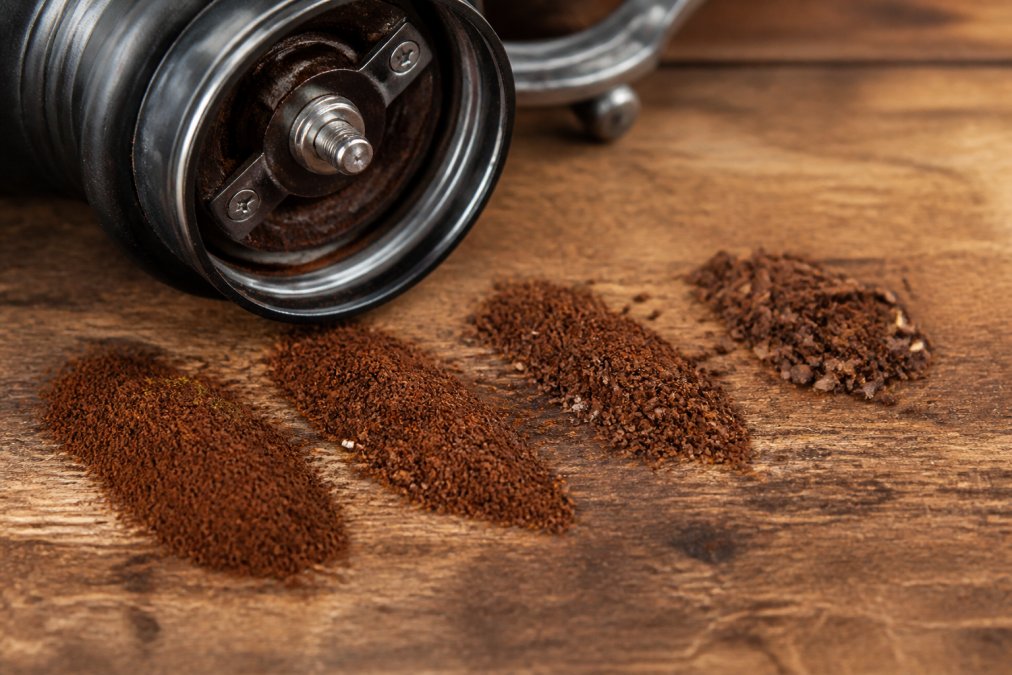
If your coffee tastes bitter, coarsen the grind by one setting and brew again. That one change often solves the problem outright.
Here's the practical breakdown by method:
| Brew Method | Grind Size | Typical Brew Time |
|---|---|---|
| French press | Coarse | 4 minutes |
| Drip | Medium | 4-5 minutes |
| Pour-over | Medium-fine | 2-3 minutes |
| Espresso | Fine | 25-30 seconds |
A burr grinder produces uniform particles, which matters more than most people realize. Blade grinders create a mix of dust and boulders, so some grounds over-extract while others under-extract in the same brew.
Water Temperature and Brew Time: The Extraction Window
Water temperature and contact time form the extraction window, and getting either wrong is enough to make a good bean taste bitter. The problem with most advice here is that it stays vague, "just off a boil" and "don't overbrew" don't tell you what number to hit.
The working range for most brew methods is 195°F to 205°F (90.5°C to 96°C). Below 195°F, water under-extracts and the cup tastes sour, salty, and thin. Above 205°F, it strips bitter compounds and tannins aggressively, and the cup turns harsh and drying. The sweet spot for most medium roasts sits around 200°F.
Here's the part that matters: you cannot hit 200°F by eyeballing a kettle. Water boils at 212°F at sea level, and it drops roughly 1°F per 30 seconds of resting in a typical gooseneck kettle. So "just off a boil" is a 30-to-60-second window, not a vague instruction. If you want to be precise, a $20 instant-read thermometer or a variable-temperature kettle removes the guesswork entirely.
Roast level shifts the target. Dark roasts are more porous and extract faster, so they often taste best brewed a few degrees cooler, around 195°F to 200°F. Light roasts are denser and need more energy to extract fully, so push toward 200°F to 205°F. Brewing a dark roast at 205°F is one of the most common causes of a bitter cup that the brewer blames on the bean.
Brew time is the other half of the window, and it is not a single number. Each method has its own target, and missing it by 30 seconds can shift the cup noticeably:
| Brew Method | Target Brew Time | What Happens If You Overshoot |
|---|---|---|
| French press | 4 minutes steep, then press | Tannins and fine particles keep extracting; cup turns muddy and astringent |
| Drip | 4 to 5 minutes total cycle | Water sits on the bed too long; bitterness climbs and the finish dries out |
| Pour-over | 2.5 to 3.5 minutes total | Flow slows as the bed compacts; late drips extract harsh compounds |
| Espresso | 25 to 30 seconds for a 1:2 shot | Past 30 seconds, the shot turns bitter and ashy; under 25, it's sour |
The mechanism behind the time limit: coffee releases its compounds in a rough order. Acids and sugars dissolve first, in the first 30 to 60 seconds of contact. Then the balanced middle compounds come out. Bitter compounds, caffeine, chlorogenic acid lactones, and tannins, release last, and they keep releasing as long as water is in contact with the grounds. There is no cutoff point where the water stops pulling bitterness; it only stops when you stop the brew.
That's why the fix for a bitter cup is almost always to shorten contact time or lower temperature, not to add more coffee. Adding coffee masks the bitterness but doesn't remove it, and it throws off your ratio in the process.
A practical starting routine: heat water to 200°F, start your timer when the water first hits the grounds, and stop the brew at the low end of your method's target window. If the cup is sour, add 15 seconds or 5°F. If it's bitter, subtract the same. Change one variable at a time so you can actually read the result.
The Ideal Coffee to Water Ratio for Balanced Flavor
The coffee-to-water ratio is the most overlooked cause of bitterness, and it's also the one most articles skip past. Most guides tell you to adjust grind and temperature, then wave at ratio as an afterthought. Here's the mechanism they leave out.
Ratio controls two separate things at once: strength and extraction.
| Brew Method | Typical Ratio | Why |
|---|---|---|
| French press | 1:12 to 1:15 | Full immersion needs a stronger dose to compensate for the metal filter passing more oils and fines |
| Drip | 1:15 to 1:17 | Paper filter strips oils, so a slightly weaker ratio keeps the cup from tasting thin |
| Pour-over | 1:15 to 1:16 | Faster flow means less contact time per gram, so dose carries more of the load |
| Espresso | 1:2 to 1:2.5 | Concentrated by design; ratio here is dose-to-yield, not dose-to-brew-water |
Weigh your coffee if you can. A kitchen scale removes the guesswork that volume scoops introduce, and it's the single cheapest upgrade to your consistency.
Bean Quality, Roast Level, and Freshness: Why Stale Beans Taste Bitter
Stale beans taste bitter because oxidation changes the oils and acids that give coffee its balance. Freshness is not a luxury; it's a flavor variable.
Water Quality and Clean Equipment: Hidden Sources of Bitterness
Your water and your equipment quietly shape every cup. Hard water and dirty gear are two of the most common hidden sources of bitterness.
- Rinse your brewing equipment after every use
- Descale monthly, or more often with hard water
- Use filtered water when tap water tastes strongly of chlorine
- Clean your grinder to remove stale oil residue
Frequently Asked Questions
Does water temperature affect coffee bitterness?
Yes. Water that is too hot, above 205°F, pulls out harsh bitter compounds and tannins from the coffee grounds too quickly. The ideal range is 195°F to 205°F. If your brewer runs hot, let the water sit for 30 seconds after boiling before pouring. Lower temperatures slow extraction and reduce astringency, giving you a smoother cup.
How does grind size impact the flavor profile of coffee?
Grind size controls how fast water extracts flavor from the grounds. A fine grind exposes more surface area, speeding extraction and often causing bitterness. A coarse grind slows extraction and can leave coffee sour or weak. Matching grind size to your brewing method, fine for espresso, medium for drip, coarse for French press, is the fastest way to fix bitter coffee.
What is the correct coffee to water ratio for pour-over?
A common starting point is 1 gram of coffee to 15-17 grams of water, often called the 1:15 to 1:17 ratio. For a standard 12-ounce cup, that means roughly 20 to 22 grams of coffee. If your coffee tastes bitter, try increasing the water slightly or reducing the coffee dose. Adjust in small steps and track what changes.
Can stale beans cause bitter taste in freshly brewed coffee?
Yes. Beans past their peak, usually more than 4 to 6 weeks after roast, lose volatile oils and develop oxidized, bitter flavors. Coffee roasted to order and shipped within hours of roasting, like what Lux Brew Coffee Co. offers, preserves the flavor profile and reduces the chance of bitterness from staleness. Check the roast date on every bag.