

Table of Contents
- Is Organic Specialty Coffee Worth It? The Honest Answer
- The Real Benefits of Organic Coffee
- Organic vs. Conventional Coffee: What Actually Changes in the Cup
- Certified Organic Coffee: What the Labels Really Mean
- Specialty Grade and Organic Are Not the Same Thing
- How to Choose Organic Coffee Beans That Fit Your Routine
- Conclusion: Who Should Pay the Organic Specialty Premium
- Frequently Asked Questions
Last Updated: October 6, 2026
Is Organic Specialty Coffee Worth It? The Honest Answer
Is organic specialty coffee worth it? For most daily drinkers, yes, if you value flavor clarity, farming standards, and freshness over the lowest price per bag. It is not worth it if you drink coffee purely for caffeine and never notice how a cup tastes.
At Lux Brew Coffee Co., we source from ethical family farms and roast every batch to order, so we see both sides of this question. The short version: you are paying for two separate things, organic certification and specialty grade quality, and they do not always arrive in the same bag.
Below, we break down what organic farming actually changes, where the cost gap comes from, and how to decide whether the premium fits your routine.
The Real Benefits of Organic Coffee
The main benefit of organic coffee is what it leaves out: synthetic pesticides and fertilizers are not used on the crop. That matters most to people who drink several cups a day and want to limit their exposure to chemical residues.
Organic farming also tends to work differently at the farm level. Growers often rely on composting, shade management, and natural pest control instead of chemical inputs. That approach usually costs more to run, which is part of why organic beans carry a higher price.
What You Avoid With Organic Beans
Certified organic coffee is grown without most synthetic pesticides and fertilizers, and it is processed without certain chemical treatments. For a heavy coffee drinker, that is the core selling point.
What it does not guarantee is better taste. A poorly roasted organic bean still tastes flat. Organic status describes how the coffee was grown, not how it was handled after harvest.
Environmental Impact and Farming Practices
Organic certification also covers soil and water practices. Growers typically manage shade, control erosion, and avoid synthetic inputs that can run off into local water sources.
For buyers who care about sustainability, that is a real difference. Just remember that "organic" and "ethically sourced" are not identical claims. A farm can be organic and still pay poorly, or pay well and skip certification entirely.
Organic vs. Conventional Coffee: What Actually Changes in the Cup
In the cup, the difference between organic and conventional coffee is smaller than most marketing suggests. The bigger variable is roast quality and freshness, not the certification stamp.
A conventional bean roasted this week will usually beat an organic bean that has sat in a warehouse for months. That is the part most comparisons skip.
Taste, Health, and the Cost Gap
Taste comes down to origin, processing, and roast date far more than organic status. Two beans from the same region, one organic and one not, can taste nearly identical if both are roasted well.
The health argument is more about residue avoidance than a nutritional upgrade. Organic coffee is not a different beverage; it is the same beverage grown under stricter input rules.
The cost gap is real. Organic beans typically cost more per bag because certification, smaller yields, and labor-intensive farming all add expense. Whether that gap is worth it depends on how much you value the farming method versus the flavor in your mug.
Certified Organic Coffee: What the Labels Really Mean
Certified organic coffee means a third-party certifier verified that the coffee was grown and handled according to organic standards. In the United States, the USDA Organic seal is the label to look for.
That seal is not self-declared. Farms and handlers go through inspection and documentation to carry it, which is why certified beans cost more. For details on what the certification covers, see the USDA Organic standards and certification.
Other seals exist, including international equivalents and additional third-party certifications some roasters pursue. More certification is not automatically better coffee, but it does mean more verification.
Specialty Grade and Organic Are Not the Same Thing
Specialty grade and organic are separate quality signals, and confusing them is where most buyers overspend. Specialty grade is a scoring standard based on bean quality, defects, and cup characteristics. Organic is a farming and processing standard.
A bean can be specialty grade without being organic, or organic without meeting specialty grade.
| Label | What It Measures | What It Does Not Tell You |
|---|---|---|
| USDA Organic | Farming and processing inputs | Flavor quality or freshness |
| Specialty grade | Bean quality and cup score | Farming method |
| Roast date | Freshness after roasting | Origin or certification |
| Single origin | Sourcing from one region | Whether it is organic |
The best bags usually carry more than one of these. If you have to prioritize, freshness and specialty grade affect your daily cup more than certification alone.
How to Choose Organic Coffee Beans That Fit Your Routine
Choosing organic coffee beans starts with matching the bag to how you actually brew. A pour-over drinker chasing flavor clarity has different priorities than someone running a drip machine every morning.
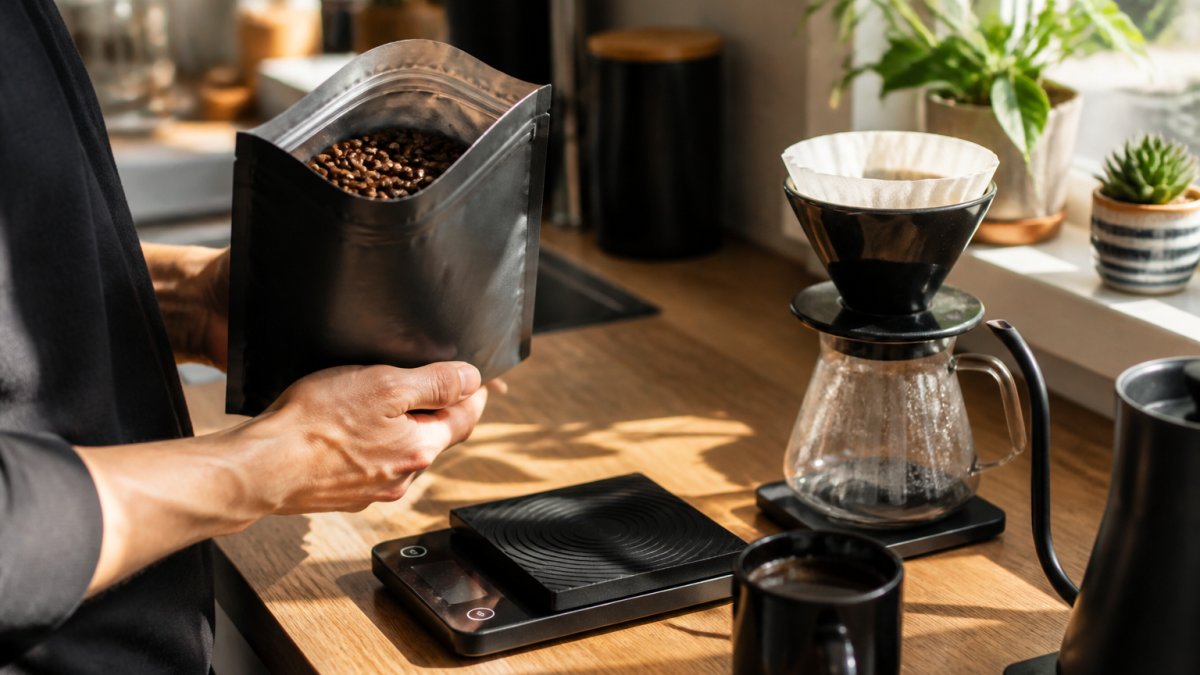
Here is how we would narrow it down:
- Check the roast date first. Freshness beats certification in the cup. Look for a roast date, not just a best-by date.
- Decide if you want organic, specialty grade, or both. If residues are your concern, prioritize certified organic. If flavor is the goal, prioritize specialty grade.
- Match the roast to your brewer. Lighter roasts suit pour-over and drip; darker roasts hold up in espresso and milk drinks.
- Buy whole bean if you can. Pre-ground coffee loses aroma faster, so whole bean keeps more of what you paid for.
- Start with one origin before subscribing. Buy a single bag, brew it your usual way, then commit to a subscription once you know you like it.
For a casual drinker, a medium roast single origin is the easiest place to start. You do not need an expensive setup to taste the difference; a simple pour-over or drip brewer is enough.
This is where roasting to order changes the equation. Lux Brew Coffee Co. roasts every batch to order and ships within hours of roasting, which addresses the freshness problem that undercuts most organic beans sitting on a shelf.
Conclusion: Who Should Pay the Organic Specialty Premium
Organic specialty coffee is worth the premium if you drink coffee daily, notice flavor differences, and care about how the beans were farmed. It is a harder sell if you drink one rushed cup a week and never think about it again.
For the first group, the value comes from three things stacking up: certified organic growing, specialty grade quality, and a roast date close to your brew day. Miss any one of those and the premium gets harder to justify.
Frequently Asked Questions
Is organic specialty coffee worth the extra cost?
It depends on what you value. Organic specialty coffee typically costs more because of certification fees, smaller harvests, and careful processing. If you drink coffee daily and care about farming practices, the premium often feels justified. If you mainly want a caffeine hit, conventional coffee does the job for less. Compare prices per bag at a specialty roaster before deciding, since the gap varies by origin and roast.
Does organic coffee taste better than conventional coffee?
Organic certification does not guarantee better flavor on its own. Taste comes from origin, roast level, and freshness. A conventionally grown specialty-grade bean can outperform a stale organic one. That said, many organic coffees are also specialty grade, so they get scored for defects and flavor. Look for roast date and grade, not just the organic seal, when judging quality.
What does certified organic mean for coffee?
In the United States, certified organic coffee must be grown without synthetic pesticides or fertilizers and processed under USDA organic standards. Farms undergo inspections and keep detailed records. The certification covers the growing and handling process, not flavor or freshness. A bag can carry the USDA seal and still sit on a shelf for months, so check the roast date too.
Is specialty coffee always organic?
No. Specialty grade refers to bean quality, scoring 80 points or higher on a standardized scale for defects, flavor, and consistency. Organic refers to farming methods. A coffee can be specialty grade without organic certification, or organic without reaching specialty grade. The best bags carry both, which is why roasters that source carefully often highlight both on the label.
The real challenge is not finding organic coffee. It is finding organic coffee that was roasted recently enough to taste like it. Lux Brew Coffee Co. roasts every batch to order, ships within hours of roasting, and sources specialty grade beans from ethical family farms. If you want the organic premium to actually show up in your cup, start with Lux Brew Coffee Co. and taste what fresh roasting does for a daily brew.