

Table of Contents
- Why Proper Storage Matters for Loose Leaf Tea
- Best Tea Storage Containers: Materials and Design
- The Four Essential Storage Conditions
- How Long Does Loose Leaf Tea Stay Fresh
- Tea Storage Tips for Flavor Preservation
- Common Storage Mistakes to Avoid
- Conclusion
Last Updated: August 29, 2026
Why Proper Storage Matters for Loose Leaf Tea
Loose leaf tea contains volatile oils and delicate compounds that degrade when exposed to oxygen, light, heat, and moisture. Proper storage preserves the flavor, aroma, and quality you paid for. The moment tea leaves are processed, oxidation begins. Improper storage accelerates this dramatically, a bag left open on your kitchen counter tastes stale within days, while the same tea stored correctly maintains its character for months.
Oxidation breaks down the sensory characteristics that make tea distinctive. Moisture invites mold growth. Light degrades flavor compounds. Scent contamination from nearby spices or coffee can completely mask the tea's intended profile.
This guide covers how to achieve all four conditions, what materials work best, how long different teas stay fresh, and the specific mistakes that ruin tea before you brew it.
Best Tea Storage Containers: Materials and Design
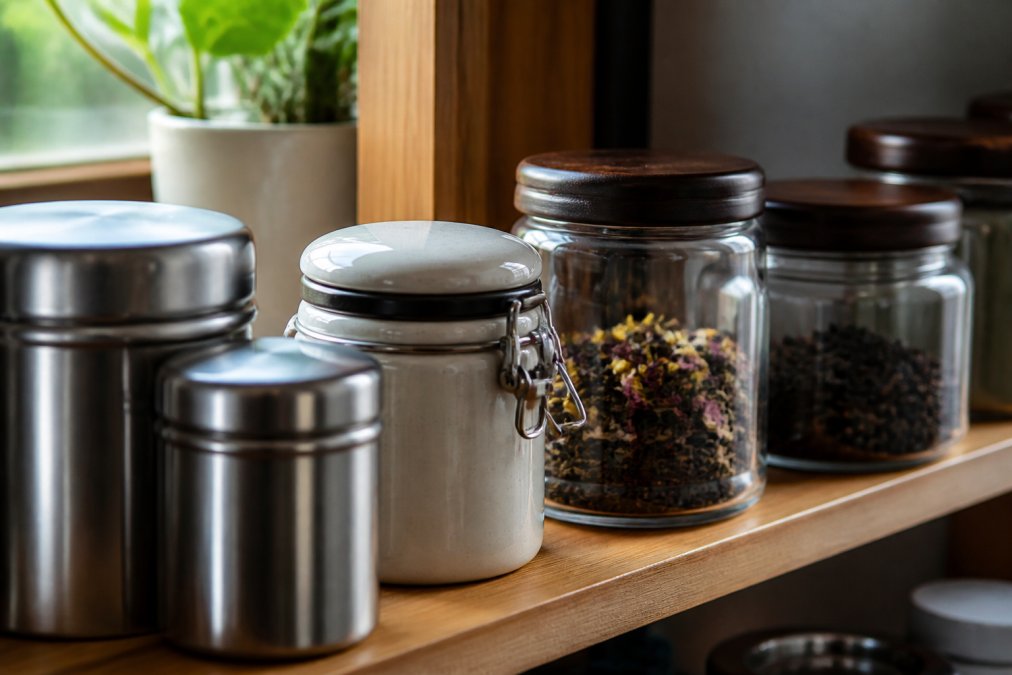
The best tea storage containers combine three critical features: airtight sealing, opaque construction, and food-grade materials that won't leach into your tea.
Airtight Containers and Oxygen Barriers
An airtight container is non-negotiable. Oxygen triggers oxidation, breaking down flavor compounds and creating stale, papery notes. The best containers have rubber gaskets or bayonet-style lids that create a true seal. Test the seal by pressing the lid down firmly; you should feel resistance and hear a slight pop when you open it.
Vacuum-sealed containers remove most oxygen inside, dramatically slowing oxidation. For storage longer than three months, vacuum sealing is worth the investment. Place tea in a vacuum bag, use a home vacuum sealer, and store in a cool, dark place. This method extends shelf life significantly compared to standard airtight containers.
Opaque Storage and UV Protection
Light degrades tea's delicate compounds, particularly in green and white teas, which are less oxidized and therefore more vulnerable. The best tea storage containers are opaque, completely blocking light. Stainless steel tins, ceramic jars, and dark glass all work well. Store containers away from windows and out of direct light. A dark pantry shelf or cabinet is ideal.
Some enthusiasts use double-container systems: an opaque outer tin and a smaller glass container inside for viewing without opening the main seal.
Food-Grade Materials and Durability
Containers must be food-grade, certified safe for storing consumables. Avoid anything with metallic coatings that might chip, painted surfaces that could flake, or plastics with unknown origins.
Stainless steel is the gold standard, durable, doesn't interact with tea, blocks light and oxygen, and lasts indefinitely. Tin canisters work well too, though more prone to denting. Ceramic jars with airtight lids are excellent if the glaze is food-safe. Glass works only if dark or stored away from light. Avoid plastic unless explicitly food-grade and BPA-free.
Size matters as well. A container too large for your tea will have excess air space, increasing oxidation. Fill containers as full as practical. If you buy tea in bulk, divide it into smaller containers for daily use and store the rest in a larger, sealed container in the coolest part of your home.
The Four Essential Storage Conditions
Proper loose leaf tea storage requires managing four variables simultaneously. Miss any one, and quality degrades.
Temperature Control and Cool Dry Places
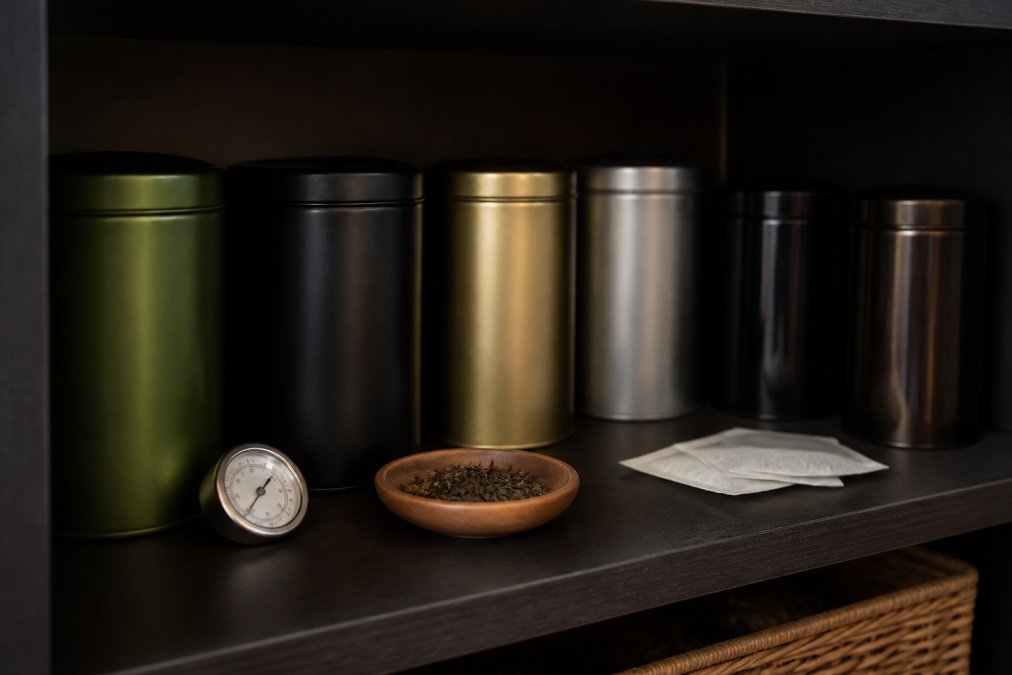
Tea degrades faster at higher temperatures. Heat accelerates oxidation and moisture absorption. The ideal storage temperature is between 60-70°F (peer-reviewed research). A cool pantry, cabinet, or closet is perfect. Avoid kitchens near stoves or ovens, bathrooms (too humid), and windowsills (temperature fluctuates).
Never refrigerate loose leaf tea. Refrigerators introduce condensation every time you open the door, damaging tea. Freezing is worse, repeated thaw-freeze cycles create moisture problems. Room temperature in a cool part of your home is always better.
Temperature consistency matters as much as absolute temperature. Fluctuating temperatures cause the air inside your container to expand and contract, pushing moisture in and out. A basement or interior closet is better than a kitchen shelf.
Moisture Absorption and Humidity Control
Tea is hygroscopic, it absorbs moisture from the air. Even a few percentage points of humidity increase can lead to mold growth, flavor degradation, and clumping. The ideal humidity level for tea storage is below 50% (the FDA).
If you live in a humid climate, use desiccant packets inside your containers. Food-grade silica gel packets are cheap and effective. Place one packet in each container and replace it every few months. Check containers occasionally for condensation on the inside of the lid, a sign humidity is getting in.
Light Sensitivity and Flavor Degradation
Light degrades tea's flavor compounds through photodegradation. Green teas and white teas, which are lightly oxidized, are most vulnerable. Black teas and oolong teas are more resilient but still benefit from dark storage.
Store all tea in opaque containers in a dark location. A pantry, cabinet, or closet works. If you must use glass containers, keep them away from windows and in the darkest part of your kitchen. Avoid displaying tea on open shelves, light exposure over months adds up.
Scent Contamination and Aroma Retention
Tea absorbs odors from its surroundings. Store it near coffee, spices, or anything with a strong smell, and your tea will taste like those things instead of itself. This is particularly true for delicate white and green teas.
Store tea away from the coffee maker, spice rack, and anything aromatic. Keep tea in sealed containers even inside a cabinet. If you buy tea from multiple sources, store them separately or in individual airtight containers so they don't cross-contaminate.
How Long Does Loose Leaf Tea Stay Fresh
The shelf life of loose leaf tea depends on the type, storage conditions, and how you define "fresh." Properly stored tea doesn't expire in the traditional sense, but it gradually loses flavor and aroma.
Shelf Life by Tea Type
White teas and green teas have a shelf life of 6-12 months when properly stored (peer-reviewed research). After that, they begin to lose their subtle, grassy, or floral notes.
Oolong teas typically stay fresh for 12-18 months. Black teas are the most stable, maintaining good quality for 18-24 months or longer.
Pu-erh teas are meant to be stored long-term and can improve over years or decades when kept in the right conditions. Herbal blends vary widely depending on ingredients, most staying fresh for 6-12 months.
Signs of Spoiled or Stale Tea
Stale tea won't make you sick, but you'll notice immediately. The first sign is loss of aroma. Open the container and smell the tea. If it smells musty, flat, or like nothing much, the tea has oxidized. Fresh tea has a distinctive, pleasant aroma.
Visual changes indicate problems. If you see discoloration, mold, or unusual appearance, don't drink it. Mold means moisture got in, and the tea is no longer safe.
Taste is the final test. Stale tea tastes flat, papery, or dull. It loses the complexity and vibrancy of fresh tea.
Tea Storage Tips for Flavor Preservation
Beyond the four essential conditions, specific techniques extend freshness further.
Vacuum Sealing and Long-Term Preservation
Vacuum sealing removes most oxygen from a bag, creating an environment where oxidation happens much more slowly. Tea sealed this way can maintain quality for a year or more, compared to 6-12 months in a standard airtight container.
Place loose leaf tea in a vacuum-seal bag, use a home vacuum sealer to remove air, and seal the bag. Store the sealed bags in a cool, dark place. Some people then place vacuum-sealed bags inside airtight containers for additional protection. This is especially useful if you buy tea in bulk or want to store premium teas long-term.
Travel Storage Solutions
Traveling with tea requires portable solutions that maintain airtight, opaque conditions. Small stainless steel tins or airtight plastic containers work well for short trips. For longer trips, vacuum-seal small portions in bags. Label each bag with the tea type and date. TSA allows loose leaf tea in carry-on and checked baggage, just keep it sealed to prevent odor contamination.
Climate-Specific Storage Strategies
In hot, humid climates, use multiple layers of protection: airtight containers with desiccant packets, stored in the coolest, driest part of your home. A basement or interior closet is better than a kitchen shelf. Consider a small dehumidifier if humidity is consistently above 60%.
In dry climates, the main concern is temperature stability. Keep tea away from heating vents and direct sunlight. In mild climates, standard airtight, opaque containers in a cool pantry or cabinet are usually sufficient.
Common Storage Mistakes to Avoid
The most common mistake is leaving tea in its original packaging after opening. Many tea bags and loose leaf packages aren't designed for long-term preservation. Transfer tea to an airtight, opaque container as soon as you open it.
Displaying tea on open shelves looks nice but destroys quality. Light exposure, temperature fluctuations, and scent contamination all accelerate in open-shelf storage. Keep tea in closed cabinets or drawers.
Storing tea in the refrigerator is a common mistake. Moisture from repeated opening and closing damages tea far more than room temperature storage. Avoid refrigeration unless your home is consistently above 75°F with no cooler storage option.
Mixing different teas in one container causes cross-contamination. Each tea absorbs the aroma of others. Use separate containers.
Buying more tea than you can use in a reasonable timeframe is impractical. Tea degrades over time, no matter how well you store it. Buy what you'll drink within 6-12 months.
Not checking storage conditions periodically is easy to overlook. Once a month, check your tea containers for signs of condensation, odors, or visual changes.
Proper storage of artisan loose leaf tea is straightforward once you understand what tea needs: darkness, dryness, cool temperatures, and airtight sealing. The investment in quality containers and a good storage location pays for itself the first time you brew a cup of tea that tastes noticeably better. When you're buying premium tea from sources like Lux Brew Coffee Co., where every batch is selected for quality and freshness, storing it correctly ensures you experience the tea exactly as intended. Start with a single opaque, airtight container in your coolest, darkest cabinet, and you've solved most storage problems. Add vacuum sealing and desiccant packets for longer-term storage, and your tea will stay fresh for months.
| Storage Factor | Best Practice | Why It Matters |
|---|---|---|
| Container Type | Opaque, airtight tin or ceramic | Blocks light and oxygen, maintains seal |
| Temperature | 60-70°F, consistent | Slows oxidation and prevents moisture fluctuations |
| Humidity | Below 50% | Prevents mold growth and flavor degradation |
| Light Exposure | Dark cabinet or pantry | Preserves flavor compounds and aroma |
| Placement | Away from kitchen/spices | Prevents scent contamination |
| Duration | 6-18 months depending on type | White/green tea shorter; black tea longer |
Proper storage of loose leaf tea is one of the easiest ways to protect your investment in quality. When you start with fresh, artisan-grade tea from ethical sources, storing it correctly ensures every cup delivers the flavor and aroma the producer intended. At Lux Brew Coffee Co., we're committed to freshness at every step, from ethical sourcing to roasting to order to shipping within hours. How you store that tea at home completes the journey. Use airtight, opaque containers in a cool, dry place, and you'll taste the difference every time you brew.
Frequently Asked Questions
Should you store loose leaf tea in the fridge?
Avoid storing loose leaf tea in the refrigerator. Condensation from temperature fluctuations damages the tea and introduces unwanted moisture. Fridges also expose tea to strong food odors, causing scent contamination. Instead, keep tea in a cool, dry pantry away from direct sunlight. If you live in a hot, humid climate, an airtight container in a cool cupboard works better than refrigeration.
What is the best container to store loose leaf tea?
The best containers combine airtight sealing, opaque design, and food-grade materials. Tin canisters with tight-fitting lids offer excellent oxygen barriers and UV protection. Ceramic jars with airtight lids also work well. Glass containers are acceptable only if they are dark or stored away from light. Avoid clear plastic or containers that allow air exposure, as these accelerate oxidation and flavor degradation.
How long does loose leaf tea stay fresh when stored correctly?
Properly stored loose leaf tea typically stays fresh for 6 to 12 months. Black teas last longer (up to 12 months), while delicate white and green teas are best consumed within 6 to 8 months. Oolong and pu-erh teas can age well for years in ideal conditions. Shelf life depends on storage temperature, humidity, light exposure, and the tea's original quality. Check for visual changes or stale aroma to confirm freshness.
Does loose leaf tea expire if stored correctly?
Loose leaf tea does not expire in the traditional sense, but it does lose freshness over time through oxidation and volatile oil degradation. Proper storage in airtight containers away from light, heat, and moisture dramatically slows this process. Even well-stored tea eventually becomes stale, though it remains safe to drink. Most tea enthusiasts consume their tea within 6 to 12 months to enjoy peak flavor and aroma retention.
This article was written using GrandRanker