

Table of Contents
- Top 5 Budget Espresso Machines Under 300: Quick Comparison
- How We Tested and Ranked These Budget Espresso Machines
- 1. De'Longhi Stilosa: The Cheapest Way Into Real Espresso
- 3. Flair Pro 2: Best Manual Espresso Maker Under $300
- 4. De'Longhi Dedica: Slim, Fast, and Easy to Live With
- 5. Gaggia Classic Pro E24: Best Long-Term Value if You Buy Refurbished
- Manual vs. Semi-Automatic Espresso Machine: Which Fits Your Morning?
- Frequently Asked Questions
Last Updated: October 8, 2026
Top 5 Budget Espresso Machines Under 300: Quick Comparison
Finding a real espresso machine for under $300 used to mean settling for weak, watery shots. That changed. Today, a handful of machines in this price range pull genuine espresso with real pressure and real crema. This guide covers the top 5 budget espresso machines under 300, based on how they perform in a normal home kitchen, not a lab.
Quick Picks:
- Best Overall: Breville Bambino, closest to cafe-quality espresso near the top of the budget
- Best for Beginners: De'Longhi Stilosa, the lowest-cost way to learn real espresso
- Best Manual Option: Flair Pro 2, full control for hands-on brewers
- Best for Small Kitchens: De'Longhi Dedica, slim, fast, and simple
- Best Long-Term Value: Gaggia Classic Pro E24, repairable and built to last if bought refurbished
| Machine | Price Range | Type | Best For |
|---|---|---|---|
| De'Longhi Stilosa | Under $100 (reported promo) | Semi-automatic | First-time buyers |
| Breville Bambino | Around $299.95 (reported) | Semi-automatic | Beginners wanting quality |
| Flair Pro 2 | Not stated in our research | Manual | Hands-on brewers |
| De'Longhi Dedica | Not stated in our research | Semi-automatic | Small kitchens |
| Gaggia Classic Pro E24 | Sale, refurbished, or used only | Semi-automatic | Long-term ownership |
How We Tested and Ranked These Budget Espresso Machines
Each machine can be ranked on four measurable outcomes, not marketing claims: shot repeatability, milk-steaming capability, time-to-first-shot, and total cost of ownership over the first year.
A testing method (and what to replicate at home):
- Dose and yield: A 1:2 ratio, roughly 18 g of ground coffee in, about 36 g of espresso out, is a common baseline for a double shot.
- Shot time: A target of 25-30 seconds from first drip to finish is common. Faster usually means under-extracted and sour; slower usually means over-extracted and bitter.
- Temperature consistency: Pulling back-to-back shots can reveal flavor drift. Machines with small boilers and no PID tend to swing more between shots.
- Milk steaming: It's useful to time how long it takes to stretch and texturize about 4 oz of cold milk to a glossy microfoam, and note whether the wand has enough power to create a vortex.
- Repeatability: Pulling the same recipe three days in a row can reveal if the machine can reproduce a decent shot with the same beans and grind. If it cannot, it loses points regardless of price.
The cost most guides leave out. The machine is the entry fee, not the whole bill. A realistic first-year setup for a machine in this range usually looks like this:
| Item | Typical one-time cost | Notes |
|---|---|---|
| Espresso machine | $100-$300 | The headline number |
| Burr grinder | $80-$200 | The single biggest upgrade to shot quality |
| Scale (0.1 g) | $15-$30 | Needed to hit dose and yield targets |
| Tamper or leveler | $20-$50 | Often included, sometimes not |
| Milk pitcher | $10-$20 | Only if you drink milk drinks |
| Descaling solution | $10-$20 | Repeat purchase |
| Fresh beans | $15-$20 per bag | Recurring, roughly monthly for one daily drinker |
That means a "$150 machine" is realistically a $300-$500 first-year commitment once you add a grinder and the basics. Budget for the grinder before you budget for the machine.
A note on pressurized vs. non-pressurized baskets. Many machines in this price range ship with a pressurized (dual-wall) basket.
Ownership and maintenance. Espresso machines reward routine care. Backflush or clean the group regularly, descale on the schedule your water hardness demands (hard water means more often), and use filtered water if your tap runs mineral-heavy. Skipping descaling is the most common way a budget machine dies early. Most practitioners find that a machine cleaned on schedule outlasts an identical one that is not, often by years.
1. De'Longhi Stilosa: The Cheapest Way Into Real Espresso
The Stilosa is the lowest-cost route into genuine espresso we found in this category.
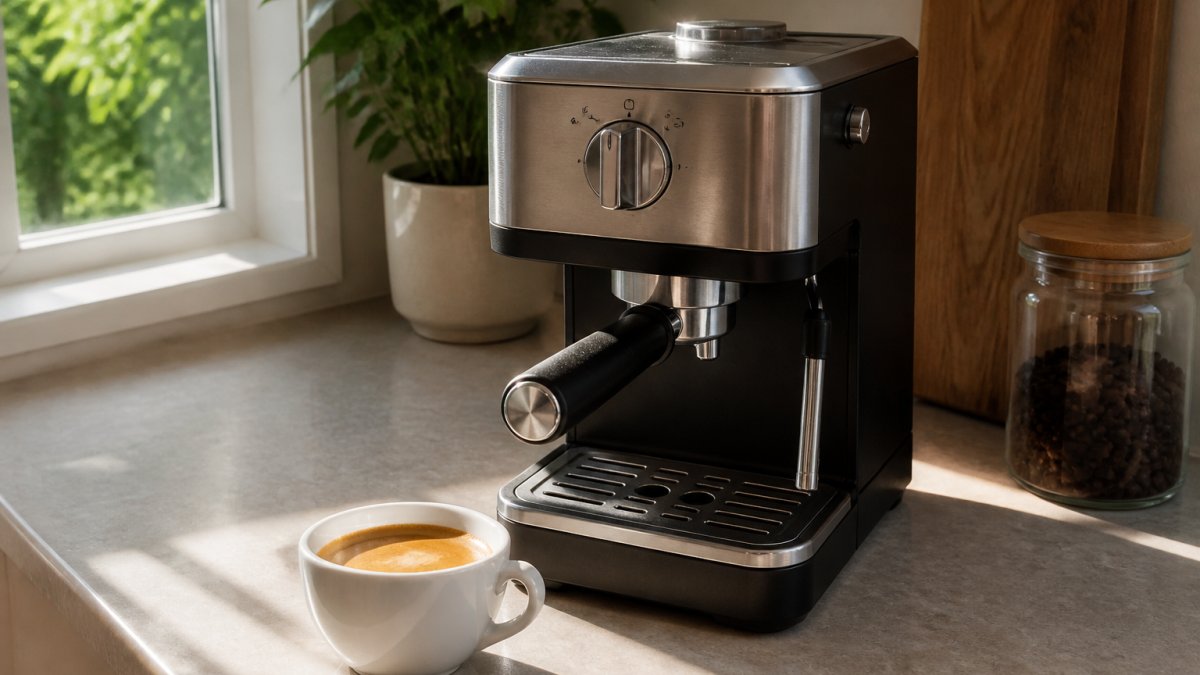
It uses a 15-bar pump and a pressurized basket, which means it forgives an inconsistent grind. For a first machine, that is a feature, not a flaw.
(/products/breville-barista-express-espresso-machine-bes870xl-brushed-stainless-steel)** we would hand a beginner who wants cafe-quality shots without a steep learning curve. One search result reported a price around $299.95, placing it right at the top of the budget.That reported price is not verified as current, so check before you buy. Note that this is the standard Bambino, not the Bambino Plus, which our research did not confirm as available under $300.
Where it earns its spot: it heats up fast and steams milk well for a machine at this price. Where it falls short: the reported price leaves almost no room in the budget for a grinder.
3. Flair Pro 2: Best Manual Espresso Maker Under $300
The Flair Pro 2 is a manual espresso maker, not an automatic machine. You supply the pressure by hand. A supplied discussion named it as an option at a budget of about $300, though our research did not confirm a current price.
Manual brewing means no pump to fail and no electronics to replace. It also means you control pre-infusion and pressure directly, which some brewers prefer. The tradeoff is real: no steam wand, so no milk drinks unless you froth separately.
If you want a manual vs. semi-automatic espresso machine comparison in one line: manual gives you control and durability, semi-automatic gives you speed and convenience.
4. De'Longhi Dedica: Slim, Fast, and Easy to Live With
The Dedica is the machine for tight counters and rushed mornings. Our research named it as a possible starter option, though it did not confirm a current price or full specs.
Its slim design is the standout feature for anyone short on counter space. It heats up quickly and keeps the routine simple, which matters more than horsepower when you are making one shot before work.
What most reviews miss is that slim machines often have smaller drip trays and water tanks. If you pull several shots a day, you will refill more often than you would with a larger machine.
5. Gaggia Classic Pro E24: Best Long-Term Value if You Buy Refurbished
The Gaggia Classic Pro E24 is the pick for buyers who care about repairability. One supplied result said it may fit a $300 budget only when on sale, refurbished, or used. A new unit was not supported as under $300 in our research.
That caveat is the whole point. This machine is built to be serviced, with widely available parts and a large owner community. A refurbished unit that you can maintain often outlasts a new machine you cannot repair.
If you are coming from a disposable capsule machine, expect a learning curve. But the payoff is a machine you keep for years instead of replacing.
Manual vs. Semi-Automatic Espresso Machine: Which Fits Your Morning?
Semi-automatic machines win for most people. They handle pressure and timing for you, so you get a repeatable shot with less effort.
The core trade-off, in plain terms:
- Semi-automatic: A pump drives pressure; you control the grind, dose, and when to stop the shot. Fast, consistent, and beginner-friendly. More electronics and a pump that can eventually fail.
- Manual: You supply the pressure by hand. No pump, no electronics, very few parts to replace. You control pre-infusion and pressure directly. No steam wand on most manual models, so no milk drinks unless you froth separately.
Match the machine to your routine, not to a spec sheet:
- Rushed weekday mornings: semi-automatic (Bambino, Dedica, Stilosa), heat up fast, minimal steps.
- Weekend experimentation: manual (Flair Pro 2), you dial in pressure and pre-infusion by feel.
- Long-term ownership: repairable semi-automatic (Gaggia Classic Pro E24), widely available parts and a large owner community.
- Tight counter space: slim design (Dedica), but expect a smaller drip tray and water tank, so more refills if you pull several shots a day.
- Milk drinks as the priority: semi-automatic with a steam wand, manual setups need a separate frother.
What ownership actually looks like. This is where most guides stop, and where the real differences show up:
| Factor | Semi-automatic | Manual |
|---|---|---|
| Setup effort | Low, plug in, warm up, pull | Moderate, preheat, load, press by hand |
| Daily cleanup | Rinse basket, purge wand, occasional backflush | Rinse brew chamber and piston |
| Common wear parts | Pump, gaskets, steam valve | Gaskets, seals |
| Parts availability | Varies widely by brand | Usually simple, few parts |
| Expected service life | Shorter on sealed budget units; longer on repairable models | Long, few failure points |
| Milk capability | Built-in steam wand | None (froth separately) |
Warranty and repairability matter more than most buyers think. Warranty terms in this price range commonly run from a few months to a couple of years, and coverage often excludes wear items like gaskets and descaling damage.
Water quality is the quiet variable. Hard water scales a boiler faster than anything else. If your tap water is mineral-heavy, use filtered water or descale on a tighter schedule.
The best budget espresso machine is the one that matches your routine and that you can keep running. A cheaper machine you actually use, and can maintain, beats a better machine that sits idle or dies unrepaired.
Frequently Asked Questions
Can you get a good espresso machine for under $300?
Yes. Several machines in this range pull genuine espresso at 9 bars or more of pressure, including the De'Longhi Stilosa and the Breville Bambino. What you give up at this price is mostly convenience: fewer program settings, smaller boilers, and slower steam recovery. The bigger limitation is the grinder. A $300 budget split between machine and grinder usually produces better espresso than $300 spent on the machine alone.
Do budget espresso machines need a separate grinder?
Most do, if you want consistent results. Pressurized baskets, which ship with nearly every budget machine, tolerate pre-ground coffee reasonably well, but they cap how good the shot can get. Switching to a single-wall basket and a burr grinder lets you adjust grind size, dose, and yield, which is what actually controls shot time and flavor. Budget grinders start well under $100, so factor that into your total.
Are espresso machines under $300 suitable for beginners?
They are, provided you pick one with a pressurized basket and simple controls. The Breville Bambino and De'Longhi Dedica both heat up in under a minute and require little technique to produce a drinkable shot. Manual options like the Flair Pro 2 cost less but demand more attention to tamping, dose, and pressure. For a first machine, semi-automatic with a pressurized basket is the easier starting point.
What features should I look for in a budget espresso machine?
Prioritize a 15-bar pump or higher, a 54mm or larger portafilter, and a steam wand you can actually control. Check heat-up time, since some budget machines take several minutes to reach brew temperature. Look at whether the machine accepts both pressurized and single-wall baskets, because that determines whether you can upgrade later. Finally, check parts availability. Descaling and gasket replacement are routine, and a machine with no spare parts becomes disposable.
How much does it cost to make espresso at home versus buying it?
A double shot uses roughly 18 grams of coffee. At typical specialty bean prices, that works out to well under a dollar per shot once you buy in 12-ounce bags. Add milk, and a homemade latte still costs a fraction of a cafe version. The machine is the upfront cost; the per-cup cost drops sharply after the first few months, which is why repairability matters more than a slightly lower purchase price.
The hardest part of home espresso is not the machine. It is keeping fresh, quality beans on hand so every shot tastes the way it should. Lux Brew Coffee Co. roasts each batch to order and ships within hours of roasting, sourcing specialty grade coffee from ethical family farms. If you want your budget machine to perform at its best, start with beans that deserve it. Explore the Lux Brew Coffee Co. collection and give your morning ritual the coffee it has been missing.