

Table of Contents
- What Is Coffee Bean Degassing and Why It Matters
- How Long to Rest Coffee Beans for Peak Flavor
- The Best Way to Store Fresh Coffee Beans
- Why Does Coffee Bloom When Brewing?
- How Roast Profile, Processing, and Altitude Change Degassing Speed
- Signs of Under-Degassed Coffee and How to Fix Them
- Conclusion
- Frequently Asked Questions
Last Updated: September 30, 2026
What Is Coffee Bean Degassing and Why It Matters
Coffee bean degassing is the release of carbon dioxide trapped inside roasted coffee beans, a process that begins the moment beans leave the roaster and continues for days or weeks afterward. This guide from Lux Brew Coffee Co. explains why that timeline matters. During roasting, intense heat drives moisture out of the bean and triggers chemical reactions, including the Maillard reaction, that build the flavors we associate with good coffee. Those reactions also generate carbon dioxide, which becomes trapped inside the bean's cellular structure under pressure.
How Long to Rest Coffee Beans for Peak Flavor
The ideal resting period for coffee beans is 4-7 days after roasting for most brew methods, though espresso often benefits from 7-14 days. This resting window lets carbon dioxide release gradually so it doesn't interfere with extraction.
What Is Actually Happening During the Rest
Degassing is not a single event; it is a decay curve. Immediately after roasting, the bean's internal CO2 pressure is at its peak, and the gas escapes fastest in the first 24-48 hours. The rate then slows because the remaining gas has to diffuse through the bean's cell walls and pore network before it can leave the surface. That is why the difference between day 2 and day 4 is dramatic, while the difference between day 10 and day 12 is subtle.
Two forces drive the release:
- Pressure differential. CO2 moves from high concentration inside the bean to low concentration in the surrounding air. A sealed bag with no valve equalizes that gradient and stalls degassing; a valve bag or open container keeps it moving.
- Moisture and heat. Warm, humid air carries CO2 away from the bean surface faster than cold, dry air. This is why beans left in a hot car degas faster than beans in a cool pantry, and why the same roast can behave differently in summer and winter.
Resting Times by Roast Level and Brew Method
| Roast Level | Filter/Pour-Over | Espresso |
|---|---|---|
| Light | 5-10 days | 10-14 days |
| Medium | 4-7 days | 7-12 days |
| Dark | 2-5 days | 5-9 days |
Darker roasts degas faster because the roasting process makes the bean more porous. Lighter roasts retain gas longer thanks to their denser cellular structure. A common mistake is treating every bag the same way, regardless of roast profile.
Why Espresso Needs a Longer Rest Than Filter
Espresso is the most CO2-sensitive brew method because of how it extracts. A 9-bar pump pushes water through a compact puck in roughly 25-30 seconds. If the puck still holds significant CO2, the gas has nowhere to go but backward, and it resists the water's path through the bed. The result is channeling: water finds the path of least resistance, some grounds over-extract, others barely get touched, and the shot tastes simultaneously sour and harsh.
A Practical Resting Schedule
- Day 2-3: Brew a small filter cup. Expect a sharp, gassy, slightly hollow cup. This is your baseline.
- Day 4-5: Brew again. If the cup has gained sweetness and body, the beans are entering their window.
- Day 6-8: Pull an espresso shot. If it runs fast and tastes thin, wait two more days.
- Day 9-14: For espresso, this is usually the sweet spot for medium and light roasts.
The Best Way to Store Fresh Coffee Beans
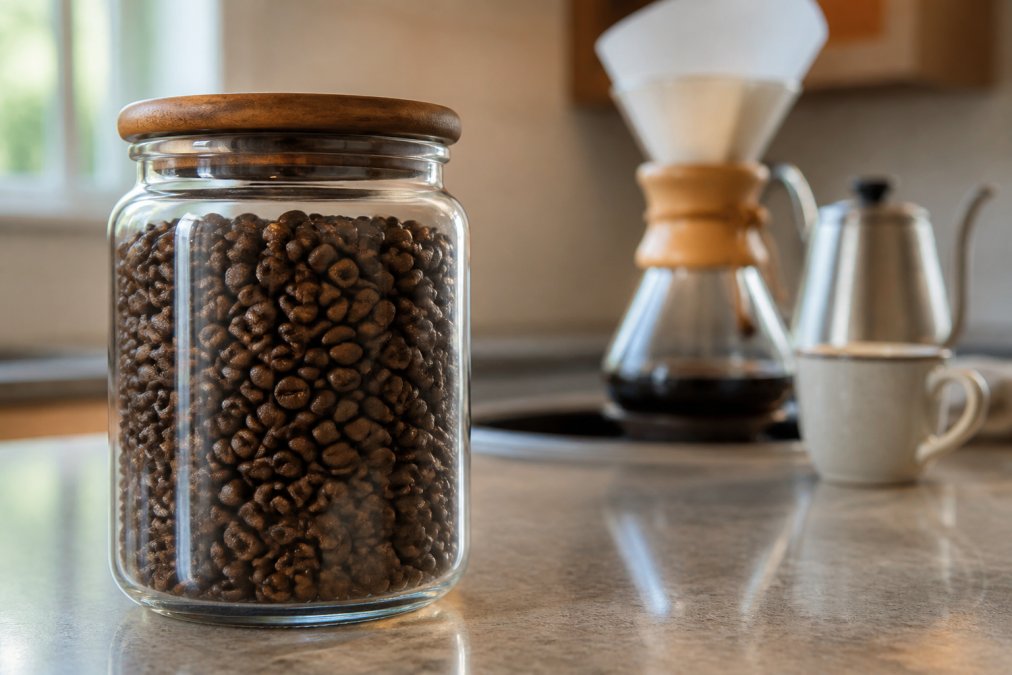
The best way to store fresh coffee beans is in an opaque, airtight container kept away from light, heat, and moisture, ideally at room temperature. Oxygen drives oxidation, which is the real enemy of freshness, not degassing itself.
Why One-Way Degassing Valves Matter
A one-way degassing valve lets carbon dioxide escape the bag while blocking oxygen from entering. Without it, internal pressure builds, the bag inflates, and trapped gas slows the release you actually want. This is why coffee bags have that small circular valve, and why transferring beans into a plain jar too early can trap gas that should be venting. Store beans in the original valve bag or a container with a similar mechanism.
Why Does Coffee Bloom When Brewing?
Coffee bloom is the visible release of carbon dioxide that happens when hot water first hits the grounds. The grounds puff up and bubble, and the fresher the coffee, the more dramatic the bloom.
How Roast Profile, Processing, and Altitude Change Degassing Speed
Roast profile, processing method, and growing altitude all shift how fast a bean releases carbon dioxide. These factors explain why two bags roasted on the same day can behave completely differently.
Roast Profile: Porosity and Cell-Wall Damage
During roasting, the bean undergoes two audible cracks. First crack marks the point where moisture and CO2 pressure fracture the cell walls from the inside; second crack marks a deeper breakdown of the bean's structural matrix. The further a roast progresses past first crack, the more those cell walls rupture, and the more open the pore network becomes.
Processing Method: Washed vs. Natural vs. Honey
Processing changes the bean's surface structure and density before it ever reaches the roaster, and that carries through to degassing.
- Washed: The fruit is removed before drying, leaving a clean, relatively uniform bean surface. Washed coffees tend to degas at a steadier, more predictable rate, which is one reason they are common in espresso blends where consistency matters.
- Natural: The bean dries inside the whole fruit. The mucilage and fruit sugars leave a different surface structure and can slow the early release of CO2, so natural-process coffees often need a day or two longer to settle than a washed coffee of the same roast level.
- Honey: Partial mucilage is left on during drying, landing between washed and natural in both surface character and degassing behavior.
Altitude and Humidity: The Environmental Variables Most Guides Skip
Altitude affects the bean before roasting. Coffee grown at higher elevations develops more slowly and produces denser beans with tighter cell structures. Dense beans hold CO2 longer, so a high-grown light roast can sit in the 10-14 day window even when a lower-grown coffee of the same roast is ready in a week.
How to Apply This Without a Lab
You do not need to measure altitude or humidity to use these variables. Use them as adjustment levers:
- If your coffee tastes gassy and hollow, add 2-3 days to your rest.
- If it tastes flat and papery, you rested too long or stored it too warm.
- If you moved to a more humid climate or a warmer kitchen, expect to shorten your rest window slightly.
- If you are brewing a natural-process, high-grown light roast, plan for the long end of the range.
Signs of Under-Degassed Coffee and How to Fix Them
Under-degassed coffee shows up in the cup before you ever suspect the beans. The most common signs:
- Espresso gushes out fast and tastes sour or thin, with little crema
- Pour-over beds bubble aggressively and drain unevenly
- The aroma feels sharp and gassy rather than sweet
- Flavor seems hollow, missing the body you expected
Conclusion
Timing your brew around the coffee bean degassing curve is one of the simplest upgrades you can make to your daily cup, and it costs nothing but patience. Lux Brew Coffee Co. roasts every batch to order and ships within hours, so you know exactly when your beans were roasted and can plan your resting window with confidence. Our specialty grade beans, sourced from ethical family farms, arrive fresh enough to reward that planning.
Frequently Asked Questions
How long should you degas coffee beans?
Most coffee beans need 3 to 14 days to degas enough for a balanced brew. Filter methods like pour-over often peak around 5 to 10 days after roasting, while espresso usually needs 7 to 14 days because the pressure of extraction amplifies any remaining carbon dioxide. Darker roasts release gas faster and may be ready in 3 to 5 days, while light roasts with denser cellular structure can take up to 14 days or longer. Taste is the final guide: if your cup tastes flat or gassy, give the beans more rest.
Why does carbon dioxide affect the flavor of brewed coffee?
Carbon dioxide trapped inside roasted coffee beans creates internal pressure that pushes water away during brewing. When CO2 releases too quickly, it blocks the water from reaching soluble compounds like sugars, acids, and aromatic oils, which leads to sour, uneven, or hollow-tasting coffee. Once the CO2 has escaped, water can extract those compounds evenly, producing a fuller flavor profile with balanced acidity and sweetness. This is why coffee bean degassing directly shapes what ends up in your cup.
Does the roast level impact the speed of coffee degassing?
Yes. Darker roasts are exposed to heat longer, which breaks down cell walls and creates more porosity, so carbon dioxide escapes faster. A dark roast may finish most of its degassing within 3 to 5 days. Light roasts retain a denser cellular structure, so CO2 releases more slowly and can take 10 to 14 days. This is why the same resting period produces very different results depending on the roast profile you buy.
What happens if you brew coffee beans that haven't degassed?
Brewing under-degassed beans usually produces a cup that tastes sour, sharp, or oddly flat. The trapped CO2 disrupts extraction by repelling water, so the grounds release fewer sugars and aromatic compounds. In espresso, the effect is dramatic: you'll see excessive crema, gushing shots, and inconsistent timing. In pour-over, the bloom will be aggressive and the bed may channel. Waiting a few more days for coffee bean degassing to progress usually fixes these problems without changing your brewing parameters.