

Table of Contents
- Why Coffee Flavor Notes Matter More Than You Think
- Decoding Common Coffee Flavor Notes and What They Actually Mean
- Your Coffee Tasting Notes Chart: A Quick Reference Guide
- How Roast Level, Origin, and Processing Shape the Label
- How to Brew Coffee to Taste Flavor Notes at Home
- The Psychology Behind Marketing Descriptors on Coffee Bags
- Conclusion
- Frequently Asked Questions
Last Updated: September 24, 2026
Why Coffee Flavor Notes Matter More Than You Think
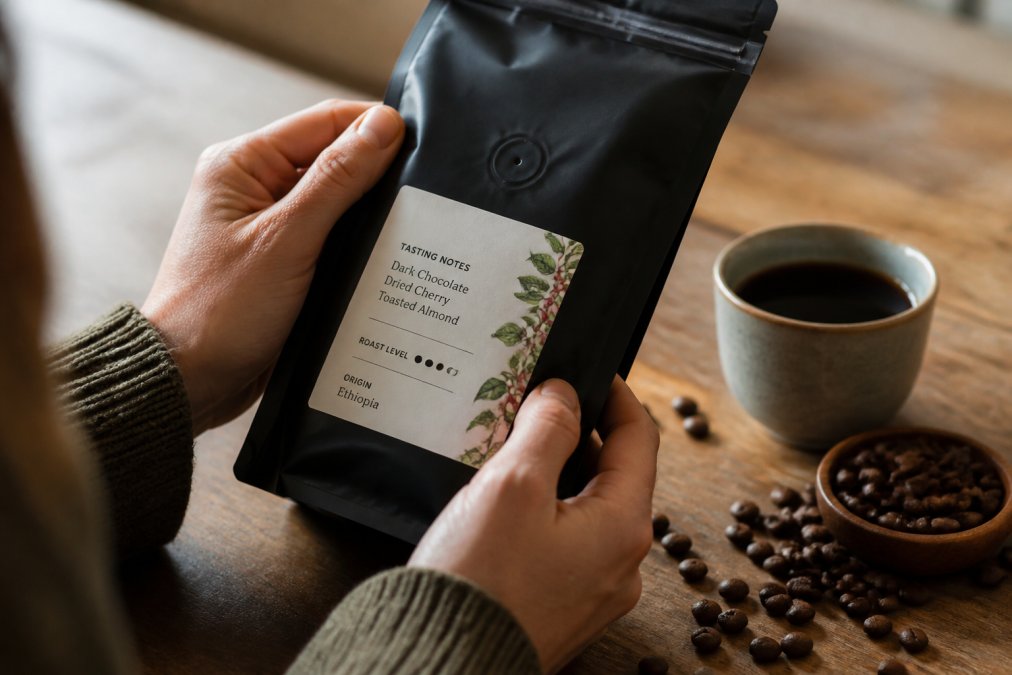
Learning how to read coffee flavor notes on packaging turns a confusing label into a clear promise about what's in your cup. At Lux Brew Coffee Co., we roast every batch to order, so we think hard about what those descriptors really tell you. A bag that says "notes of citrus" is not flavored with citrus. It's telling you how that coffee tastes.
Most people skim past the flavor notes and buy on price or packaging. That's a mistake. Those few words describe the roast level, the origin, and the processing method behind the beans. Read them well, and you stop guessing.
Below, we'll break down what each descriptor means, how to brew for flavor, and how to spot marketing fluff.
Decoding Common Coffee Flavor Notes and What They Actually Mean
Flavor notes describe the natural taste a coffee develops from its origin, roast, and processing. They are not added ingredients. A "berry" note comes from compounds the bean itself produced, not from fruit.
The vocabulary on a bag is not random. It traces back to the Specialty Coffee Association (SCA) Flavor Wheel, the industry-standard reference that organizes descriptors into families, fruity, floral, sweet, nutty/cocoa, spices, roasted, and others, and then breaks each family into specific terms. When a roaster writes "stone fruit," they are pulling from the fruity family, not inventing a phrase. Knowing the wheel's structure is the fastest way to translate a label.
Here is how the wheel's main families map to what you actually taste:
- Fruity: bright, juicy flavors split into berry (blueberry, raspberry, strawberry), dried fruit (raisin, prune), and citrus (lemon, orange, grapefruit). Citrus reads as high acidity; berry reads as jammy sweetness.
- Floral: delicate notes like honeysuckle, jasmine, or chamomile. These usually sit on top of a fruity base and fade as the cup cools.
- Sweet: caramel, honey, brown sugar, or molasses. This family reflects how sugars caramelized during roasting, not added sweetener.
- Nutty/Cocoa: almond, hazelnut, peanut, cocoa, dark chocolate, fudge. These come from Maillard reaction products formed during roasting.
- Spices: cinnamon, clove, nutmeg, pepper. Often a background note rather than the headline.
- Roasted: toast, grain, malt, smoke. A signal the roast went darker.
Fruity, Floral, and Sweet Descriptors Explained
Fruity and floral notes usually signal a lighter roast and a single-origin bean. You might see "notes of berry," "notes of citrus," or "notes of stone fruit." These coffees taste bright and complex because the roast stopped before the acids and aromatic compounds broke down.
Sweet notes like caramel or honey come from how the bean is processed and roasted. They show up across many origins, which is why "caramel" alone tells you less than "caramel and citrus", the pairing narrows the roast and origin.
Nutty, Chocolate, and Spice Notes: Comfort in a Cup
Nutty, chocolate, and spice notes tend to come from darker roasts. Think "notes of chocolate," "notes of nut," or "notes of spice." These coffees taste warm and rich because longer roasting develops the Maillard and caramelization compounds that read as cocoa and toasted nut.
If you like a smooth, low-acid cup, look for these words on the bag.
Your Coffee Tasting Notes Chart: A Quick Reference Guide
A coffee tasting notes chart maps each descriptor to the flavor, roast, and brew method that brings it out. Use this table when you're standing in the store.
| Descriptor | What It Tastes Like | Typical Roast | Best Brew Method |
|---|---|---|---|
| Fruity | Berry, citrus, stone fruit | Light | Pour-over |
| Floral | Honeysuckle, jasmine | Light | Pour-over |
| Sweet | Caramel, honey, burnt sugar | Medium | Drip |
| Nutty | Almond, hazelnut | Medium-dark | Drip, French press |
| Chocolate | Cocoa, fudge | Dark | Espresso |
| Spice | Cinnamon, clove | Dark | French press |
Keep this chart handy. It turns a vague label into a clear expectation.
How Roast Level, Origin, and Processing Shape the Label
Three things decide what ends up on the label: roast level, origin, and processing method. Change any one, and the flavor notes change.
Roast level is the biggest lever. Light roasts keep more of the bean's natural acidity and fruit. Dark roasts push toward chocolate, nut, and spice. A common mistake is assuming darker means stronger. It usually means less bright and more bitter.
Origin matters too. A single-origin bean from one farm tastes different from a blend. Traceability on the label tells you where the coffee grew, which shapes its sensory profile.
What Processing Method Tells You About Flavor
Processing is how the fruit is removed from the bean after picking. It is the single most predictive word on a bag, because the method decides how much fruit sugar and acid stays in contact with the seed, and that contact is what creates the fruity, winey, or clean notes the roaster later writes down.
Here is what each common process term actually predicts:
- Washed (wet process): The fruit is stripped off before drying. The bean ferments clean, so the cup reads bright, acidic, and transparent. If a bag says "washed" and lists citrus or floral notes, expect them to be crisp and distinct rather than heavy.
- Natural (dry process): The whole cherry dries around the bean for weeks. Sugars and fruit compounds migrate into the seed, producing berry, wine, or tropical-fruit notes and a heavier body. A "natural" label with "strawberry" or "blueberry" is the roaster telling you the process, not just the taste.
- Honey: Some fruit mucilage is left on during drying. The result sits between washed and natural, sweeter and rounder than washed, cleaner than natural. Labels often pair "honey" with caramel, brown sugar, or stone fruit.
- Anaerobic / experimental: The cherry ferments in a sealed tank with limited oxygen. These produce the most intense and unusual descriptors, cinnamon, tropical punch, even "boozy", and are the labels most likely to disappoint if your brewing is off.
A useful rule: the process word tells you the category of flavor, and the specific note tells you the intensity. "Natural process, notes of blueberry" is a stronger, more literal promise than "washed process, notes of blueberry," because the natural method is what put the berry character there in the first place.
How to Brew Coffee to Taste Flavor Notes at Home
You can brew coffee to taste flavor notes by matching your method to the roast. The wrong method hides the very flavors the bag promises.
Here's a simple routine:
- Grind fresh, right before brewing
- Match grind size to your method
- Use water just off the boil
- Keep your ratio consistent
- Taste, then adjust one variable at a time
A common mistake is brewing a light, fruity coffee in a French press. The metal filter traps oils and mutes the bright notes. Try a pour-over instead. For a dark, chocolatey roast, a French press or espresso brings out the body.
Brewing method changes perceived notes more than most people expect. Same bean, different method, different cup.
The Psychology Behind Marketing Descriptors on Coffee Bags
Marketing descriptors are written to sell, not just to describe. Words like "notes of wine" or "notes of apricot jam" sound premium and rare. That's the point.
Some labels lean on vivid, exotic language because it makes the coffee feel special. Others stay plain and honest. The gap between the two is often bigger than the gap in the cup.
Here's what most guides miss: the more poetic the label, the more you should trust your own taste over the words.
Conclusion
Reading coffee flavor notes is a skill, and it gets easier with practice. The next time you pick up a bag, check the roast, origin, and processing method first. Then match your brew to the notes.
Frequently Asked Questions
What are the different flavor notes found in coffee?
Coffee flavor notes span a wide spectrum, from fruity and floral to nutty and chocolatey. Common descriptors include notes of citrus, berry, stone fruit, honeysuckle, and red currant for brighter coffees, while darker roasts often show notes of chocolate, caramel, burnt sugar, and nut. These terms reflect compounds developed during growing, processing, and roasting, not added ingredients.
Are flavor notes in coffee added ingredients?
No. Coffee flavor notes are natural sensory characteristics that develop from the bean's origin, processing method, and roast level. When a bag lists notes of chocolate or citrus, it describes what you may taste, not what was added. The only exception is flavored coffee, which will clearly state added flavoring on the label.
How should I interpret acidity and body on a coffee label?
Acidity refers to the bright, tangy quality in coffee, not its pH level. A coffee labeled with high acidity might have notes of citrus or berry. Body describes the weight and mouthfeel, from light and tea-like to syrupy and heavy. These two attributes help you predict whether a coffee will taste crisp and lively or rich and smooth before you brew.
What is the best way to brew coffee to taste the flavor notes listed on the bag?
Start with a pour-over or drip method using a medium grind and water between 195-205°F. A ratio of 1:15 to 1:16 coffee to water works well for highlighting delicate notes. Lighter roasts benefit from slightly hotter water, while darker roasts do better with cooler temperatures to avoid bitterness. Adjust grind size and brew time to bring out sweetness and clarity.