

Table of Contents
- Why Cleaning Your Espresso Machine Group Head Matters
- What You'll Need Before You Start
- Daily Cleaning: Brushing and Rinsing the Group Head
- How to Backflush an Espresso Machine
- How to Clean a Breville Barista Express Group Head
- Espresso Machine Cleaning Schedule and Frequency
- Common Mistakes to Avoid When Cleaning
- Troubleshooting After Cleaning
- Frequently Asked Questions
Last Updated: October 10, 2026
Why Cleaning Your Espresso Machine Group Head Matters
Learning how to clean an espresso machine group head is essential because a dirty group head ruins your espresso. Coffee oils and ground residue block water flow and create bitter, uneven shots.
Most home baristas skip this step or do it wrong, thinking rinsing is enough. Over time, oils oxidize and harden into a film that water alone cannot remove, reducing pressure stability and shortening machine lifespan.
The good news: understanding how to clean an espresso machine group head takes minutes once you know how. Daily maintenance prevents major problems, and a consistent schedule keeps your machine performing like new.
What You'll Need Before You Start
Gather these items before you begin:
- A group-head brush with brass bristles (stainless steel can scratch)
- Espresso machine cleaning detergent designed for backflushing
- A blind basket or cleaning disc
- A small cloth or brush for the gasket
- Warm water
- Your espresso machine's manual (to confirm backflushing compatibility)
Not all machines support backflushing. Check your manual first. Some machines have pressure relief valves that prevent backflushing. Using detergent on incompatible machines can damage internal seals.
Daily Cleaning: Brushing and Rinsing the Group Head
Daily cleaning is the foundation of espresso machine maintenance. Skip it, and deeper cleaning becomes necessary more often.
Step 1: Remove the Portafilter and Basket
Start with the machine off or on standby. Remove the portafilter by twisting counterclockwise and tap out remaining grounds. Leaving grounds inside accelerates buildup as even small bits oxidize and harden over time.
Step 2: Brush the Group Head and Gasket
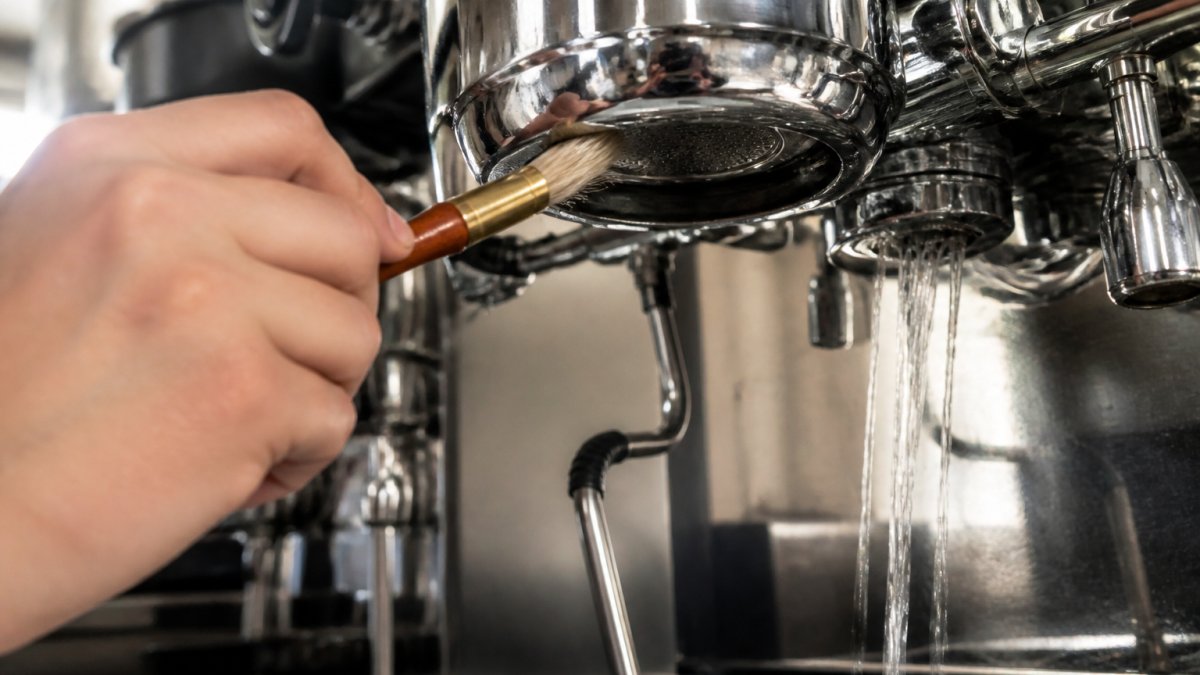
Insert your group-head brush and scrub in circular motions to dislodge oils and residue, paying special attention to the gasket edges. Use your brush or cloth to wipe away visible grounds or oil from the gasket itself, ensuring a tight seal and even water distribution.
Step 3: Flush with Water
Run water through the group head for 5-10 seconds without the portafilter attached to rinse away loose debris. The water should flow evenly across the shower screen. Repeat 2-3 times until water runs clear; uneven or slow flow indicates deeper cleaning is needed.
How to Backflush an Espresso Machine
Backflushing reverses water flow through the group head, forcing out stubborn oils and residue. Use it weekly for home machines, more often for high-volume use.
Backflushing with Water
Insert a blind basket into your portafilter and lock it into the group head. Pulse the pump 5-10 times for 1-2 seconds each, listening for hissing as pressure builds and releases. Remove the portafilter and flush the group head with clean water for 5-10 seconds, checking for even flow. Water backflushing handles light to moderate buildup; for heavier residue, use detergent backflushing.
Backflushing with Cleaning Detergent
Add 1/4 to 1/2 teaspoon of cleaning detergent to the blind basket (too much creates excessive foam and damages seals). Lock the portafilter into the group head and pulse the pump 5-10 times; brown or tan foam indicates dissolved buildup. Flush with clean water at least 10 times until no foam appears, as residual detergent affects taste and corrodes internal parts.
How to Clean a Breville Barista Express Group Head
Machine type affects cleaning procedures. Home espresso machines vary in design, and understanding your machine's specific features prevents damage and improves results.
Breville Barista Express and Similar Semi-Automatic Machines
Breville Barista Express machines support backflushing and feature a removable shower screen. Remove it by unscrewing the single screw above the group head and soak the screen and gasket in hot water with cleaning detergent for 15-20 minutes. Scrub with a soft brush and rinse thoroughly until no foam appears. While soaking, brush and flush the group head using standard daily cleaning. Reattach once both are clean and dry.
Manual Lever Machines
Manual lever machines lack electric pumps, so traditional backflushing is not possible. Rely on daily brushing with a brass-bristled brush and thorough water rinsing. For stubborn buildup, soak removable components in hot water with cleaning detergent for 20 minutes, then scrub gently and rinse completely.
Commercial or High-Volume Machines
Commercial machines typically support backflushing and may have automated cleaning cycles. Consult your manual for the specific sequence. They require more frequent detergent backflushing, daily or every 4-6 hours of use, because high volume accelerates oil oxidation.
Machines with Automated Cleaning Cycles
Some newer semi-automatic machines include automated cleaning cycles that pulse water or detergent through the group head. Use these weekly as directed, but they supplement rather than replace daily brushing and rinsing of the gasket and shower screen.
Key Compatibility Check
Before backflushing any machine, confirm it has a 3-way solenoid valve that allows water to flow backward. Machines without this valve cannot safely backflush. Check your manual or contact the manufacturer, attempting to backflush an incompatible machine risks seal damage and internal leaks.
Espresso Machine Cleaning Schedule and Frequency
Cleaning frequency depends on how much you use your machine. A casual home user and a daily espresso enthusiast have different maintenance needs. Tailor your schedule to your habits.
Light Use (1-2 Shots Per Week)
- Daily brushing and rinsing: After each use (2-3 minutes)
- Water backflushing: Every 2 weeks (3-5 minutes)
- Detergent backflushing: Every 8-12 weeks (5-10 minutes)
- Deep disassembly and soak: Every 6 months (20-30 minutes)
Moderate Use (3-5 Shots Per Week)
- Daily brushing and rinsing: After each use (2-3 minutes)
- Water backflushing: 2-3 times per week (3-5 minutes)
- Detergent backflushing: Every 2-3 weeks (5-10 minutes)
- Deep disassembly and soak: Every 3-4 months (20-30 minutes)
This is the typical home barista schedule. Regular backflushing keeps pressure stable and prevents the bitter taste that comes from oil buildup. Monthly detergent backflushing removes oxidized residue before it hardens into stubborn deposits.
Heavy Use (1+ Shot Daily or 6+ Per Week)
- Daily brushing and rinsing: After each use (2-3 minutes)
- Water backflushing: Daily or every other day (3-5 minutes)
- Detergent backflushing: Weekly (5-10 minutes)
- Deep disassembly and soak: Every 4-8 weeks (20-30 minutes)
High-volume use accelerates oil oxidation and residue buildup. Daily water backflushing maintains even flow and pressure. Weekly detergent backflushing removes oxidized oils before they form hard deposits that are difficult to remove. Neglecting this schedule at high usage levels causes weak shots, uneven extraction, and premature wear on seals.
Why Frequency Matters
Daily brushing and rinsing removes fresh grounds and oils before they oxidize. Oxidized oils are much harder to remove than fresh oils.
Water backflushing reverses water flow to dislodge buildup without chemicals. It maintains pressure stability and even water distribution. Neglecting water backflushing allows residue to accumulate, making detergent backflushing less effective.
Detergent backflushing dissolves oxidized oils that water alone cannot remove. Over time, these oils form a film that hardens and traps debris.
Deep disassembly removes components for soaking and thorough scrubbing. This catches residue that backflushing misses, especially inside the gasket and around the shower screen.
Printable Cleaning Checklist
Daily (After Each Use)
- Remove portafilter and empty basket
- Brush group head with brass-bristled brush (circular motions, 30 seconds)
- Wipe gasket with cloth or brush
- Flush group head with water for 5-10 seconds (2-3 times)
- Check for even water flow across shower screen
Weekly Water Backflush
- Insert blind basket into portafilter
- Lock portafilter into group head
- Pulse pump 5-10 times (1-2 seconds each)
- Remove portafilter
- Flush group head with clean water 5-10 times
- Verify even water flow
Monthly Detergent Backflush (or Weekly for Heavy Use)
- Add 1/4 to 1/2 teaspoon cleaning detergent to blind basket
- Lock portafilter into group head
- Pulse pump 5-10 times (watch for brown/tan foam)
- Remove portafilter
- Flush group head with clean water at least 10 times
- Continue flushing until no foam appears and water runs clear
- Run 2-3 blank shots through the machine to clear lines
Every 3-6 Months (Deep Clean)
- Remove shower screen (if removable) and soak in hot water with detergent for 15-20 minutes
- Remove gasket and soak separately
- Brush group head thoroughly
- Scrub shower screen and gasket with soft brush
- Rinse all components thoroughly
- Inspect gasket for cracks or wear; replace if damaged
- Reassemble and flush with clean water 15+ times
Common Mistakes to Avoid When Cleaning
Avoid these errors. They damage your machine or waste your effort.
Using stainless steel brushes scratches brass and stainless steel surfaces inside your group head. Scratches trap debris and accelerate buildup. Always use brass bristles.
Skipping the gasket leaves residue that contaminates every shot. The gasket sits directly in the water path.
Overusing cleaning detergent creates foam that can seep into internal seals and damage them. Follow the detergent's dosage instructions. Less is safer than more.
Backflushing incompatible machines causes leaks or seal damage. Always check your manual first.
Leaving water or detergent residue inside the group head affects taste and corrodes metal.
Troubleshooting After Cleaning
If your espresso tastes bitter or sour after cleaning, residual detergent is likely the cause. Flush the group head again with clean water 10-15 times.
Uneven water flow across the shower screen after cleaning means debris is still lodged inside. Repeat water backflushing 5-10 more times.
Weak pressure during the shot suggests the group head is partially blocked. Backflush with detergent and flush thoroughly.
Leaking from around the portafilter during backflushing indicates the gasket is worn or misaligned. Reposition the gasket and try again.
A burnt or chemical smell after cleaning means detergent residue remains. Flush with clean water 15-20 times and run several blank shots.
Frequently Asked Questions
How often should you clean an espresso machine group head?
Clean your group head daily after each brewing session by brushing and rinsing with water. Perform detergent backflushing 2-3 times per week, and run a full cleaning cycle monthly. Frequency depends on usage: high-volume machines benefit from more frequent deep cleaning. Neglecting regular maintenance allows coffee oils and grounds to accumulate, affecting brew quality and machine lifespan.
Can you clean an espresso machine group head without backflushing?
Yes. Daily brushing and water flushing remove most surface residue and grounds from the group head, gasket, and shower screen. However, backflushing is more effective at removing deep-seated coffee oils that brushing alone cannot reach. For best results, combine daily brushing with weekly or bi-weekly backflushing to maintain optimal water flow and brew pressure.
What cleaner should you use to backflush an espresso machine?
Use only espresso machine-specific cleaning detergents designed for backflushing, such as Cafiza or similar brands formulated for group head cleaning. Never use general-purpose cleaners, vinegar, or dish soap, as these can damage seals, gaskets, and internal components. Always follow the detergent manufacturer's instructions for dilution ratios and contact time to avoid corrosion or residue buildup.
How do you remove coffee oils and residue from a group head?
Start with daily brushing of the group head, gasket, and shower screen using a group-head brush to remove grounds. Follow with water flushing to rinse away loose particles. For deeper cleaning, backflush with water several times, then backflush with diluted cleaning detergent 5-10 times, and finish with multiple water-only backflushes to rinse completely. Weekly or bi-weekly detergent backflushing prevents oil buildup that hardens over time.
Keeping your espresso machine group head clean is the simplest way to improve your coffee. Daily brushing and regular backflushing take minutes but deliver consistent, delicious shots. Premium beans from Lux Brew Coffee Co. deserve a clean machine. With proper maintenance, your espresso machine will brew at its best for years. Start with daily brushing today and add weekly backflushing to your routine. Your next cup will taste noticeably better.