

Table of Contents
- Why Fresh Coffee Alternatives to Koffeekult Matter
- What Makes Coffee Fresher: The Roast Date and Degassing Period
- Roast-to-Order Coffee: The Freshest Alternative to Koffeekult
- Best Coffee Bean Storage Containers for Maximum Freshness
- How to Store Coffee Beans Long Term
- Coffee Freshness Tips: Beyond Storage
- Direct Trade and Ethical Sourcing: What Separates Premium Alternatives
- Specialty Grade Coffee: Single-Origin vs. Blends
Fresh Coffee Alternatives to Koffeekult: 2026 Guide
Last Updated: August 2, 2026
Why Fresh Coffee Alternatives to Koffeekult Matter
When searching for a Koffeekult alternative for fresher beans, you're asking the right question. The coffee industry has shifted toward roast-to-order models and direct-trade sourcing. Understanding these options means the difference between stale beans that taste flat and specialty-grade coffee that tastes alive. Freshness comes down to roast dates, degassing periods, and how quickly beans reach your hands.
Most coffee drinkers don't realize that freshness is the single most important variable in their cup. A bag roasted three weeks ago tastes noticeably different from one roasted three days ago, even from the same farm. The real alternative isn't just switching brands, it's understanding what freshness means and finding sources that prioritize it.
This guide covers the science behind coffee freshness, storage methods that preserve it, and premium alternatives that guarantee peak-quality beans.
What Makes Coffee Fresher: The Roast Date and Degassing Period
Understanding freshness requires understanding two concepts: roast dates and degassing. The roast date is printed on quality bags and is your most important reference point. Degassing is the CO2 escape that happens immediately after roasting, affecting both flavor and extraction.
Fresh coffee beans begin losing flavor complexity within 24 hours of roasting. The first week after roasting is the peak flavor window, beans have finished degassing, oils have stabilized, and tasting notes emerge fully. By week three, oxidation breaks down volatile compounds. By week four, most specialty coffees taste noticeably flatter.
The degassing period typically lasts 24-48 hours after roasting. Roasters recommend waiting 12-24 hours before brewing; CO2 must escape before water can penetrate properly. Brewing immediately produces sour, under-extracted coffee. Waiting past four weeks allows oxidation to degrade the flavor compounds you're paying for.
This is where most alternatives fail. Traditional retail coffee sits in warehouses for days or weeks before reaching stores. A Koffeekult alternative for fresher beans addresses this by shipping within hours of roasting.
Roast-to-Order Coffee: The Freshest Alternative to Koffeekult
Roast-to-order is the gold standard for freshness. When you order, the roaster doesn't roast until your order arrives. Your beans are roasted specifically for you on the day ordered and shipped immediately after cooling.
The taste difference is dramatic. Roast-to-order beans arrive with full flavor complexity intact. The tasting notes on the bag are actually present because volatile compounds haven't oxidized away. Compare this to coffee roasted weeks in advance: it tastes flat, one-dimensional, and lacks the brightness that defines specialty-grade beans.
Lux Brew Coffee Co. roasts every batch to order and ships within hours of roasting, eliminating warehouse sitting time entirely.
How Roast-to-Order Shipping Works
When you order, the roaster pulls green beans from inventory, roasts them to your selected profile, allows cooling, bags them with a fresh roast date, and ships the same day or next morning. Most services use expedited shipping because speed is the entire point.
Shipping typically takes 2-4 business days depending on location. Beans arrive 3-5 days after roasting, right in the optimal flavor window. The cost reflects operational complexity, individual roasting runs, rapid packaging, expedited shipping, but the flavor difference justifies the premium.
Subscription vs. One-Time Purchase Freshness
Subscription services add another freshness layer. When you subscribe to roast-to-order, you receive fresh beans on a regular schedule, typically biweekly or monthly. You never have old coffee sitting in your pantry.
Subscriptions force consistency. If you drink a pound weekly, biweekly delivery ensures beans stay within their optimal flavor window. One-time purchases require you to manage inventory actively. If you order a single bag and don't brew it for three weeks, you've wasted the freshness advantage.
Best Coffee Bean Storage Containers for Maximum Freshness
Once fresh beans arrive, storage becomes critical. The wrong container degrades beans within days. The right container extends freshness by weeks.
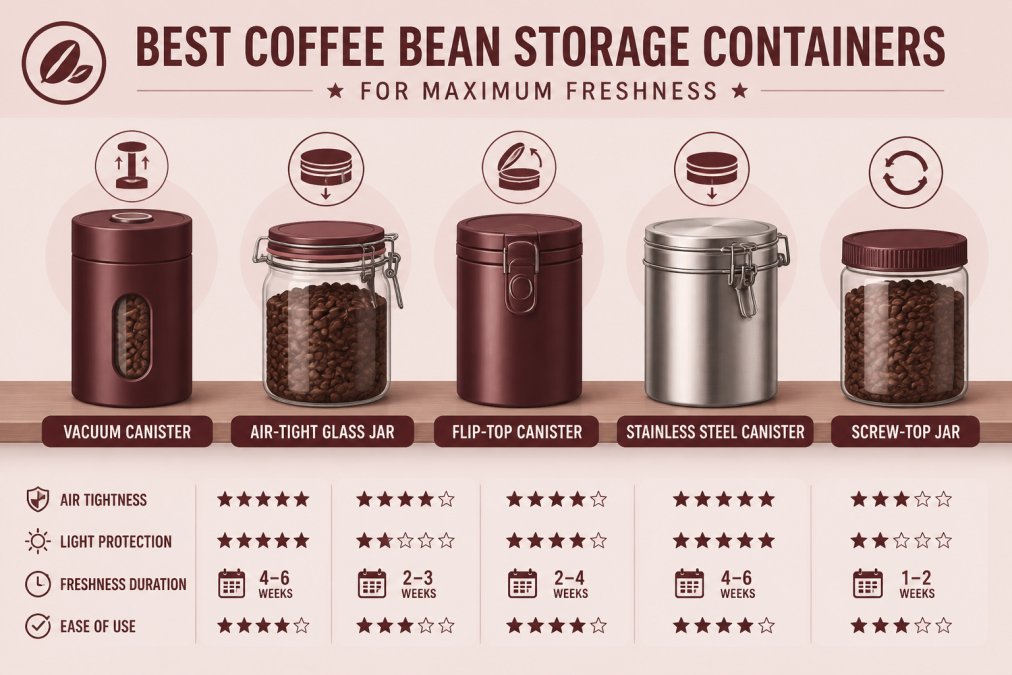
Coffee's enemies are light, air, moisture, and heat. Proper storage containers block all four using either vacuum sealing (actively removing air) or airtight seals with CO2 release valves (allowing degassing while blocking oxygen).
Vacuum-Sealed Coffee Storage Options
Vacuum containers actively remove air, creating an oxygen-free environment. The Fellow Atmos Vacuum Canister ($69.95) uses a pump mechanism to create an active seal. The Planetary Design Airscape Coffee Canister ($37.50 for 32 oz) uses a plunger mechanism, forcing air out manually. The Coffeevac 3 in 1 Pump it Out ($23.00) combines airtight sealing, a CO2 release valve, and manual pump capability with an integrated date tracker.
Vacuum containers suit serious enthusiasts who brew frequently and want maximum flavor retention.
Airtight Canisters with CO2 Release Valves
CO2 release valves solve a specific problem: freshly roasted beans continue degassing for days, and trapped gas creates pressure inside sealed containers. A one-way valve allows CO2 escape without letting air back in.
The Coffee Gator Coffee Canister ($24.95 for 64 oz) features stainless steel construction, a CO2 valve, and a date tracker wheel. The Friis Coffee Vault ($38.90) uses a patented freshness valve and stainless steel construction. The OXO Good Grips POP Coffee Canister ($22.99 for 1.7 qt) prioritizes ease of use with one-handed operation.
These containers suit most home brewers, affordable, simple, and effective for beans within the first month of roasting.
How to Store Coffee Beans Long Term
Long-term storage means keeping beans fresh beyond the first month by addressing temperature, light, and moisture simultaneously.
Temperature, Light, and Moisture Control
Ideal storage temperature is 50-70°F (10-21°C). Room temperature is acceptable; cooler is better. Every 10-degree increase roughly doubles oxidation rate. A pantry or cabinet works fine; a kitchen counter near windows or stoves does not.
Light breaks down oils and aromatic compounds. Store beans in opaque containers or dark cabinets. If using clear containers, place them inside dark bags. Light damage happens within 2-3 days in direct sunlight.
Coffee is hygroscopic and absorbs moisture. Humid environments like bathrooms or kitchens near water are poor storage locations. Dry pantries or closets are ideal. In very humid climates, add silica gel packets to storage containers.
Never refrigerate or freeze coffee. Temperature fluctuations create condensation, introducing moisture. Cold temperatures also make consistent grinding harder, affecting extraction.
Shelf Life: When Freshness Declines
Coffee doesn't spoil like milk. It oxidizes. Beans remain safe indefinitely, but flavor degrades predictably.
The optimal flavor window is 5-30 days after roasting. Weeks 4-8, flavor noticeably flattens. After 8 weeks, most specialty coffees taste stale. This timeline assumes proper storage; poor storage accelerates degradation.
Buy beans frequently in smaller quantities rather than stockpiling. A pound consumed over two weeks stays fresh throughout. Five pounds consumed over two months means the last bag tastes noticeably worse.
Coffee Freshness Tips: Beyond Storage
Freshness extends beyond the beans themselves. How you prepare them matters equally.
Whole Bean vs. Pre-Ground: The Freshness Factor
Whole beans stay fresh for weeks. Ground coffee stays fresh for days. Grinding dramatically increases surface area, accelerating oxidation.
When you grind beans, you expose the interior to oxygen. Within hours, volatile aromatic compounds escape. Within 24 hours, ground coffee has lost significant complexity. By 48 hours, it tastes noticeably stale compared to same-day grinding.
Always buy whole beans. Pre-ground coffee defeats the purpose of sourcing fresh beans.
Grind Size, Extraction, and Flavor Profile
Grind size determines water extraction speed. Finer grinds expose more surface area; coarser grinds extract slower. Correct grind size matches your brewing method: espresso requires very fine grinds, pour-over requires medium-fine, French press requires coarse.
Extraction efficiency affects how much flavor you get from beans. Fresh beans with optimal extraction taste dramatically better than fresh beans with poor extraction. A cheap blade grinder producing inconsistent particles will under-extract fresh beans. A quality burr grinder producing consistent particles unlocks full flavor complexity.
Invest in a burr grinder before expensive beans. A $40 burr grinder makes cheaper beans taste better than a $200 blade grinder makes expensive beans taste.
Direct Trade and Ethical Sourcing: What Separates Premium Alternatives
Direct trade is a sourcing model where roasters buy directly from coffee farmers, eliminating middlemen. This affects both freshness and ethics.
When coffee passes through multiple distributors before reaching a roaster, it sits in storage at each step. Directly sourced coffee reaches roasters faster, arriving fresher. Direct trade ensures farmers are paid fairly, typically 2-3 times commodity price.
Direct trade enables relationship-based quality control. Roasters buying from specific farms can request processing methods, harvest timing, and fermentation approaches impossible when buying through commodity brokers.
Lux Brew Coffee Co. sources from ethical family farms using direct trade practices. For consumers, this means transparency. You often find the farmer's name and story on the bag. Direct trade coffee costs more than commodity coffee, but the combination of freshness, quality, and ethics justifies the premium.
Specialty Grade Coffee: Single-Origin vs. Blends
Specialty grade coffee scores 80+ on a 100-point scale by certified cuppers. This scoring ensures consistency and quality.
Single-origin coffees come from specific farms, regions, or countries, showcasing unique characteristics. An Ethiopian single-origin tastes completely different from a Colombian single-origin, even roasted identically.
Blends combine beans from multiple origins. A roaster might blend bright, acidic beans with heavy-bodied beans for balance. Blends are more forgiving to brew; if one origin under-extracts, the other compensates. Single-origins require more precision.
For freshness, single-origins have an advantage. Roasters can optimize each origin's profile. Blends require compromise. Single-origins also showcase terroir rather than averaging multiple origins.
Single-origins suit enthusiasts exploring coffee. Blends suit everyday drinkers seeking consistency.
| Aspect | Single-Origin | Blend |
|---|---|---|
| Flavor Complexity | Showcases specific terroir | Balanced, averaged flavor |
| Roast Optimization | Optimized for one origin | Compromise between origins |
| Freshness Advantage | Slight edge | Minimal difference |
| Brewing Precision | Requires more adjustment | More forgiving |
| Price | Typically higher | Typically lower |
| Best For | Enthusiasts exploring origins | Everyday drinkers seeking consistency |
The search for a Koffeekult alternative for fresher beans comes down to understanding what freshness means and prioritizing it in every decision: sourcing, storage, and brewing. Roast-to-order models like Lux Brew Coffee Co. eliminate warehouse sitting time. Proper storage containers preserve freshness for weeks. Whole beans ground immediately before brewing ensure you taste what you paid for.
Start with a subscription from a roast-to-order roaster. Get a quality burr grinder and airtight storage container. Grind immediately before brewing. These three changes transform your coffee experience more dramatically than any other adjustment.
Frequently Asked Questions
What makes coffee fresher from a roast-to-order service compared to retail bags?
Roast-to-order services roast your beans immediately after you order and ship within hours, capturing coffee at its peak freshness. Retail bags sit in warehouses and on store shelves for weeks or months, losing aromatics and flavor compounds through oxidation. The roast date is critical, coffee reaches optimal flavor 3-7 days after roasting (the degassing period), then gradually declines. Roast-to-order ensures you receive beans during this prime window, while standard retail options often arrive well past their peak freshness.
How long do coffee beans stay fresh after roasting, and does vacuum sealed coffee storage really help?
Whole beans stay fresh for 2-4 weeks after roasting when stored properly, with the best flavor occurring days 3-10. Vacuum sealed coffee storage significantly extends freshness by removing oxygen that causes oxidation and degradation of oils. Containers with one-way CO2 release valves allow degassing gases to escape while preventing air from entering, protecting bean density and moisture content. Airtight storage in a cool, dark place can preserve freshness up to 50% longer than standard packaging, making it essential for maintaining tasting notes and body.
Should I buy a subscription or one-time purchase for the freshest coffee?
Subscription services designed for freshness typically ship smaller quantities more frequently, ensuring beans arrive closer to their roast date. One-time purchases work well if you consume beans quickly (within 2 weeks) but risk staleness if you order larger quantities. For maximum freshness, subscriptions that allow flexible scheduling, pausing or adjusting frequency, offer the best balance. One-time purchases suit casual drinkers or those testing single-origin blends before committing, while committed coffee enthusiasts benefit from regular subscriptions that guarantee peak freshness delivery.
How do I know if a coffee company is actually practicing direct trade and ethical sourcing?
Legitimate direct trade operations provide specific farm names, regions, and cupping scores on their product pages. They publish transparency reports showing farmer payment premiums above commodity prices and often feature farmer stories or photos. Look for third-party certifications (Fair Trade, Rainforest Alliance) and willingness to discuss sourcing practices openly. Be skeptical of vague claims like 'ethically sourced' without specifics. Reputable companies explain their supply chain, pricing structure, and how much reaches family farms directly, not just generic sustainability messaging.
What's the difference between light roast, medium roast, and dark roast for freshness and flavor?
Roast profiles affect how quickly beans oxidize and how flavors develop. Light roasts retain more origin characteristics and acidity, making freshness critical, stale light roast beans taste flat. Medium roasts balance origin flavors with roast-induced complexity and have moderate acidity and body. Dark roasts mask staleness better due to bold roast flavors, so freshness matters less. For specialty coffee with distinct tasting notes and flavor profiles, light and medium roasts demand fresher beans. Choose your roast profile based on brewing method, espresso profiles often use medium to dark, while pour-over highlights light roast freshness.
This article was written using GrandRanker