

Table of Contents
- What Makes Decaf Coffee Beans Work for Home Espresso
- Comparison Table: Top Decaf Coffee Beans for Home Espresso
- 1. Lux Brew Coffee Co. Decaf Espresso Blend
- 2. Counter Culture Slow Motion Decaf Blend
- 3. Yesso! Espresso
- 4. Espresso Bel Canto Decaf
- 5. Decaf Eye of the Tiger Espresso
- 6. Valle del Cauca Decaf
- How to Dial In Decaf Espresso
- Frequently Asked Questions
Last Updated: October 6, 2026
What Makes Decaf Coffee Beans Work for Home Espresso
Shopping for the best decaf coffee beans for home espresso comes down to four things: decaffeination method, roast freshness, a roast profile built for pressure rather than a drip basket, and storage. Get those right and a decaf shot pulls thick, sweet, and syrupy; get them wrong and you get gushers, sourness, or a flat, papery aftertaste no grinder setting will fix.
This guide from Lux Brew Coffee Co. covers decaf options we would put in a home espresso machine, plus our dial-in routine.
Why Decaf Beans Behave Differently in an Espresso Machine
Decaffeinated coffee is coffee that has had most of its caffeine removed before roasting, usually through a water-based, carbon dioxide-based, or solvent-based process. Each leaves the bean in a slightly different state going into the roaster.
Three consequences follow for espresso. Decaf beans often need a finer grind and a slightly longer ratio to hit the same sweetness as a regular blend, because processing strips oils and sugars along with the caffeine.
The U.S. Food and Drug Administration guidance on decaffeinated coffee labeling confirms decaf must retain no more than 0.10 percent caffeine by dry weight, which is why "how much caffeine is left" is a smaller variable than most buyers assume.
Decaffeination Methods Compared for Espresso
The method is the best predictor of how a decaf behaves in a 9-bar basket. Here is how the three main processes compare.
Water-based (Swiss Water Process and similar). Green coffee is soaked in water to dissolve caffeine, then the caffeine is filtered out with carbon filters while flavor compounds return to the beans. No chemical solvents touch the coffee.
Solvent-based (methylene chloride or ethyl acetate). The green coffee is steamed to open the bean's pores, washed with a solvent that bonds to caffeine, then steamed again to drive off residual solvent.
What This Means for Your Bag
A useful shorthand: Swiss Water means a softer, rounder shot that plays well with milk. CO2 means the closest thing to a regular espresso blend. If the bag says nothing, assume solvent processing, or ask the roaster before ordering.
All three processes meet the same 0.10 percent ceiling, so the choice is about flavor and mouthfeel, not how "decaf" the coffee is.
Comparison Table: Top Decaf Coffee Beans for Home Espresso
| Product | Roast Level | Decaf Method | Best For | Standout Trait |
|---|---|---|---|---|
| Lux Brew Coffee Co. Decaf Espresso Blend | Medium | Not specified | Everyday espresso and milk drinks | Roasted to order, shipped within hours |
| Counter Culture Slow Motion Decaf Blend | Darker | Not specified | Milk-based drinks | Balanced body, acidity, sweetness |
| Yesso! Espresso | Medium-dark | Swiss Water | Fruit-forward espresso | Chocolate, strawberry, dried cherry |
| Espresso Bel Canto Decaf | Not specified | Swiss Water | Organic and Fair Trade buyers | Espresso-specific, organic, Fair Trade |
| Decaf Eye of the Tiger Espresso | Not specified | Not specified | Sweet, spiced shots | Cinnamon, cranberry, Nutella-like |
| Valle del Cauca Decaf | Not specified | Not specified | Trying a named single-origin decaf | Sourced from Valle del Cauca |
1. Lux Brew Coffee Co. Decaf Espresso Blend
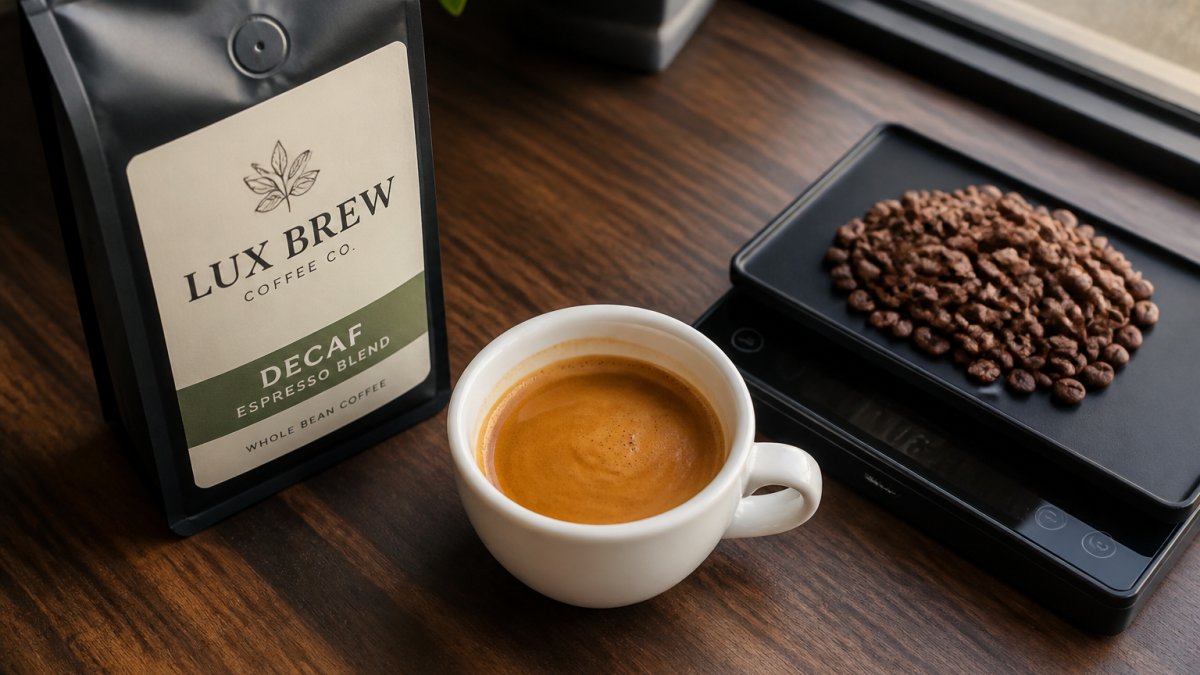
Our top pick is our own decaf espresso blend, and the reason is simple: it is roasted to order and shipped within hours of roasting. For decaf, freshness is paramount.
We source specialty grade coffee from ethical family farms, so the green coffee is graded before it reaches the roaster. Because every batch is roasted to order, you are not buying beans that sat in a warehouse losing the oils that hold crema together.
Pros and Cons
Pros:
- Roasted to order, so the roast date is effectively your ship date
- Shipped within hours of roasting
- Specialty grade coffee sourced from ethical family farms
- Works across espresso and milk drinks
Cons:
- We do not publish a decaffeination method on the bag, so buyers should ask us directly before ordering
- Because it is roasted to order, you need to plan a few days ahead rather than grabbing it off a shelf
2. Counter Culture Slow Motion Decaf Blend
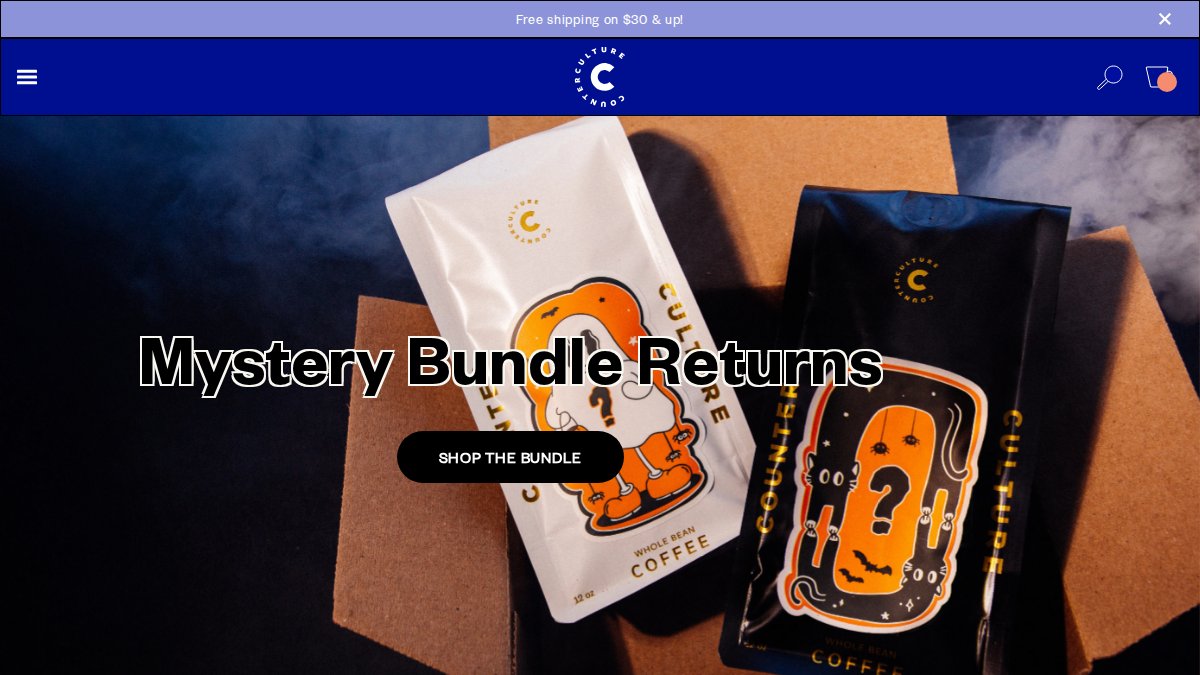
If you drink mostly milk drinks, this is the decaf to beat. A user review recommends it for milk drinks, and it is described as a darker roast, exactly the profile that punches through steamed milk instead of disappearing into it.
Serious Eats names it the best decaf coffee for balance of body, acidity, and sweetness, the balance that makes a decaf shot taste like coffee rather than the absence of coffee.
What the listings do not tell you is price, roast date, or bag size, so check the bag in person or on the product page before committing.
3. Yesso! Espresso
Yesso! Espresso is a medium-dark decaf built on the Swiss Water Process, with flavor notes of dark chocolate, strawberries, and dried cherries, an unusually specific set for a home barista who wants a decaf that still tastes like something.
The Swiss Water Process is the method most decaf drinkers ask for by name because it uses water rather than chemical solvents. Water-processed decafs can taste slightly softer, which is why the medium-dark roast here is a sensible pairing.
The gap: price and package size are not shown in the listings we reviewed, so confirm both before you buy.
4. Espresso Bel Canto Decaf
Espresso Bel Canto Decaf is one of the few options here explicitly built for espresso rather than adapted from a drip roast. It is described as organic and Fair Trade, and it uses the Swiss Water Process.
For buyers who care about both certification and processing method, that combination is hard to find in one bag, and the labels mean the supply chain is documented.
Price and package details are not listed in the sources we reviewed, so treat this as a "check the current listing" purchase rather than a known quantity.
5. Decaf Eye of the Tiger Espresso
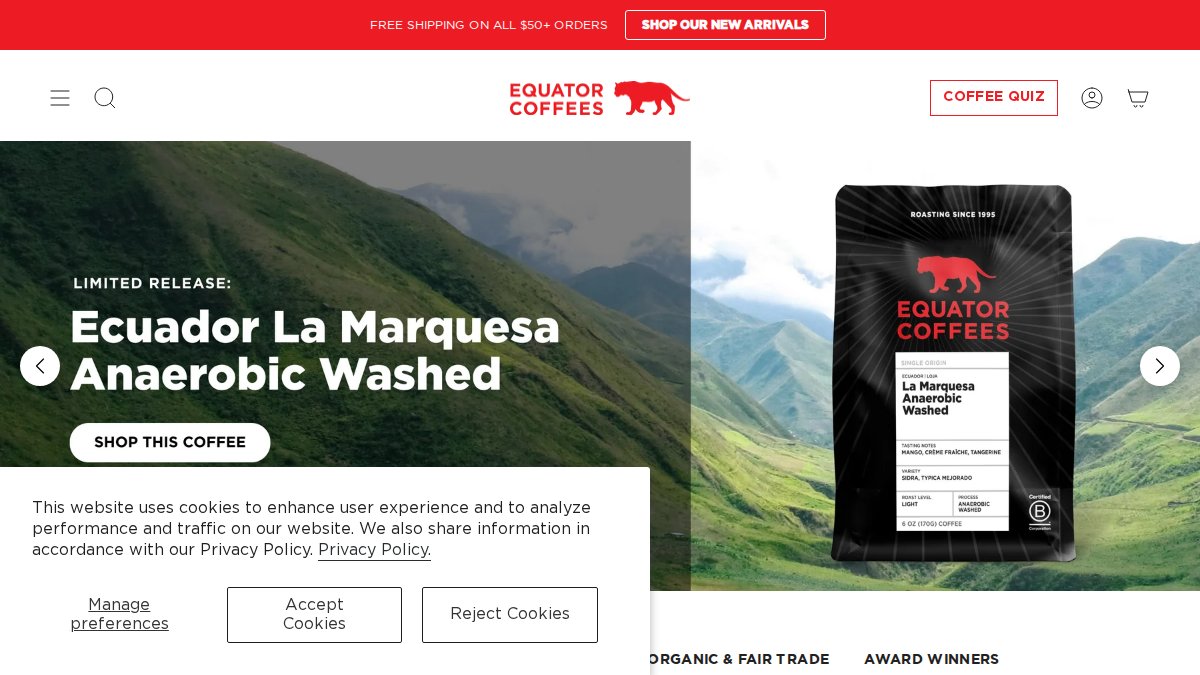
Equator Coffees built this one as a decaf espresso, and the flavor notes are the most distinctive on the list: cinnamon, cranberry, and a Nutella-like character, the opposite of thin, generic decaf.
Sweet, spiced, and fruit-forward decafs tend to shine as straight shots rather than in milk, since milk mutes the cinnamon and cranberry. Pull it slightly shorter than usual to keep those notes up front.
The listing does not state price, roast level, or decaffeination method, so you will need to confirm all three before ordering.
6. Valle del Cauca Decaf
Heretic Coffee Co. names this decaf after Valle del Cauca, and it appears in ranked coffee coverage specifically as an espresso choice. That is a meaningful signal: plenty of decafs are good coffee but were never designed for a 9-bar basket.
What the sources do not provide is flavor notes, processing method, or price. If you like to explore single-origin decafs and want something a step away from the standard blends, this is worth a look, but go in expecting to research the current listing yourself.
How to Dial In Decaf Espresso
Dialing in decaf espresso means adjusting grind size, dose, and yield until the shot tastes balanced. Decaf usually needs a finer grind and a slightly longer yield than the same roaster's caffeinated blend. Start with a 1:2 ratio, taste, then move one variable at a time.
What makes decaf different is that the bean changes faster. Decaf degasses aggressively in the first week after roast, then fades faster, so a grind setting that pulled a perfect shot on day three can run two seconds fast by day eight. Plan on re-dialing at least once per bag.
The Baseline Routine
Here is the routine we recommend, in order:
- Weigh your dose. Use a scale, not a scoop. A 1:2 ratio means 18 grams in, 36 grams out.
- Set a baseline grind. Start one or two settings finer than you would for a regular blend, then adjust.
- Time the shot. Aim for roughly 25 to 30 seconds from first drip to finish as a starting point.
- Taste before you change anything. Sour and thin means grind finer. Bitter and dry means grind coarser.
- Change one variable per shot. Grind, then dose, then yield. Never all three at once.
- Re-check after day five. Decaf shifts as it degasses, so a setting that worked on day two may need a nudge on day six.
Troubleshooting Decaf Shots
Decaf fails in a few predictable ways. Here is how to read each one.
Bitter, dry, and slow. The shot drips past 35 seconds and leaves a drying, ashy finish, over-extraction. Grind coarser.
Gushing and channeling. The shot sprays, the puck has holes, and the taste is uneven, usually a distribution problem, not a grind problem.
Flat and papery. The shot times look correct but the taste is hollow, a freshness problem, not a dial-in problem.
No crema. Decaf produces less crema than regular coffee even when fresh, because the oils that trap gas are partly removed during processing. A thin crema is normal.
How Roast Age Changes Your Grind
A useful pattern: decaf beans are gassiest in the first three to five days after roast and settle into a stable window from roughly day five to day fourteen.
Pull a reference shot on day five, note the grind setting and shot time, then re-check on day ten. If the shot has sped up by more than two seconds, tighten the grind one step.
Frequently Asked Questions
What are the best decaf coffee beans for espresso?
The best decaf coffee beans for home espresso come from roasters who specify the decaffeination method, roast level, and intended brew method. Look for Swiss Water Process beans, medium-dark or dark roasts, and freshness indicators like a roast date. Always check that the bag lists espresso as a recommended brew method.
Can you use any decaf coffee beans in an espresso machine?
You can technically use any decaf coffee bean in an espresso machine, but results vary. Beans roasted for filter or drip often lack the density and structure needed for a proper espresso extraction. They may produce thin shots with weak crema. For consistent results, choose decaf coffee beans specifically labeled for espresso or espresso blends, which are roasted to handle the pressure and short extraction time.
What roast level is best for decaf espresso?
Medium-dark to dark roasts work best for decaf espresso. Decaffeination removes some of the bean's natural compounds, which can flatten sweetness and body. A darker roast helps compensate by adding caramelized sugars and deeper chocolate notes. Light roasts can work but often taste sharp or hollow in decaf. If you drink milk-based espresso drinks, a dark roast decaf holds up better against milk.
How should you grind decaf beans for espresso?
Grind decaf beans slightly finer than you would regular espresso beans. Decaffeinated beans are often more brittle and porous, so they can channel water faster. Start with a grind setting one or two steps finer than your usual espresso setting, then adjust based on shot time. Aim for a 25-30 second extraction for a 1:2 ratio. If the shot runs too fast, go finer. If it chokes, go coarser.
How much caffeine is in a shot of decaf espresso?
A single shot of decaf espresso typically contains 2-5 milligrams of caffeine, compared to 60-75 milligrams in a regular espresso shot. The exact amount depends on the decaffeination process and the bean. Even at the higher end, a decaf shot has less caffeine than a standard cup of green tea. Check the roaster's website for specific residual caffeine data.